Bulgaria Expects Fuel Price Drop as Oil Falls 20%, Says Finance Minister
Caretaker Finance Minister Georgi Klisurski said he expects fuel prices at gas stations to ease in the coming period, pointing to a sharp decline in international oil markets
HOT: » Which party would you vote for (if you could) in the upcoming snap vote in Bulgaria on April 19?
 Send to Kindle
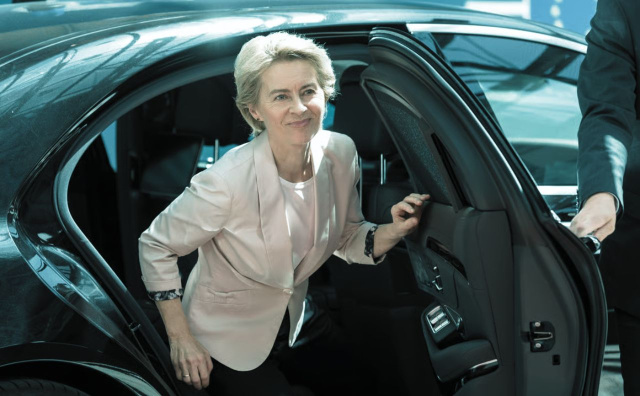 President of the European Commission Ursula von der Leyen
The European Commission has urged member states to prepare for possible energy shortages linked to the ongoing conflict involving Iran, warning that disruptions in global oil and gas supply chains could become prolonged. EU Energy Commissioner Dan Jørgensen has asked governments to consider measures aimed at reducing consumption, particularly in transport.
In a letter to national energy ministers, seen by POLITICO and Euronews, Jørgensen suggested that countries explore voluntary demand-reduction steps, with a focus on lowering fuel use in road and air transport. The idea includes encouraging citizens to travel less where possible, as part of broader efforts to ease pressure on fuel supplies.
He warned that the situation in the Persian Gulf is shifting from a price fluctuation issue to a potential supply crisis, given Europe’s reliance on the region for a significant share of jet fuel and diesel imports. The EU sources more than 40 percent of its jet fuel and diesel from Gulf suppliers, while alternative options remain limited due to refining constraints within Europe.
According to the commissioner, rising costs and supply risks are already affecting the transport sector, with diesel and aviation fuel particularly exposed. He also called on governments to avoid national policies that could increase fuel consumption or disrupt the internal flow of petroleum products across the EU, stressing the need for coordination.
An emergency meeting of EU energy ministers is scheduled for Tuesday, where the situation will be reviewed alongside broader global market conditions. The discussions come amid concerns over a possible supply gap of millions of barrels of oil per day and significant volumes of liquefied natural gas, as tensions in the region persist.
International partners, including the G7, have stated they are monitoring developments closely and remain ready to take measures to stabilize markets if necessary. While no decisions such as releasing additional strategic reserves have been confirmed, the situation is under active review.
Jørgensen also noted that transport costs are already rising, urging coordinated action to ensure continued availability of diesel and jet fuel. He highlighted concerns about Europe’s dependence on Gulf states such as Saudi Arabia and Kuwait, particularly for diesel imports, which account for a notable share of consumption in the EU and the UK.
Industry data cited in reports shows a slight decline in Europe’s jet fuel and kerosene imports compared to the previous month, while aviation sector sources have warned that prolonged disruption could lead to flight reductions or cancellations during peak travel periods.
The Commission has also advised countries to consider additional steps such as postponing refinery maintenance, increasing biofuel use, and improving monitoring of supply chains. It has further encouraged better information sharing between member states to reduce market uncertainty.
Energy storage levels remain a key stabilizing factor, with EU gas reserves currently around 90 percent full, following earlier guidance allowing flexibility in refilling targets to avoid market spikes. The bloc also maintains substantial emergency oil stocks, reinforced by coordinated releases from the International Energy Agency earlier in the month.
Despite these safeguards, the Commission warned that uncoordinated national responses could worsen volatility and undermine the EU’s internal energy market. Jørgensen stressed that member states should act collectively, treating energy security as a shared system rather than separate national policies.
He concluded that while immediate supply conditions remain manageable, the EU must prepare for a potentially prolonged period of instability if disruptions in the Strait of Hormuz continue.
Caretaker Finance Minister Georgi Klisurski said he expects fuel prices at gas stations to ease in the coming period, pointing to a sharp decline in international oil markets

The caretaker government has approved a decision endorsing the Partnership Agreement between the European Union and its Member States and the Mercosur bloc

US Vice President JD Vance launched a sharp attack on the European Union during a visit to Budapest, accusing Brussels of interfering in Hungary’s election just days before a closely contested vote that could reshape the country’s political landscape
Fuel prices in Germany have recently reached new highs, with diesel briefly exceeding 2.40 euros per litre during the Easter holiday period before easing slightly afterward
A recently revised German military service framework has triggered public debate after it emerged that it places new travel-related obligations on men aged between 17 and 45
Bulgaria’s fuel market has recorded a sharp upward shift since the outbreak of the war in Iran, with diesel and petrol prices rising significantly across the country
The caretaker government has approved a decision endorsing the Partnership Agreement between the European Union and its Member States and the Mercosur bloc
US Vice President JD Vance launched a sharp attack on the European Union during a visit to Budapest, accusing Brussels of interfering in Hungary’s election just days before a closely contested vote that could reshape the country’s political landscape
Fuel prices in Germany have recently reached new highs, with diesel briefly exceeding 2.40 euros per litre during the Easter holiday period before easing slightly afterward
A recently revised German military service framework has triggered public debate after it emerged that it places new travel-related obligations on men aged between 17 and 45

Spain has officially launched its system of digital identity, which came into effect on April 2 and grants the electronic version of the national identity card the same legal validity as the physical document

Unemployment in the euro area edged up slightly in February, reaching 6.2% compared to the record low of 6.1% recorded in January, according to figures released by Eurostat

Aniventure Comic Con Returns to Bulgaria with Star Guest Christopher Judge!
Global Fuel Shock: Oil Jumps Over 40% Since Iran War Began