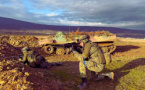
The Zmeevo military training ground is being considered for transformation into a specialized site for testing drone technologies, according to Vladislav Shekerov, acting head of the Defense Institute. Speaking to the Bulgarian National Radio, he outlined plans to establish a laboratory at the range in cooperation with the Center for Defense Innovation and the Center of Excellence in Kazanlak. The facility would be designed to test both unmanned systems and technologies aimed at countering them, addressing what officials describe as a current gap within Europe and NATO for comprehensive testing capabilities.
The initiative is part of broader efforts to strengthen Bulgaria’s role in defense innovation. The Ministry of Innovation and Growth has emphasized the need for such infrastructure, pointing to a recently signed cooperation agreement involving Sofia Tech Park, the Defense Institute, the GATE Institute, the Nikola Vaptsarov Naval Academy and the Association for Scientific Research and Development. The partnership aims to advance research, technological development and innovation in the fields of security and defense.
Despite some progress, officials acknowledge that results so far remain limited. Since 2023, only one Bulgarian company has secured funding under NATO’s DIANA innovation program, despite around 150 firms applying with projects that have potential dual-use applications. This has prompted closer coordination between the Defense Institute, the armed forces and the Defense Innovation Center, established last year, to better identify market opportunities and support domestic development.
Investment in unmanned systems is also part of a larger modernization plan financed through European mechanisms. Under the SAFE loan instrument, Bulgaria is set to acquire defense equipment worth 3.2 billion euros by 2030, with a ten-year grace period before repayments begin. Drone and anti-drone technologies are included among the nine priority projects funded under this framework.
The Zmeevo range itself carries historical significance. More than two decades ago, it was used for the dismantling of missile systems such as SS-23, Scud and Frog as part of military reforms. At the time, local concerns focused on potential environmental risks linked to the destruction of these weapons. Today, the same site is being reconsidered as a hub for modern defense technologies, where innovation and military application could converge.