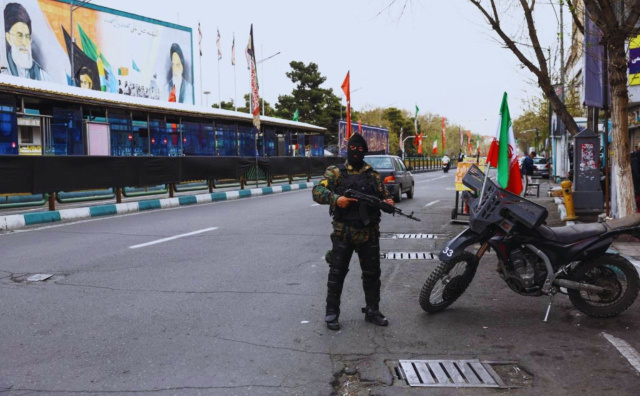
Negotiations between the United States and Iran continue to evolve, though both sides present sharply contrasting interpretations of the process. US President Donald Trump maintains that Tehran is eager to reach an agreement, while Iranian officials insist that Washington’s approach reflects weakness and a failure to achieve its objectives. Despite the rhetoric, channels of communication remain active through intermediaries.
According to US officials, discussions are ongoing, with efforts underway to arrange a potential meeting in Pakistan aimed at identifying a possible pathway toward de-escalation. Iran’s Foreign Minister Abbas Araghchi has confirmed that messages have been exchanged via mediators, but he rejected the idea that Tehran is negotiating under pressure, pointing instead to what he described as a shift in US demands from earlier calls for “unconditional surrender.”
On the ground, the conflict continues to escalate. Israeli forces report renewed strikes in central Iran, including operations in Isfahan, while Iranian-linked actions and air defense responses have been reported across several Gulf states. Intelligence sources also indicate that Iran is reinforcing strategic positions, including Kharg Island, amid expectations of potential further US military activity.
Regional security concerns are widening beyond Iran and Israel. Reports from Gulf countries describe interceptions of drones and missiles, with Saudi Arabia, the United Arab Emirates, Kuwait, and Bahrain all affected by related incidents or threats. In parallel, Kuwait authorities have detained individuals accused of plotting attacks linked to Hezbollah, while Iraq is facing diplomatic pressure to curb armed groups operating from its territory.
Inside the United States, political and public pressure is increasing. Lawmakers from both major parties have expressed dissatisfaction with briefings on the war’s objectives and timeline, particularly as discussions continue over funding and military resupply. Public opinion surveys indicate that a majority of Americans disapprove of the conflict and question the decision to use force, adding to domestic political friction.
The White House has indicated that the current operational timeline spans several more weeks, though officials say it remains too early to determine whether strategic goals are being met. At the same time, economic consequences are beginning to emerge, including new costs introduced by the US Postal Service in the form of a temporary fuel surcharge on packages.
Energy markets remain sensitive to developments, with oil prices rising amid uncertainty over potential escalation and disrupted trade routes. Analysts also warn that the conflict could have wider implications for global food security, given the region’s role in international supply chains.
Iran, meanwhile, continues to signal resistance rather than compromise. Officials emphasize that military and political pressure will not force concessions, while suggesting that any further escalation could open additional regional fronts, including key maritime chokepoints critical to global energy flows.
Several Gulf states have reported missile and drone strikes on their territories just hours after the United States and Iran announced a two-week ceasefire agreement, raising fresh questions about whether the truce is holding on the ground
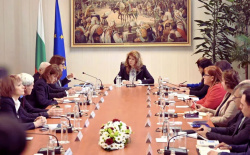
Bulgaria’s caretaker Foreign Minister Nadezhda Neynsky said the announcement of a two-week ceasefire between the United States and Iran brought a sense of relief after weeks of escalating tensions in the Middle East
Global markets reacted sharply after US President Donald Trump stepped back from imminent military action against Iran, instead tying a suspension of strikes to Tehran’s agreement to a temporary ceasefire and the reopening of the Strait of Hormuz
On the 40th day of the war, a tentative pause in hostilities has been announced, as US President Donald Trump said Washington would suspend its attacks after Iran agreed to a two-week ceasefire
The United States has carried out new strikes on Iranian military targets on Kharg Island, a strategic hub for the country’s oil exports, according to American officials
The head of the International Monetary Fund (IMF), Kristalina Georgieva, has warned that the ongoing war in the Middle East is expected to push inflation higher while simultaneously slowing global economic growth
The caretaker government has approved a decision endorsing the Partnership Agreement between the European Union and its Member States and the Mercosur bloc
Several Gulf states have reported missile and drone strikes on their territories just hours after the United States and Iran announced a two-week ceasefire agreement, raising fresh questions about whether the truce is holding on the ground
US Vice President JD Vance launched a sharp attack on the European Union during a visit to Budapest, accusing Brussels of interfering in Hungary’s election just days before a closely contested vote that could reshape the country’s political landscape
Global markets reacted sharply after US President Donald Trump stepped back from imminent military action against Iran, instead tying a suspension of strikes to Tehran’s agreement to a temporary ceasefire and the reopening of the Strait of Hormuz
On the 40th day of the war, a tentative pause in hostilities has been announced, as US President Donald Trump said Washington would suspend its attacks after Iran agreed to a two-week ceasefire
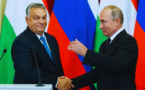
A leaked transcript of a phone call between Hungarian Prime Minister Viktor Orban and Russian President Vladimir Putin shows Orban offering extensive support to Moscow and describing himself as ready to help “in any way” in relation to the war in Ukraine
Aniventure Comic Con Returns to Bulgaria with Star Guest Christopher Judge!
Global Fuel Shock: Oil Jumps Over 40% Since Iran War Began
Bulgaria news
Novinite.com (Sofia News Agency - www.sofianewsagency.com) is unique with being a real time news provider in English that informs its readers about the latest Bulgarian news. The editorial staff also publishes a daily online newspaper "Sofia Morning News."
Novinite.com (Sofia News Agency - www.sofianewsagency.com) and Sofia Morning News publish the latest economic, political and cultural news that take place in Bulgaria.
Foreign media analysis on Bulgaria and World News in Brief are also part of the web site and the online newspaper.
News Bulgaria