NATO Demonstrates Rapid Strike Capabilities with Exercise in Bulgaria
- Tweet
 Send to Kindle

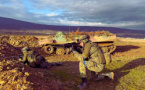
A multinational NATO exercise will take place in Bulgarian airspace on March 26 and 27, the Ministry of Defense confirmed, as part of the Alliance’s enhanced vigilance activity Neptune Strike 26-1. Training operations will be conducted over the Novo Selo training area and in northeastern Bulgaria, forming part of broader coordinated drills across Europe.
The exercise is designed to showcase NATO’s ability to rapidly deploy and integrate multinational forces across air, land and maritime domains. According to the ministry, the drills aim to demonstrate readiness to defend the territory of member states through coordinated operations involving multiple branches of the armed forces.
Neptune Strike 26 is being carried out between March 25 and April 1 under the command of NATO’s Naval Striking and Support Forces, headquartered in Portugal. The exercise brings together major naval formations, including Spain’s Juan Carlos I strike group, Italy’s Cavour carrier group and France’s Charles de Gaulle carrier group, operating across the Western and Central Mediterranean.
Air assets, including advanced fighter jets and NATO surveillance drones based in Italy, will conduct missions extending from the Mediterranean to continental Europe and the Black Sea region. Some of these operations include live-fire training at designated ranges in Bulgaria, as well as in Poland and Romania, highlighting the Alliance’s long-range strike capabilities.
NATO emphasized that the exercise is defensive in nature, planned well in advance and conducted in full compliance with international law. The drills are also part of the Alliance’s broader strategy to maintain a continuous presence along its eastern flank and ensure readiness to respond to potential threats from all directions.
Participation in this iteration of Neptune Strike includes forces from Albania, Bulgaria, Croatia, Finland, France, Germany, Greece, Italy, the Netherlands, Romania, Spain and the United States, reflecting the scale of multinational coordination involved.
Bulgaria’s Military Faces 20% Personnel Shortage Despite Slight Improvement
The personnel deficit in the Bulgarian Armed Forces stood at 20.5% in 2025, marking a slight improvement of 1.8 percentage points compared to the previous year, according to the Report on the State of Defence and the Armed Forces, approved by the caretake

Defense Minister: Bulgaria Takes No Military Commitments Under Ukraine Security Deal
Acting Defense Minister Atanas Zapryanov has stated that Bulgaria is not taking on any military obligations under the ten-year security cooperation agreement with Ukraine

Defense Minister: NATO Guarantees Bulgaria’s Security, Going Solo Not an Option
Acting defense Minister Atanas Zapryanov said that the concept of Bulgaria relying on its own defense outside a collective system would place an unsustainable burden on the country’s economy and public finances

No Threat to Bulgaria From Iran, Analyst Says Amid Diplomatic Note Row
Journalist Hristo Rimpopov told Bulgarian National Radio that there is no basis to assume Bulgaria could become a target of Iranian attacks, following confirmation by the Foreign Ministry that Tehran had sent a diplomatic note concerning the presence of U

Bulgaria Stays Out of Hormuz Military Operation, Backs Talks Instead
Acting Foreign Minister Nadezhda Neynski has stated categorically that Bulgaria will not take part in any military coalition aimed at reopening the Strait of Hormuz, citing the country’s limited capabilities
Bulgaria Defense Warning: 2% of GDP Not Enough to Fix Army Gaps
The Council of Ministers has adopted the Report on the State of Defense and the Armed Forces of the Republic of Bulgaria for 2025, which was submitted to both the National Assembly and the public, outlining an overall assessment of military readiness and