Global energy markets are once again under intense pressure as the conflict involving the United States, Israel and Iran continues to escalate. Oil prices have surged back above the symbolic threshold of 100 dollars per barrel, with Brent crude trading around 100.51 dollars during Asian trading on Thursday. The jump followed renewed fears of supply disruptions after Iranian strikes targeting energy infrastructure and shipping across the Middle East. Earlier in the week, prices briefly approached 120 dollars before retreating, only to rebound sharply amid fresh attacks and growing instability in the region. At the same time, Asian stock markets have also come under renewed pressure as investors react to the worsening geopolitical situation.
The sharp price rise comes despite an unprecedented intervention by the International Energy Agency. On Wednesday the organization ordered the largest coordinated release of emergency oil reserves in its history, amounting to 400 million barrels, in an attempt to calm markets and mitigate what analysts describe as one of the most serious energy shocks since the 1970s. The United States separately confirmed that it would release 172 million barrels from its Strategic Petroleum Reserve as part of the effort to stabilize supplies.
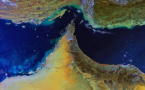
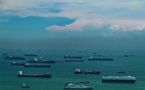
Nevertheless, developments on the ground have largely overshadowed those measures. Iran has intensified attacks on oil infrastructure and transport routes throughout the region, apparently seeking to disrupt global energy flows. Several commercial vessels have been struck in or near the Strait of Hormuz, a narrow waterway through which roughly one fifth of the world’s oil and liquefied natural gas normally passes. The attacks have forced shipping companies and regional governments to take emergency action.
In Iraq, authorities halted operations at all of the country’s oil export terminals after two foreign oil tankers were attacked and caught fire in Iraqi territorial waters near the southern export hub around Al-Faw in the northern Persian Gulf. According to Farhan Al-Fartousi of Iraq’s General Company for Ports, one crew member was killed while 38 others were rescued from the vessels. Firefighters eventually managed to extinguish the fires. The ships involved were identified as the Maltese-flagged Zefyros and the Safesea Vishnu, which sails under the Marshall Islands flag. Rescue teams are still searching for missing seafarers, and the Iraqi Oil Marketing Company warned that the incident threatens maritime navigation and the security of oil activities in the country’s waters.
Elsewhere in the Gulf, Bahrain urged residents to remain indoors after Iranian strikes targeted fuel storage tanks in the Muharraq governorate. In Oman, authorities moved all ships away from the country’s main oil export terminal at Mina Al Fahal after drones struck another port facility. Reports also emerged of a container ship being hit near the United Arab Emirates, while Kuwait said a drone struck a building, injuring two people. In Dubai, emergency services responded after a drone crashed into a structure.
Iranian forces are also believed to have set two tankers ablaze in Iraqi waters, an attack that left one sailor dead. These strikes form part of a broader campaign targeting oil fields, refineries and transport infrastructure across Gulf states. Cargo traffic through the Strait of Hormuz has effectively stalled as a result of the escalating attacks.
The war, now approaching its second week, has reportedly caused around 2,000 deaths. The United Nations children’s agency Unicef said more than 1,100 children have either been killed or wounded since the fighting began.
In the United States, President Donald Trump told supporters at a rally in Kentucky that the US had effectively won the war but emphasized that Washington must ensure the outcome is secured. “We don’t want to leave early, do we? We’ve got to finish the job,” he said.
Iranian military officials have responded with sharp warnings to Washington. A spokesperson for the country’s command structure said oil prices could climb dramatically if the conflict continues. “Get ready for oil to be 200 dollars a barrel,” the official said, adding that energy prices ultimately depend on regional stability, which Tehran accuses the United States of undermining.
Meanwhile, British Prime Minister Keir Starmer said the UK government would intervene if companies attempted to exploit the situation by excessively raising heating oil prices for consumers.
Despite the scale of the conflict, US intelligence agencies believe Iran’s leadership structure remains stable. According to sources cited by Reuters, multiple intelligence assessments conclude that the Iranian government is not in immediate danger of collapse and continues to maintain control over the domestic population.
The conflict has also spread into Lebanon. Lebanese authorities reported that an Israeli strike on the seafront in central Beirut killed at least seven people early Thursday. The attack followed what the Israeli military described as a large wave of strikes targeting densely populated southern suburbs of the capital after Hezbollah launched dozens of rockets toward Israel.
Beyond the Middle East, the energy shock is beginning to disrupt global aviation. Air New Zealand announced it would cancel about five percent of its scheduled flights, roughly 1,100 services, through early May as rising jet fuel prices and restrictions on air routes affect operations. About 44,000 passengers out of the 1.9 million expected to travel during that period will need to be rebooked. Most of the cuts will affect domestic services, while long-haul flights will largely continue.
Chief executive Nikhil Ravishankar said maintaining connections to Europe remains a priority. Aircraft can still reach European destinations by flying over US airspace, he noted, and the airline intends to preserve those routes.
Other carriers, including Australia’s Qantas, Scandinavian airline SAS and Thai Airways, have also raised ticket prices as the war disrupts Middle Eastern airspace and pushes fuel costs higher.
In New Zealand, authorities have even begun considering restrictions on vehicle use if fuel supplies become strained because of the conflict.
For now, analysts say the situation remains extremely volatile. Although emergency releases from strategic reserves and the rerouting of some exports may provide temporary relief, the continuing attacks around the Gulf and the paralysis of shipping through the Strait of Hormuz continue to pose a major threat to global energy supplies.