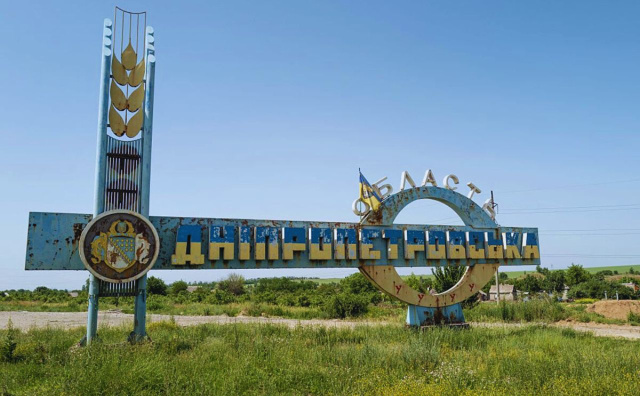
Ukrainian forces have achieved significant advances on the Oleksandrivka front in Dnipropetrovsk Oblast, marking the culmination of months of careful planning and preparatory operations. The breakthrough follows initial assaults in late 2025 on the Huliaipole front, aimed at weakening Russian positions. According to Dmytro “Perun” Filatov, commander of the 1st Separate Assault Regiment, the offensive actions near Oleksandrivka and Huliaipole were part of a broader coordinated plan, Ukrainska Pravda reported. Filatov explained that the regiment conducted flanking strikes in areas between Dobropillia and Nove Zaporizhzhia to pressure Russian forces and create favorable conditions for the eventual liberation of the region. Using mechanized vehicles, Ukrainian units penetrated up to 12 kilometers into Russian lines, though Filatov described these advances as “minor successes” rather than a full counteroffensive, emphasizing that their purpose was to stabilize tactical positions and respond to Russian redeployments ahead of the anticipated spring campaign.
The 2nd Battalion of the 95th Airmobile Brigade, led by Anton Derliuk, joined the operation in late January, focusing on pushing Russian forces from Dnipropetrovsk Oblast. The battalion moved under cover of snow and fog, neutralizing reconnaissance units and drone operators to blind the enemy. Derliuk reported surrounding roughly 60 Russian soldiers, capturing three prisoners, and eliminating the remainder of the encircled forces. His unit advanced 10–11 kilometers beyond the established line of contact, demonstrating the effectiveness of infantry operations and the high level of soldier training. Overall, Ukrainian commanders estimate that the recaptured and cleared territory along the Oleksandrivka front spans 300-450 square kilometers, though the names of liberated settlements remain undisclosed. Journalistic reports suggest initial progress in southern Dnipropetrovsk villages such as Vyshneve, Yehorivka, and Pershotravneve, with further advances pushing Russian forces back from neighboring Zaporizhzhia Oblast settlements, including Novoiehorivka, Novoivanivka, and Pavlivka. Consolidation of these gains, however, remains an ongoing challenge.
Major General Oleksandr Komarenko, head of the Main Operations Directorate of the Ukrainian General Staff, confirmed that more than 400 square kilometers of territory have been cleared of Russian forces, with only a few settlements remaining contested. He highlighted that the operation was meticulously coordinated, involving airborne assault units, mechanized brigades, and ground assault troops working in concert. Despite progress, Komarenko noted that the situation on the front remains complex, particularly in the Pokrovsk and Oleksandrivsk directions where Russian forces have concentrated their main units. The offensive has, however, alleviated pressure in adjacent areas, including Pokrovska and Myrnograd, as Russian focus shifted toward Oleksandrivka. Looking ahead to the spring campaign, Komarenko stressed that Ukraine’s priorities will include consolidating positions in Pokrovsk, Oleksandrivsk, and Zaporizhzhia, while Russian forces continue to attempt territorial control in Luhansk, Donetsk, and parts of Dnipropetrovsk. Over the past 24 hours, Ukrainian positions have faced intense enemy attacks involving missiles, kamikaze drones, aircraft, and artillery, while defenders have targeted key Russian infrastructure, including equipment concentrations and drone control points.