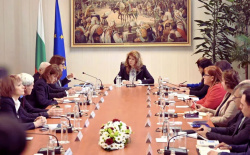
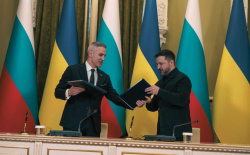
In Sofia, President Iliana Yotova participated in official commemorations at the Memorial Plaques of the Rescuers of Bulgarian Jews next to the St. Sophia Cathedral and at the Monument of Salvation in the St. Kliment Ohridski Garden. Wreaths were laid on behalf of the caretaker Minister of Defense Atanas Zapryanov, Chief of Defense Admiral Emil Eftimov, and the parliamentary group of BSP-United Left. The ceremony also saw the presence of BSP-United Left Floor Leader Nataliya Kiselova, "Greatness" MP Yuliana Mateeva, representatives of the Jewish community, and members of the public. Later, President Yotova was scheduled to deliver an address at the Monument of Salvation.
In Plovdiv, similar tributes were paid at the Monument of Gratitude, with wreaths and flowers placed to honor the rescuers. Descendants of those involved in the events of March 10, 1943, traditionally attend these ceremonies, commemorating the so-called Kyustendil Action. On that day, politicians, church leaders, public figures, and ordinary Bulgarians united to oppose the deportation of nearly 50,000 Bulgarian Jews to Nazi death camps.
The significance of March 10 was formally recognized by the Bulgarian government on February 13, 2003, establishing the Day of the Rescue of Bulgarian Jews and of Remembrance of the Victims of the Holocaust and of Crimes against Humanity. On this day in 1943, Deputy Speaker of the 25th National Assembly Dimitar Peshev sent a letter of protest to Prime Minister Bogdan Filov, signed by 43 lawmakers, opposing the deportations. The coordinated efforts of Metropolitan Cyril of Plovdiv, Exarch Stefan of Sofia, and the wider Bulgarian public ultimately prevented the deportation of almost 50,000 Jews, saving them from Nazi extermination.
How Bulgaria saved its people
In the spring of 1943, as Nazi Germany intensified its campaign to deport Jews from occupied Europe to extermination camps, a remarkable event unfolded in Bulgaria that set the country apart from most of its Axis allies. Bulgaria, which had joined the Axis in 1941 and enacted anti‑Jewish laws similar to those in Nazi Germany, was under pressure to hand over its Jewish citizens for deportation. Plans were made to send some 48,000 Jews from Bulgaria’s pre‑war territory to the death camps in German‑occupied Poland, but the initiative was met with massive public opposition. Key figures such as Deputy Speaker Dimitar Peshev and members of parliament protested vigorously, gathering signatures and appealing directly to Tsar Boris III to halt the deportations. At the same time, leaders of the Bulgarian Orthodox Church, including Metropolitan Cyril of Plovdiv and Exarch Stefan of Sofia, appealed to the conscience of the nation and joined in the opposition, helping to galvanize broader civilian resistance. Ordinary citizens, intellectuals, trade unions and clergy took part in protests, marches and petitions that made collaboration with the deportation orders politically untenable. By March 10, 1943, this widespread resistance forced the government to cancel its deportation plans for Jews within Bulgaria’s borders, ultimately preventing nearly 50,000 Bulgarian Jews from being sent to Nazi death camps - a uniquely successful rescue in wartime Europe.