Airspace above Sofia’s Vasil Levski Airport was temporarily shut down on Saturday after security systems detected a drone in the vicinity of the capital’s main aviation hub, Bulgarian National Television (BNT) reported.
Airport authorities said the alert prompted an immediate response from Air Traffic Control, Border Police and other ground services. As a precaution, a passenger plane arriving from Cologne was instructed not to proceed with its landing in Sofia. The aircraft was instead redirected to Varna Airport, where it landed safely.
According to the information available, the crew of the incoming flight was notified while approaching Bulgarian airspace. The diversion was carried out in order to avoid any potential risk while the situation around Sofia Airport was being assessed.
The airspace over the airport remained closed only briefly. Authorities said the measure was introduced purely as a safety precaution until the drone was neutralized. Once the situation was resolved and the area was secured, normal air traffic operations at the capital’s airport resumed.
The incident occurred against the backdrop of increased attention to Bulgaria’s air security in recent days. Yesterday, Iran’s ambassador to Sofia, Ali Reza Irvash, stated in an interview with Bulgarian National Radio that Bulgaria is not viewed by Tehran as a legitimate military target and that Iran has no hostile intentions toward the country.
In the same interview, the diplomat said Iran is seeking to deepen friendly relations with Bulgaria and insisted that the Iranian public holds no animosity toward the Bulgarian people. He argued that attempts to spread fear among Bulgarians are being used by Iran’s opponents to create divisions and undermine relations between the two nations.
When asked whether a stray Iranian missile (or drone) could theoretically reach Bulgaria, Irvash replied that he could not predict the future but noted that those conducting military operations against Iran are also working to prevent such incidents. He suggested that attention should instead focus on removing the factors that create such fears, including what he described as the unjustified presence of certain aircraft in Sofia, and called for Bulgaria to use its voice internationally in support of peace.
Amid the tensions, Greece has meanwhile announced measures to help strengthen Bulgaria’s air defense. Greek Defense Minister Nikos Dendias said Athens will deploy a Patriot missile system and F-16 fighter jets as part of coordinated actions between the two NATO allies.
The decision was approved by Greece’s Government Council for Foreign Affairs and Defense (KYSEA) after a request from the Bulgarian side. The Patriot battery is to be placed in northern Greece in a position that can provide missile defense coverage over a large portion of Bulgarian territory, while two F-16 aircraft will remain stationed at a nearby base, ready to assist in protecting the region’s airspace.
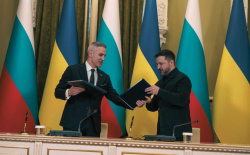
To improve coordination, two senior officers from the Greek Air Force will also be sent to Sofia, where they will work within the operational center of the Bulgarian Armed Forces. Dendias said the assistance will not reduce Greece’s own defensive capacity and confirmed that he discussed the arrangements with Bulgaria’s acting Defense Minister Atanas Zapryanov. The Greek minister is expected to visit Sofia next week following an invitation from his Bulgarian counterpart.
According to Athens, the purpose of these joint measures is to maintain stability and reinforce security in the region. Greece has recently undertaken similar deployments elsewhere, including sending naval and air units to support the protection of a military facility in Cyprus.
The developments come as tensions remain high in the Middle East following a week-long military campaign by the United States and Israel against Iran. Tehran responded with missile and drone strikes, some of which reportedly reached areas close to Turkey and Cyprus. Turkey said it intercepted a ballistic missile that had entered its airspace, while Iran denied targeting the country.
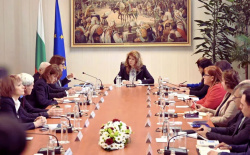
In Bulgaria, the government has been closely monitoring the situation. Prime Minister Andrey Gyurov convened the Security Council for a second meeting this week to assess the evolving security environment. After the session, he said there is currently no direct threat to Bulgaria, although the authorities are taking steps to strengthen the country’s defensive capabilities.
Part of the challenge stems from the fact that Bulgaria’s newly purchased American F-16 fighter jets are not yet fully operational. The country has ordered 16 aircraft in two separate contracts worth around five billion leva, or approximately 2.5 billion euros. The first eight planes have already been delivered, but experts estimate that it could take up to two years before they are fully integrated into the air force.
Until that process is completed, Bulgaria continues to rely largely on its older Soviet-designed MiG-29 fighter jets, whose maintenance has become increasingly difficult. As a NATO member, however, the country also benefits from allied assistance through joint air policing missions and the Alliance’s integrated air defense system, with Romania and Turkey among the partners contributing to the protection of regional airspace.