The war involving the United States, Israel and Iran has entered its seventh day, with fighting and political tensions continuing to expand across the Middle East and beyond. Military operations remain underway across Iranian territory while missile and drone attacks have spread across the Gulf region. Washington and Tel Aviv say their campaign, known as Operation Epic Fury, is significantly weakening Iran’s military capabilities.
In Iran itself, the US and Israel have continued intensive strikes since the start of the conflict last Saturday. According to available estimates, more than 1,230 people have been killed during the bombardment. The Israeli military claims it has achieved near-total air superiority after carrying out around 2,500 strikes and destroying approximately 80 percent of Iran’s air defense systems. US Central Command also reported that American forces struck roughly 200 targets in Iran within the past 72 hours, including ballistic missile launch facilities and naval assets.
The cost of the first 100 hours of Operation Epic Fury has been estimated by the Center for Strategic and International Studies at about 3.7 billion dollars, which equals roughly 891 million dollars per day. Of this amount, approximately 3.5 billion dollars has not been included in existing US budget allocations.
The conflict has also triggered major political developments following the death of Iran’s Supreme Leader Ayatollah Ali Khamenei, who was killed in a US-Israeli strike on Tehran at the beginning of the campaign. The question of his successor remains unresolved, although speculation has circulated that his son Mojtaba Khamenei could take the position. US President Donald Trump dismissed that possibility as unacceptable and said he intends to be involved in choosing Iran’s next leader, similar to his involvement in leadership changes in Venezuela. Trump did not name any specific alternative candidates.
Iranian officials have issued warnings about the possibility of a ground invasion. Ali Larijani, secretary of Iran’s Supreme National Security Council, said Iranian forces are prepared for such a scenario and threatened that thousands of US soldiers could be killed or captured if American troops enter the country. At the same time, Iran’s Foreign Minister Abbas Araghchi rejected the idea of negotiations with Washington, saying there is no reason to negotiate with a country that Iran does not trust.
Despite continuing attacks, US officials say the intensity of Iran’s missile and drone strikes has declined significantly since the conflict began. According to Washington’s assessments, ballistic missile launches have fallen by around 90 percent, while drone attacks have dropped by approximately 83 percent compared to the first day of the war. Trump also claimed that Iran’s military capabilities have been largely destroyed, telling NBC News that the country has effectively lost its navy and most of its remaining assets.
The war has increasingly affected neighboring countries. Iranian missile and drone strikes have targeted several Gulf states, prompting air defense responses across the region. In Kuwait, the United States temporarily suspended operations at its embassy after retaliatory strikes in which Kuwaiti air defenses intercepted incoming missiles and drones.
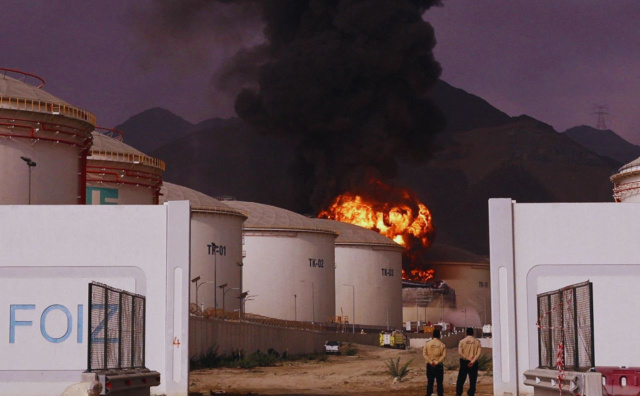
In Bahrain, an Iranian missile struck a state-run oil refinery in an industrial town, although authorities managed to contain the resulting fire. The United Arab Emirates reported intercepting multiple Iranian missiles along with more than 120 drones, while Qatar said it was targeted by a large wave of Iranian missiles and drones after explosions were heard in the capital Doha.
The growing instability has prompted large-scale evacuations of foreign nationals. The US State Department says around 20,000 Americans have already left the Middle East, most of them departing independently. Washington is now organizing charter flights for those who remain in the region and wish to leave.
Evacuation efforts by other countries have also faced difficulties. A French government-chartered flight sent to retrieve citizens stranded in the United Arab Emirates was forced to turn back during the journey after missile fire was reported along its route.
Meanwhile, Israel has faced its own security challenges. Iran’s Revolutionary Guard announced that it had carried out a coordinated drone and missile attack targeting Tel Aviv and central Israel. In response to the heightened threat, Israeli authorities closed all holy sites in Jerusalem’s Old City and cancelled Friday prayers. Violence has also been reported in the West Bank.
Beyond Israel and Iran, military activity and tensions have spread across other parts of the region. In Iraq, security forces shot down a drone approaching a military base near Baghdad International Airport that hosts US assets. The aircraft was intercepted overnight near the Victoria airbase before it could reach its intended target.
Iran has also launched strikes against what it described as anti-Iran separatist groups operating near the mountainous border between Iran and Iraq. Iranian state television reported that these groups include Kurdish factions based in remote areas along the frontier. Reports suggest that the United States has been in contact with some of these groups about potentially participating in operations against Iran.
Israel has expanded its operations in Lebanon as well. The Israeli military began striking what it described as Hezbollah infrastructure in the Dahiya district of southern Beirut, a densely populated residential and commercial area. Before the attacks, evacuation warnings were issued for the southern suburbs of Beirut, where roughly half a million people live. The orders caused widespread panic and massive traffic jams as residents attempted to leave the area. According to Lebanon’s health ministry, Israeli strikes since Monday have killed at least 123 people and injured 683.
The expanding conflict has also reached beyond the immediate region. Azerbaijan accused Iran of carrying out drone attacks on its territory, an allegation that Tehran denied. Azerbaijani authorities said four civilians were injured when a drone struck the Nakhchivan exclave, prompting the government to halt truck traffic across its border with Iran and prepare possible retaliatory measures.
The war has already affected at least 14 countries across the Middle East and nearby regions. Governments around the world are increasingly concerned about the risk of further escalation and its economic consequences.
Energy markets have been among the most immediate casualties of the conflict. Rising oil prices prompted the United States to grant Indian refiners a temporary 30-day waiver allowing them to continue purchasing Russian crude. The decision came despite earlier statements by Trump that India had agreed to halt such purchases in order to reduce financial support for Moscow and help end the war in Ukraine. US Treasury Secretary Scott Bessent described the waiver as a measure intended to maintain stability in global oil markets and said it would not provide a significant financial benefit to the Russian government.
Financial markets have reacted sharply to the fighting. Earlier in the week the Dow Jones Industrial Average dropped by more than 1,000 points, or about 2.2 percent, as investors responded to the surge in energy prices and the uncertainty surrounding the conflict.
Political divisions have also emerged in Washington. The Republican-controlled US House of Representatives rejected a Democratic-backed resolution that would have halted military operations against Iran unless Congress formally authorized the conflict. The vote was 219 to 212, allowing Trump to continue the campaign.
US Defense Secretary Pete Hegseth rejected accusations that the US and Israel are destabilizing the region, insisting that their actions are aimed at neutralizing Iran’s military capabilities. At the same time, other allies are considering how they might respond if the conflict widens further.
In Canada, the country’s top military officer, General Jennie Carignan, confirmed that allied nations are discussing possible assistance to Gulf states to strengthen their defenses. A meeting among allied militaries has been scheduled to examine potential measures, after which the Canadian Armed Forces will present recommendations to the government. Carignan stressed that Canada is not participating in US bombing operations and that the discussions are not related to joining Operation Epic Fury.
European governments remain divided over how to react. The United Kingdom and France have deployed naval and air defense assets to the eastern Mediterranean to protect allied interests. A drone attack earlier this week struck the British Royal Air Force base at Akrotiri in Cyprus. Other European countries, including Germany, Ireland, Belgium and the Netherlands, have so far limited their response to diplomatic efforts.
The United Kingdom’s defense secretary, John Healey, has also refused to rule out the possibility that Britain could eventually join US and Israeli strikes against Iran.
Egypt is warning about serious economic consequences as the conflict drags on. President Abdel Fattah el-Sisi said the country’s economy is entering what he described as a state of near-emergency because the war threatens to drive up prices and disrupt regional trade.
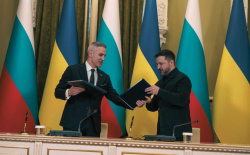
The conflict has even created new military cooperation requests. Ukrainian President Volodymyr Zelensky said the United States has asked Kyiv for assistance in countering Iranian-made Shahed drones, which are widely used by Iran and its allies. Zelensky said he had instructed officials to provide the necessary equipment and to send Ukrainian specialists who have extensive experience defending against such attacks during Russia’s war against Ukraine.
With military operations continuing and the number of countries affected steadily growing, the conflict shows no sign of easing as it enters its second week.