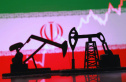
Spanish Prime Minister Pedro Sanchez has delivered a firm rebuttal to US President Donald Trump’s threat to cut trade with Spain, emphasizing his government’s refusal to participate in military action against Iran and reiterating a clear stance of “No to war.” Sanchez described the escalating conflict in the Middle East as akin to playing “Russian roulette with the destiny of millions,” warning of far-reaching human and economic consequences if the violence continues.
The warning from Trump came after Spain declined to allow US forces to use bases at Morón and Rota for strikes on Iran. Trump publicly criticized Madrid during a meeting with German Chancellor Friedrich Merz, saying Spain had been “terrible” and instructing Treasury Secretary Scott Bessent to halt all trade with the country. Sanchez, however, rejected any notion of compliance out of fear, stating that Spain would not become complicit in actions “bad for the world” simply to avoid reprisals.
Further reading: Caught in the Middle: Europe and the Iran Crisis
In his address, Sanchez drew parallels to the 2003 invasion of Iraq, criticizing the then-conservative government led by José María Aznar for supporting the US-led war that promised to eliminate Saddam Hussein’s weapons of mass destruction, establish democracy, and ensure global security, but instead resulted in widespread instability in Europe. He emphasized that a government’s duty is to protect its citizens, not exploit conflicts for profit or geopolitical maneuvering. Sanchez warned that repeating such mistakes in Iran could trigger a long war with significant casualties and economic fallout worldwide.
Sanchez’s position contrasts sharply with other NATO leaders. While German Chancellor Merz privately told Trump that Spain could not be excluded from trade agreements negotiated with the EU, Trump continued to denounce Spain’s defence spending and refusal to provide bases for US operations. The Élysée Palace confirmed that French President Emmanuel Macron expressed solidarity with Spain, while European Council President António Costa affirmed the EU’s support. Stéphane Séjourné, EU internal market commissioner, stressed that any threat against a member state is effectively a threat against the EU as a whole, highlighting Brussels’ exclusive competency over trade matters.
The Spanish government has also been vocal in criticizing Israel’s actions in Gaza, calling them “genocide” and acknowledging Palestinian statehood earlier than many EU partners. Sanchez reiterated that Spain’s foreign policy stance, including on Ukraine and Gaza, is guided by principles of international law and human rights, not alignment with the US administration. He warned that “you cannot respond to one illegality with another,” highlighting the potential for catastrophic outcomes when global powers escalate conflict.
Domestically, Sanchez faces ongoing political pressure. His coalition government, dependent on left-wing and regional nationalist support, has contended with allegations of corruption and persistent speculation about its stability. Nonetheless, his firm opposition to US military demands may strengthen his domestic support, as public opinion polls indicate widespread disapproval of Trump, even among right-leaning voters.
Sanchez concluded by urging diplomacy and restraint, calling on the US, Israel, and Iran to halt the conflict before further human suffering and global economic disruption occur. He framed Spain’s position as one of principled opposition to war, advocating for peace, legality, and the protection of ordinary citizens over military aggression or geopolitical expedience.