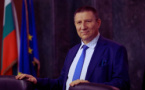
Former president Rumen Radev, who left office before completing his second term, says his decision to enter parliamentary politics comes in response to public expectations for deeper democratic change and faster European integration. In an interview with Berliner Zeitung, later published on his Facebook page, he links his move to the wave of mass protests held across Bulgaria in December, as well as demonstrations by Bulgarians in cities such as Berlin, which ultimately led to the resignation of the government. According to him, citizens want to live in a modern and free European state, independent of oligarchic influence and able to offer opportunities for professional and personal development at home.
Further reading: More Than a Budget Crisis: Bulgaria's Gen-Z Demands a Political Reckoning
Radev places particular emphasis on relations with Germany, describing it as Bulgaria’s key economic, trade and investment partner. Bilateral trade exceeded 12 billion euros last year, with Bulgarian exports surpassing imports, a fact he presents as proof of the country’s industrial potential. He highlights the rapid expansion of the automotive sector and the role of Bulgarian engineers, especially in information technologies, arguing that the future of electric vehicles depends heavily on software developed in Bulgaria. At the same time, he notes that stagnation in Germany’s automotive industry has had repercussions for Bulgarian companies, some of which are now considering redirecting labour toward the growing defence sector.
On defense, Radev stresses Bulgaria’s long-standing traditions and its established share in the global market for military products. He says Bulgarian firms are progressing quickly in meeting NATO standards and investing in advanced capabilities such as optics, electronic warfare, drones and anti-drone systems. In this context, investments by major German companies like Rheinmetall are seen as both economically beneficial and aligned with the goal of strengthening defence capacity.
Turning to the war in Ukraine, Radev argues that a sustainable end to the conflict requires a stronger diplomatic component. While military and financial assistance to Kyiv has dominated so far, he believes diplomatic instruments have not been sufficiently utilised. He observes what he describes as a gradual shift among European leaders toward a more pragmatic approach, citing statements by Emmanuel Macron about restoring dialogue with Russia and discussing a future European security architecture. Without communication with Moscow, Radev warns, Europe risks remaining locked in a framework defined by rivalry and constant militarisation. Drawing on his background as a former Air Force commander, he underlines the importance of defence investment but cautions about long-term economic and social consequences.
Further reading: NATO Pilot, Putin Sympathizer, or Something Else? Who Is Rumen Radev and Why Did He Just Blow Up Bulgarian Politics
At the same time, he says Ukraine deserves continued support but must fulfil the Copenhagen criteria before joining the European Union. He points out that Western Balkan countries have waited for decades and undertaken difficult reforms in governance, the economy and the rule of law. In his view, accelerating Ukraine’s accession without meeting the same standards would undermine European principles, and Kyiv still has substantial work ahead before membership can be considered.
On relations with North Macedonia, Radev recalls that under the European consensus reached in July 2022, the country must amend its constitution to recognise Bulgarians as a state-forming people before accession negotiations can advance. He describes this as a complex yet necessary step, expressing a desire to see North Macedonia in the EU while also emphasising that genuine integration means removing barriers so that people on both sides of the border can move, work and communicate freely.
Radev also comments on the Bulgarian government’s decision to join President Donald Trump’s “Board for Peace” initiative. He calls the move unusual, noting that it was taken after his resignation and without informing parliament or the presidency, thereby bypassing internal procedures. While affirming that strategic ties with the United States should continue to deepen, given Washington’s role in European security, he insists that participation in international initiatives must comply with the constitution, European law and established parliamentary requirements.
Further reading: A Disgraceful Betrayal: Bulgaria's Shameful Entry into Trump's Board of Peace
Regarding the introduction of the euro, Radev reiterates his criticism of how the process was managed. Because the single currency affects every citizen and opinions remain divided, he argues that a referendum would have been the most democratic option. He maintains that although the euro can stimulate investment, attract capital and expand market access, the authorities failed to cushion vulnerable groups against rising prices. Citing national statistics, he notes that 30% of Bulgarians are at risk of poverty or social exclusion and 22% already fall below that threshold, figures recorded before the euro’s adoption. After the convergence report was approved in June, he says, prices began climbing in the national currency, with significant increases over the past nine months in basic goods, food and particularly services. In his assessment, the transition should have been accompanied by stronger financial buffers to protect those most exposed to inflationary pressures.


 Rumen Radev