Putin Declares Easter Ceasefire in Ukraine War
The Kremlin has announced that Russian President Vladimir Putin has ordered an “Easter ceasefire” in the war in Ukraine, declaring a temporary halt in hostilities lasting around 36 hours
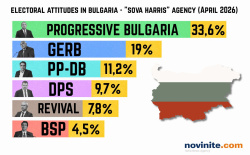
HOT: » Which party would you vote for (if you could) in the upcoming snap vote in Bulgaria on April 19?
 Send to Kindle
Russian servicemen and pro-war commentators reacted with open outrage after the authorities began slowing down and restricting Telegram, warning that the move threatens communication on the battlefield and could seriously undermine military operations in Ukraine.
Russia’s communications watchdog announced on February 10 that restrictions on the messaging app would continue as part of a broader effort to tighten control over the country’s information space. The measures follow earlier limitations on calls made via Telegram and WhatsApp, reflecting a long-standing policy to bring digital platforms under stricter state oversight.
For soldiers deployed in Ukraine, however, Telegram is not just a social platform but a key operational tool. Messages circulating in pro-war channels described shock and anger among troops, who complained that after losing access to satellite internet services, they are now facing interference with their main channel for coordination. Some questioned how combat operations could continue without reliable communication.
Several servicemen publicly appealed to the authorities through recorded video messages shared on monitoring channels. One soldier said that Telegram was their only means of staying in contact while on active duty and pleaded for it not to be restricted. Others stressed that the app is essential for rapidly sharing information about incoming drone attacks and coordinating defensive responses. Fighters from anti-drone units warned that any slowdown would weaken their ability to counter unmanned aerial vehicles, especially in recently occupied areas.
The backlash quickly spread beyond the front line. Nationalist bloggers and pro-war commentators expressed fury, arguing that the decision showed a disconnect between the state’s information policies and the realities of the war. Some accused the authorities of undermining their own military effort, while others mocked the idea that Russia could block communication tools for its own forces while failing to disrupt similar technologies used by Ukraine.
Several prominent pro-war channels criticized the move as yet another blanket ban that would only fuel frustration and confusion. Even officials in border regions voiced concern, warning that slowing Telegram could disrupt the flow of urgent security updates to civilians in areas exposed to shelling and drone strikes. At the same time, residents were encouraged to switch to state-backed messaging platforms.
Pro-government commentators attempted to redirect blame toward the platform’s founder, accusing him of hiding behind free speech arguments instead of preventing the spread of what they described as hostile narratives. In response, the founder stated separately that limiting citizens’ freedoms is not an effective solution.
Despite the backlash, the regulator confirmed that restrictions would continue.
The Kremlin has announced that Russian President Vladimir Putin has ordered an “Easter ceasefire” in the war in Ukraine, declaring a temporary halt in hostilities lasting around 36 hours
A group of Members of the European Parliament has raised concerns over the potential leakage of confidential EU information to Russia, urging stronger safeguards within the European Parliament

Global markets reacted sharply after US President Donald Trump stepped back from imminent military action against Iran, instead tying a suspension of strikes to Tehran’s agreement to a temporary ceasefire and the reopening of the Strait of Hormuz
On the 40th day of the war, a tentative pause in hostilities has been announced, as US President Donald Trump said Washington would suspend its attacks after Iran agreed to a two-week ceasefire
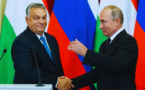
A leaked transcript of a phone call between Hungarian Prime Minister Viktor Orban and Russian President Vladimir Putin shows Orban offering extensive support to Moscow and describing himself as ready to help “in any way” in relation to the war in Ukraine
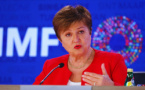
The head of the International Monetary Fund (IMF), Kristalina Georgieva, has warned that the ongoing war in the Middle East is expected to push inflation higher while simultaneously slowing global economic growth
A leaked transcript of a phone call between Hungarian Prime Minister Viktor Orban and Russian President Vladimir Putin shows Orban offering extensive support to Moscow and describing himself as ready to help “in any way” in relation to the war in Ukraine
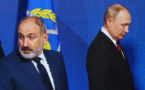
Vladimir Putin stated that Armenia cannot realistically pursue membership in the European Union while remaining part of the Moscow-led Eurasian Economic Union, arguing that the two frameworks are fundamentally incompatible

A Russian An-26 military transport aircraft has crashed in Crimea, killing all 29 people on board, according to information released by the country’s defense ministry and cited by Russian state media
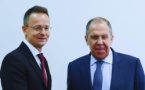
Audio recordings allegedly capturing conversations between Russian Foreign Minister Sergei Lavrov and Hungary’s Foreign Minister Péter Szijjártó have been leaked to the media
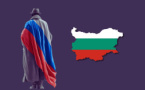
Ukrainian authorities have reported the existence of a recruitment network operating across parts of Eastern Europe, including Bulgaria, which is allegedly involved in organizing sabotage and destabilization activities in support of Russian interests
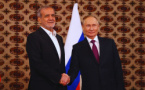
Iranian President Masoud Pezeshkian has publicly expressed gratitude to Russia and President Vladimir Putin, saying Moscow’s political backing and statements of support provide encouragement to Tehran during the ongoing conflict

Aniventure Comic Con Returns to Bulgaria with Star Guest Christopher Judge!
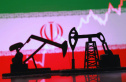
Global Fuel Shock: Oil Jumps Over 40% Since Iran War Began