€7.3 Billion on the Table: Is Bulgarian Business Ready for Europe’s Defense Boom?
Europe is undergoing a fundamental shift in how it approaches defense, moving beyond increased spending toward the creation of an entirely new industrial ecosystem
HOT: » Which party would you vote for (if you could) in the upcoming snap vote in Bulgaria on April 19?
 Send to Kindle
The European Council in Brussels focused on the creation of a European air and missile defense system, a key topic discussed by EU leaders. European Council President António Costa emphasized the importance of strengthening defense capabilities, stating that they must be developed with attention to national differences among member states. The meeting was held as an “informal retreat” at the Egmont Palace instead of the usual Europa building, marking the first time an EU summit was entirely dedicated to defense.
The initiative for a joint European air defense system comes from Polish Prime Minister Donald Tusk and Greek Prime Minister Kyriakos Mitsotakis. Poland, which currently holds the rotating presidency of the EU Council, also proposed the "eastern shield" – a plan to reinforce the EU’s eastern borders in Poland, the Baltics, and Finland. Another key issue discussed was the increase in defense spending, which has risen by 30 percent between 2021 and 2024. The 23 EU member states that are also NATO members now spend an average of 2 percent of their GDP on defense, and this trend is expected to continue. The European Commission is reviewing current rules to allow more national defense spending.
Donald Tusk pointed out that Poland is the EU’s biggest defense spender, allocating 5 percent of its GDP to defense, a commitment that had already reached 4 percent before increased spending became a widely discussed issue. European Commission President Ursula von der Leyen stressed that the threats Europe faces—such as the war in Ukraine, cyberattacks, and attacks on critical infrastructure—are growing and require a strong, unified response. She argued that more public funding is needed to support the European defense industry and promised to explore all possible flexibilities within the Stability and Growth Pact to allow for increased defense investment.
Von der Leyen also highlighted the need for better defense coordination, including joint procurement, which would reduce costs and provide the EU with strategic advantages. Simplifying and revising public procurement rules could make the process more efficient. Additionally, she underscored the importance of innovation in defense and suggested that the Ukrainian defense industry could serve as an example. She praised Ukraine’s rapid development of drones, describing them as cheaper, faster, and smarter, and suggested that the European defense sector could learn valuable lessons from Ukraine’s battlefield experience.
Von der Leyen emphasized that the billions of euros in taxpayer money being spent on defense should yield returns in the form of technological advancements and job creation within Europe. In response to a journalist's question, she noted that while the European defense industry can be funded through national budgets, which are constrained by the Stability and Growth Pact, extraordinary measures could be used in emergencies. She argued that the current situation warrants such flexibility. The European Commission is set to present a White Paper on defense by March, and the discussions from this summit will inform decisions expected in June.
Transatlantic relations were also on the agenda. Von der Leyen stated that the EU is prepared for a firm yet constructive dialogue with the United States but remains ready for potential challenges. She noted that recently imposed US tariffs on Canada and Mexico—though temporarily postponed—have increased business costs and negatively affected consumers and workers. While the EU aims for productive discussions, it remains committed to its climate change goals.
Costa reaffirmed the EU’s commitment to international principles, stating that the bloc upholds the UN Charter and the sovereignty, territorial integrity, and inviolability of borders. He reiterated EU support for Ukraine and made clear that any challenge to the territorial integrity of an EU country would be met with a firm response. Addressing a question about Greenland, Costa stated that the EU fully supports Denmark in maintaining sovereignty over the world’s largest island, rejecting the idea floated by former US President Donald Trump that Greenland should come under American control.
For the first time since Brexit, a British prime minister participated in the European Council. Labour leader Keir Starmer attended the summit at the invitation of Donald Tusk, as Poland assumed the EU Council presidency on January 1.
Europe is undergoing a fundamental shift in how it approaches defense, moving beyond increased spending toward the creation of an entirely new industrial ecosystem
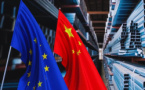
The European Union has agreed on a major overhaul of its steel import regime, effectively doubling tariffs in an effort to protect domestic producers from what officials describe as a growing wave of low-cost foreign, particularly Chinese, exports
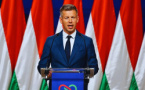
Hungary’s incoming prime minister Péter Magyar has signaled that his government will not obstruct the European Union’s €90 billion loan for Ukraine, while making clear that Budapest itself will not participate in the mechanism
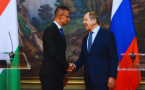
A group of Members of the European Parliament has raised concerns over the potential leakage of confidential EU information to Russia, urging stronger safeguards within the European Parliament
The European Public Prosecutor’s Office (EPPO) has carried out a series of coordinated investigative actions across several countries, including Bulgaria and Romania, as part of a probe into suspected large-scale fraud involving EU funds
The caretaker government has approved a decision endorsing the Partnership Agreement between the European Union and its Member States and the Mercosur bloc
The European Union has agreed on a major overhaul of its steel import regime, effectively doubling tariffs in an effort to protect domestic producers from what officials describe as a growing wave of low-cost foreign, particularly Chinese, exports

The introduction of the euro in Bulgaria has so far produced only a limited and largely one-off effect on consumer prices, according to an analysis by the European Central Bank
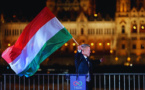
Viktor Orban’s long hold on power has come to an abrupt end after a decisive electoral victory by Péter Magyar, whose Tisza party is projected to secure a commanding parliamentary majority
NEW POLL: HUNGARIANS UNITED ON NEED FOR A ‘DIFFERENT’ RELATIONSHIP WITH THE EU, BUT DIVERGENCES REMAIN ON UKRAINE
A group of Members of the European Parliament has raised concerns over the potential leakage of confidential EU information to Russia, urging stronger safeguards within the European Parliament
The European Public Prosecutor’s Office (EPPO) has carried out a series of coordinated investigative actions across several countries, including Bulgaria and Romania, as part of a probe into suspected large-scale fraud involving EU funds

Aniventure Comic Con Returns to Bulgaria with Star Guest Christopher Judge!
Global Fuel Shock: Oil Jumps Over 40% Since Iran War Began