Hungarians Agree On Need For A “Different” EU Relationship, But Split On Ukraine Stance
NEW POLL: HUNGARIANS UNITED ON NEED FOR A ‘DIFFERENT’ RELATIONSHIP WITH THE EU, BUT DIVERGENCES REMAIN ON UKRAINE
HOT: » Which party would you vote for (if you could) in the upcoming snap vote in Bulgaria on April 19?
 Send to Kindle
Vladimir Putin conveyed to Viktor Orban that he would not accept any terms for peace in Ukraine other than his own. After three hours of talks in the Kremlin, Hungarian Prime Minister Viktor Orban highlighted the significant gap between Ukraine's and Russia's visions for ending the war. This meeting followed Orban's visit to Kyiv, where he proposed a temporary truce to expedite peace talks, a proposal Ukraine rejected.
Orban's visit to Moscow drew disapproval from European institutions and member states, viewing it as a threat to EU unity over the war in Ukraine. European Council President Charles Michel and European Commission President Ursula von der Leyen emphasized that Orban had no mandate from the EU and spoke only on his behalf. Ursula von der Leyen expressed on social media that appeasement would not stop Putin, advocating instead for unity and determination to achieve a complete, just, and lasting peace in Ukraine.
The Russian president, after the talks, reiterated that the conflict could only end on Russian terms, requiring the complete withdrawal of Ukrainian troops from the Donetsk and Luhansk People's Republics, and the Zaporizhzhia and Kherson regions. He mentioned other conditions, suggesting these would be discussed in detailed joint work. Putin stressed that only the Russian initiative could halt hostilities and initiate negotiations, viewing it as an opportunity for a full and final end to the conflict, rather than a chance for Kyiv to regroup and rearm.
Orban defended his visit, describing Hungary's EU presidency, which began on July 1, as a "peaceful mission." He portrayed the talks with Putin as a preliminary step to restore dialogue, acknowledging that many more steps were needed to end the war. He argued that peace could not be achieved from a "comfortable armchair in Brussels" and that active efforts were required, despite the rotating EU presidency lacking a mandate to negotiate on the EU's behalf.
During a press conference with Putin, Orban stated that Hungary was the only European country capable of talking to the Kremlin. He acknowledged the disparity between Ukraine's and Russia's visions for ending the conflict, noting his proposal for a temporary truce was met with silence in Kyiv. Unlike the Kremlin, President Volodymyr Zelensky insisted on Russia's withdrawal from occupied Ukrainian territories before any negotiations on ending the war could begin, a stance supported by Kyiv's Western allies.
The Ukrainian Foreign Ministry also criticized Orban's visit, stating it violated an EU-adopted principle that negotiations on Ukraine should include Ukrainian participation. Kyiv noted that Orban's visit was not mentioned during his talks with Zelensky on Tuesday.
Swedish Prime Minister Ulf Kristersson condemned Orban's visit as "irresponsible and disloyal," arguing it sent the wrong message to the world and insulted the Ukrainian people. German Chancellor Olaf Scholz, while using more moderate language, reiterated that Orban represented only Hungary, not Europe, in the Kremlin, and affirmed the EU's steadfast support for Ukraine.
A European Commission spokesperson emphasized that EU unity, rather than private initiatives, was crucial for achieving peace. The spokesperson noted that EU efforts were currently focused on organizing a second peace conference for Ukraine and that Orban's visit was not coordinated with Brussels. This visit "seriously calls into question" the planned traditional visit of EU commissioners to the country holding the rotating presidency to discuss legislative priorities, scheduled for early September. According to the spokesperson, this indicated that some actions were "not in the right direction."
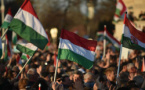
NEW POLL: HUNGARIANS UNITED ON NEED FOR A ‘DIFFERENT’ RELATIONSHIP WITH THE EU, BUT DIVERGENCES REMAIN ON UKRAINE
The Kremlin has announced that Russian President Vladimir Putin has ordered an “Easter ceasefire” in the war in Ukraine, declaring a temporary halt in hostilities lasting around 36 hours
A group of Members of the European Parliament has raised concerns over the potential leakage of confidential EU information to Russia, urging stronger safeguards within the European Parliament
US Vice President JD Vance launched a sharp attack on the European Union during a visit to Budapest, accusing Brussels of interfering in Hungary’s election just days before a closely contested vote that could reshape the country’s political landscape
A leaked transcript of a phone call between Hungarian Prime Minister Viktor Orban and Russian President Vladimir Putin shows Orban offering extensive support to Moscow and describing himself as ready to help “in any way” in relation to the war in Ukraine
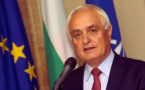
Acting Defense Minister Atanas Zapryanov has stated that Bulgaria is not taking on any military obligations under the ten-year security cooperation agreement with Ukraine
A leaked transcript of a phone call between Hungarian Prime Minister Viktor Orban and Russian President Vladimir Putin shows Orban offering extensive support to Moscow and describing himself as ready to help “in any way” in relation to the war in Ukraine
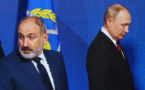
Vladimir Putin stated that Armenia cannot realistically pursue membership in the European Union while remaining part of the Moscow-led Eurasian Economic Union, arguing that the two frameworks are fundamentally incompatible
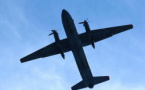
A Russian An-26 military transport aircraft has crashed in Crimea, killing all 29 people on board, according to information released by the country’s defense ministry and cited by Russian state media
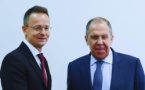
Audio recordings allegedly capturing conversations between Russian Foreign Minister Sergei Lavrov and Hungary’s Foreign Minister Péter Szijjártó have been leaked to the media
Ukrainian authorities have reported the existence of a recruitment network operating across parts of Eastern Europe, including Bulgaria, which is allegedly involved in organizing sabotage and destabilization activities in support of Russian interests
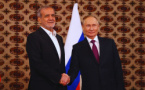
Iranian President Masoud Pezeshkian has publicly expressed gratitude to Russia and President Vladimir Putin, saying Moscow’s political backing and statements of support provide encouragement to Tehran during the ongoing conflict

Aniventure Comic Con Returns to Bulgaria with Star Guest Christopher Judge!
Global Fuel Shock: Oil Jumps Over 40% Since Iran War Began