Bulgaria: Flu Epidemic Over, COVID and Scarlet Fever Risks Remain
The flu epidemic in Bulgaria has already passed its peak, according to Prof. Todor Kantardzhiev, former director of the National Center for Infectious and Parasitic Diseases
HOT: » Which party would you vote for (if you could) in the upcoming snap vote in Bulgaria on April 19?
 Send to Kindle
 Pixabay
It has long been known by scientists that many bacteria and viruses cause illnesses by first attaching themselves to sugar molecules on the cell surfaces lining mammals' sinuses and throats, including humans. For example, viral particles can cling to these molecules--also known as sialic acids, or SAs--in a manner similar to that of keys inserted into locks.
Now, a new study in infant mice shows that keeping virus particles from attaching to SAs limits more than just the entry of influenza A viral infections, but also hinders their exit (shedding) and transmission from mouse to mouse. Such infections are the main cause of the seasonal flu that kills more than 36,000 Americans annually. While vaccines to guard against infection and symptom treatments exist, they are not foolproof, scientists say, and more strategies are needed to prevent infection from spreading.
Led by researchers from NYU Grossman School of Medicine, the study team stripped away, or desialylated, SA receptors by placing directly into mouse nasal cavities a neuraminidase enzyme known to loosen the acids' ability to remain attached to cell surfaces. The infant mice were then infected with influenza A. Results showed treatment with the neuraminidase enzyme dramatically cut mouse-to-mouse transmission rates by more than half (from 51% to 100% ) in a half-dozen influenza strains tested.
Publishing in the American Society for Microbiology journal mBio online Jan.11, the work was conducted in infant mice, which unlike those even a few months older or adult mice, were found by the research team to have many sialic acids in the upper portion of their respiratory tract. Specifically, the team blocked two SAs, technically called alpha-2,3 SA and alpha-2,6 SA receptors (the locks). These are known to be widely present in the human respiratory tract, which researchers say makes infant mice a strong comparable model for studying the spread of the infectious disease in children, who are also recognized as important "drivers" of flu transmission among people.
"If further experiments in humans prove successful, desialylating neuraminidase enzymes may prevent the flu from spreading," said lead study investigator and infectious disease specialist Mila Ortigoza, MD. PhD.
"While current approaches with vaccines and treatments target the virus, ours is the first study to demonstrate that treating the host, either infected mice or potentially infected humans, to prevent them from transmitting the virus to another host could be another effective strategy for combating pervasive infectious diseases," said Ortigoza, who is also an assistant professor in the Departments of Medicine and Microbiology at NYU Langone.
Ortigoza cautions that extensive clinical research is needed before neuraminidases can be considered for approval as a treatment in humans. She says the team already has plans for more experiments to examine why infants are more susceptible to infection from respiratory viruses and whether blocking sialic acids in children can also prevent the spread of influenza.
Funding support for this study was provided by National Institutes of Health grants P30CA016087, S10OD021747, K08AI141759, and R01AI150893. Ansun Biopharma of San Diego, Calif., provided the experimental neuraminidase drug used in these experiments but was otherwise not involved in the study.
In addition to Ortigoza, other NYU Langone researchers involved in this study are Catherina Mobini; Hedy Rocha; Stacey Bartlett, PhD; Cynthia Loomis, MD, PhD; and Jeffrey Weiser, MD. Weiser is the Jan T. Vilcek Professor of Molecular Pathogenesis in the Department of Microbiology at NYU Langone Health and chair of the department.
(ANI)

The flu epidemic in Bulgaria has already passed its peak, according to Prof. Todor Kantardzhiev, former director of the National Center for Infectious and Parasitic Diseases

Bulgaria is currently experiencing a flu season that is spreading more moderately than initially anticipated, according to an analysis by Chief State Health Inspector Assoc. Prof. Angel Kunchev,

The Regional Flu Response Task Force in Burgas is meeting today to determine whether the flu epidemic measures in the region should be extended.

A flu epidemic has officially been declared in the Plovdiv region as of today, with the impact already sharply felt in schools. Due to the rapid spread of infections, students are switching to online learning, a measure that will remain in force until Feb

In Bulgaria, four regions are currently in a pre-epidemic situation for influenza, according to Prof. Iva Hristova, director of the National Center for Communicable and Parasitic Diseases (NCPD)

The Regional Health Inspectorate in Plovdiv has recommended declaring a flu epidemic starting Wednesday, January 28, following a sharp rise in reported cases. Dr. Argir Argirov, director of the inspection

Health authorities in Bulgaria report a total of 101 confirmed measles cases across the country, according to data from the Ministry of Health

The Bulgarian Medical Association has called for an urgent overhaul of healthcare funding, insisting on a 25 percent increase in the prices of clinical pathways and all medical services, alongside a revision of the user fee for hospital stays

Health authorities report that measles infections in Bulgaria have surpassed 70 confirmed cases, with a total of 73 registered as of April 3

Health authorities have reported a total of 66 confirmed measles cases in Bulgaria, with the first infection now recorded in Sofia, according to data published on the Ministry of Health’s epidemic monitoring platform.

All emergency medical centers across Bulgaria have now been equipped with the opioid antidote Naloxone, a development confirmed by the Ministry of Health. The drug is used in cases of overdose and is considered critical for saving lives in emergencies inv
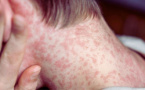
A total of 43 measles infections have been recorded across three regions in Bulgaria, according to data released by the Ministry of Health on March 30

Aniventure Comic Con Returns to Bulgaria with Star Guest Christopher Judge!

Global Fuel Shock: Oil Jumps Over 40% Since Iran War Began