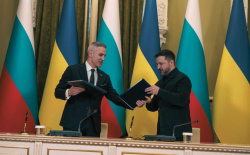
€7.3 Billion on the Table: Is Bulgarian Business Ready for Europe’s Defense Boom?
Europe is undergoing a fundamental shift in how it approaches defense, moving beyond increased spending toward the creation of an entirely new industrial ecosystem
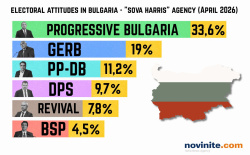
HOT: » Which party would you vote for (if you could) in the upcoming snap vote in Bulgaria on April 19?
 Send to Kindle
 One of the most notable individual asset transactions completed in 2012 was the sale and lease back of the Credit Suisse global HQ in Zurich to Norway’s NBIM, according to Colliers. Photo by Bloomberg agency
Approximately EUR 56.7 B was invested in European office property last year, down by some 7% on the previous year, according to data of realtor Colliers International.
One of the most notable individual asset transactions completed was the sale and lease back of the Credit Suisse global HQ in Zurich to Norway’s NBIM, which followed the sale of the Credit Suisse London HQ to the Qatar Investment Authority earlier in the year.
Economic stagnation in Europe continued to hold back rental growth, although regional disparities remain well apparent, the experts from the real estate agency commented.
Rental increase was registered in Dusseldorf and Munich, as the vacancy rate in the German office market reached a 10 year low, driven by above average take-up.
Noticeable increases were seen in Moscow, Oslo and Lyon.
Declines continue to be prevalent in those markets most directly exposed to the effects of the euro crisis such as Madrid, Lisbon and also in Geneva.
Colliers experts forecast that while further rental appreciation in prime lease rates is still expected in some German cities and Oslo, reductions cannot be ruled out in cities hardest hit by the economic crisis or dealing with quick supply growth such as Warsaw.
Rental values are expected to remain broadly flat in the majority of markets, but only for the best buildings and locations, while pressure on rents for secondary space is likely to remain steady or intensify.

Europe is undergoing a fundamental shift in how it approaches defense, moving beyond increased spending toward the creation of an entirely new industrial ecosystem

The government has decided to withdraw all three Bulgarian nominations for the position of European Prosecutor, effectively restarting the procedure after identifying serious flaws in the initial selection process
A recently revised German military service framework has triggered public debate after it emerged that it places new travel-related obligations on men aged between 17 and 45

The United States is expanding shipments of liquefied natural gas to Southeast Europe and Ukraine via Greece, according to remarks by the US Ambassador to Athens, Kimberly Guilfoyle
The European Public Prosecutor’s Office has formally requested that the immunity of 11 Greek members of parliament be lifted as part of an ongoing investigation into alleged misuse of EU agricultural subsidies

European governments are rolling out a range of measures aimed at easing the pressure of rising fuel prices, with approaches varying from tax cuts to direct market intervention.

Housing prices in Bulgaria have surged by 157% between 2015 and the end of 2025

The Bulgarian real estate market is showing signs of cooling in early 2026, with experts reporting a slowdown in transactions and a shift toward more balanced conditions between buyers and sellers

In 2026 the Bulgarian residential market is shaped less by size and more by adaptability.
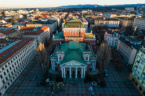
Bulgaria’s entry into the Eurozone marks a defining moment for the country’s real estate sector.

The housing market in Bulgaria is undergoing notable shifts, with buyers increasingly prioritizing location and accessibility over sheer size.

Property values in Sofia have surged by approximately €500 per square metre over the past year, according to data from one of Bulgaria’s largest real estate agencies. Across the country’s main cities, housing costs climbed by 20% in the final quarter of 2

Aniventure Comic Con Returns to Bulgaria with Star Guest Christopher Judge!
Global Fuel Shock: Oil Jumps Over 40% Since Iran War Began