Bulgaria Sets New Business Trip Allowances Ahead of Euro Adoption
Bulgaria plans to adjust daily allowances for business trips ahead of the euro adoption on January 1, 2026
Business | November 24, 2025, Monday // 15:00
HOT: » Which party would you vote for (if you could) in the upcoming snap vote in Bulgaria on April 19?
 Send to Kindle
 Photo by dariknews.bg
The European Commission approved Friday the requests of Bulgaria, the Czech Republic and Romania for a continued free allocation of EU Emissions Trading System (EU ETS) allowances to their power sectors beyond 2012.
According to a statement of the EC press office, the Commission has taken these decisions under provisions which allow certain Member States exemptions from the general rule that, from 2013 onwards, the power sector must buy all its allowances at auctions or in the market.
The EC has already approved applications from Cyprus, Estonia and Lithuania.
Under the revised EU ETS Directive1 adopted in 2009, 10 Member States were given the possibility to request temporary exemptions from the rule that full auctioning of EU ETS allowances will apply from 2013 in the power sector.
In September 2011 eight of these Member States submitted applications for temporary free allocations.
The Commission is obliged to assess these in accordance with the rules and conditions laid down in the Directive.
In total, more than 268 million allowances will be allocated for free to power plants in these six countries in the period 2013 to 2019.
The number will be reduced each year, reaching zero in 2020.
The Member States will put in place strict monitoring and enforcement rules to ensure that the economic value of free allowances is at least mirrored, if not exceeded, by a corresponding amount of investments in modernizing their electricity generation.
The decisions are without prejudice to a forthcoming state aid assessment by the Commission.
If the permission had not been granted, from 2013 onwards all Bulgarian power plants powered by coal, gas and other fossil fuels would have been under an obligation to buy all EU ETS allowances at auctions, which would have had a substantial impact on electricity prices.

Bulgaria plans to adjust daily allowances for business trips ahead of the euro adoption on January 1, 2026

In a significant affirmation of Bulgaria's path towards Eurozone accession, European Commissioner for Economy Paolo Gentiloni has confirmed the European Commission's support for Bulgaria's admission to the Eurozone in 2025

In response to the ongoing war between Russia and Ukraine, the European Commission has greenlit a significant aid package for Bulgarian farmers, totaling approximately 86.9 million euros

The European Commission has unveiled plans for significant tariff hikes on grain imports from Russia and Belarus

In a bid to bolster border management and migration control, the European Commission (EC) has announced its decision to allocate 85 million euros to Bulgaria and Romania

European Commission President Ursula von der Leyen has proposed harnessing windfall profits from frozen Russian assets to jointly purchase military equipment for Ukraine
Bulgaria’s fuel market has recorded a sharp upward shift since the outbreak of the war in Iran, with diesel and petrol prices rising significantly across the country
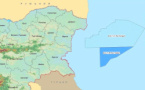
The second exploration drilling in the Krum-1 area of the Khan Asparuh block in Bulgaria’s Black Sea has also failed to identify commercially significant natural gas deposits, according to OMV Petrom

The Ombudswoman institution has voiced strong opposition to the proposed increase in heating prices in Sofia, which is expected to approach nearly 30 percent
The Energy and Water Regulatory Commission (EWRC) in Bulgaria has set the price of natural gas for April 2026 at 34.27 euros per megawatt-hour, excluding access, transmission, excise duties and VAT
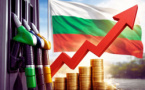
Fuel prices in Bulgaria have recorded a sharp upward movement over the past month, with diesel showing the most significant increase, according to data from the Fuelo platform
Bulgargaz has defended its previously submitted proposal for a 5% rise in natural gas prices for April before the Energy and Water Regulatory Commission, with CEO Veselin Sinabov stressing that there is currently no justification for any further increases

Aniventure Comic Con Returns to Bulgaria with Star Guest Christopher Judge!

Global Fuel Shock: Oil Jumps Over 40% Since Iran War Began