Bulgaria's Disaster '2 in 1' Elections. Or Why I Wanna Go Vote in Tunisia!
- Tweet
 Send to Kindle

It is ironic that on the day Tunisia – the cradle of the 2011 "Arab Spring" revolutions – held its first ever free and democratic elections, Bulgaria demonstrated that it's losing touch with proper democratic mechanisms.
That's is right: the people of Bulgaria, the proud new EU member state, a success story of post-communist transition (at least politically, not so much economically...) no longer cherish the right to vote in free and democratic elections – a right that the people of Tunisia are just discovering, and certainly seem poised to make a better use of (in spite of Western fears about what's going to happen when moderate Islamists from the Ennahda party come to power through the ballot box).
With no threat of "Islamists" coming to power in Bulgaria, Bulgaria's October 23 presidential and local elections were a disaster on too many levels.
And it's highly perplexing to me that the feedback issued by the international observers from the Organization for Security and Cooperation of Europe and the Council of Europe – were so positive.
(It might be because any true and fair criticism would anyway get drowned in the diplomatic-bureaucratic language of these intergovernmental organizations.)
But what really happened with the Bulgarian presidential and local elections on October 23, 2011, and the campaign preceding them, and why were they a disaster?
First, the holding of "2 in 1" elections – i.e. the 2011 votes for President and local authorities simultaneously, which was supposed to be so awesome because it saved the budget BGN 16 M, has proven to be a terrible idea: elections in Bulgaria are not usually highly organized, and the simultaneous vote turned out to be too much for Bulgarian electoral authorities, the individual polling station commissions (note the TOTAL MESS in Sofia!), and the ordinary people.
Not only that – the "2 in 1" election campaign completely obliterated any real public debate that might have otherwise (even then – only a 15% chance for it) been held on specific issues that depend on the Bulgarian President or the local authorities. Now there wasn't enough attention paid to either!
Second, Bulgaria has achieved new heights in vote-buying and vote-selling activities - which are now turning into distinguished career fields.
"Hey, kid, what does you father do?" "Oh, he's a vote-buyer!" – This will soon be a normal conversation in Bulgaria sounding as prestigious in the local context as is "He's on Wall Street" Oops – probably scratch that and go "Occupy Wall Street" if you care! People in Bulgaria – Bulgarians, Roma, Turks – DON'T care.
Vote selling is big, either. Actually, many of those selling their votes don't even fathom the meaning of voting. Dear Lord, have mercy on this land!
The situation with the Roma voters' vote-selling keenness is especially horrifying (- but that is another topic warranting a look into a myriad of factors!).
Third, welcome to the best manipulated media environment west of Minsk! The Bulgarian media don't have integrity. The individual journalists don't. And even if they did – not to worry! – the murky business groups owning them will take care of that!
In Bulgarian media, it doesn't just boil down to treating political campaign advertising as detergent commercials any more, that is a cash source.
There are entire media "groupings" specially designed to manipulate the mind of the already confused Bulgarian citizens most of whom 20 years ago jumped into the Age of Globalization right from their communist agrarian collectives, and still seem fairly lost in the global environment, or their Western-pop-culture-/-Internet-addict kids.
Even a dead simple thing – such as putting a small tick making it clear that an article is a paid publication – seems toooooo much for the Bulgarian politicians and the local-type media conglomerates serving – or rather – servicing them.
That goes for all political parties in Bulgaria: the ruling GERB party of Prime Minister Boyko Borisov, the ethnic Turkish party DPS of Ahmed Dogan, the Bulgarian Socialist Party, the supposedly "nationalist" party Ataka of Volen Siderov, plus a whole bunch of marginal political entities who somehow succeed in being as dirty as the bigger fish just enumerated.
Oh, well. Who are the Bulgarian politicians and the oligarchy lurking behind them deceiving, anyway?
Sure, the misguided average Bulgarian voter is the first victim. Not that people in Bulgaria are that stupid to believe them – it's just that realizing you got no alternatives will make you as apathetic as you can get.
But the deliberate – or just misguided - campaign of the political class in Bulgaria (I actually dare not imagine they are that smart to be that deliberate) and the oligarchy it is serving, which are designed to wipe out any real public debate on actual issues as well as their unwillingness to be held accountable for anything, and their desire to blur free will and any appreciation for the great moral ideals of liberal democracy – will come back biting them.
Because as they are working – deliberately or not – against the creation of a vibrant free society with high moral values, with appreciation and protection of democracy, with a cult for free and professional journalism and media outlets with high integrity – the results of their actions will eventually leave them without a state, nation, country to be the oligarchy and ruling class of.
It's as simple as that, and that's more and more likely to happen sooner rather than later.
I loved a headline in a prominent American political magazine in the late 1990s about NATO, US foreign policy, and American politics, around the events of the 1999 Kosovo crisis, that read, "In good faith and deep shit!"
In our case in Bulgaria, we only got the second half of that sentence. The first round of the 2011 Bulgarian presidential and local elections that were just held only demonstrated that we don't have a single politician with even the remote pretense to profess any "good faith".
It's like Borisov, Stanishev, Parvanov, Dogan, Siderov and co don't even get any more the need to dress dirty political business into lofty ideals to sell to the public – a great tool of Western democracy – which, come to think of it when you've already lost it, as we have in Bulgaria – is not that bad, actually.
Illusions are bad but we're learning in Bulgaria that it's much, much worse when you no more have any.
So I am actually getting to envy the people of Tunisia. Even if they end up electing "islamists" who will roll back the democratic reforms (even though this nightmarish scenario for the West probably won't come true), at least their guys will have some kind of a "moral compass", a set of values even if they are based on Sharia law. Our political parties in Bulgaria don't have even that.
Funny like that. And even more ironic: Bulgaria's first even democratically elected President, Zhelyu Zhelev, was an observer at Tunisia's first democratic elections as a Special Envoy for Middle East democratization of the Bulgarian Foreign Minister Nikolay Mladenov.
And the Bulgarian Foreign Ministry says we – again – a success story of post-communist transition to democracy – got a lot of expertise to share with the Arab Spring nations when it comes to democratization, holding free elections, basic democratic process. Do we? Really? Really??
Frankly, Dr. Zhelev should've been an observer at Bulgaria's elections. Or the Bulgarian voters should've been allowed to cast their votes in Tunisia where the electoral authorities are not a mess, the politicians at least have some sense of direction, and the people have fervor about making their votes count by filling their ballot boxes with their free will!
The Bulgarian people probably had a bit of that fervor when Dr. Zhelev became the first democratically elected President of his country in 1992. 20 years later there's none of that left in Bulgaria.
Note: You probably noticed I didn't even mention the presidential candidates - Rosen Plevneliev, Ivaylo Kalfin, Meglena Kuneva, etc, or some of the mayoral candidates. They didn't even fit this article about the big picture because they are too much out of it. In addition to giving you an explanation, I actually added this note with their full names for search engine optimization purposes because their names at least matter for that.
Caught in the Middle: Europe and the Iran Crisis
Nobody asked Europe whether it wanted this war. The US and Israel acted alone on February 28th, and the continent woke up to a crisis it had no hand in starting but now has no choice but to navigate.
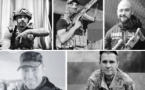
Their Names Must Not Be Forgotten: Bulgarians Who Fell in Ukraine
When Russia launched its full-scale invasion of Ukraine on February 24, 2022, it did not count on one thing: that among the defenders standing in its way would be Bulgarians.
The Caretaker Republic: How Bulgaria Learned to Govern Without Governing
Bulgaria has a constitution, a parliament, and a president. What it has struggled to maintain, with remarkable consistency over the past decade, is an actual functioning government. Since 2021 alone, the country has cycled through five caretaker cabinets,

More Than a Budget Crisis: Bulgaria's Gen-Z Demands a Political Reckoning
On the evening of December 1, 2025, Bulgaria witnessed its most significant popular mobilization since the 1990s

How many Times were Diplomatic Relations between Russia and Bulgaria Severed
If we look at history, there are not many cases in which relations between Bulgaria and Russia at the state level were as bad as they are at the moment.

Boycott of Moscow's Victory Day Parade Helps New Iron Curtain Fall
The term “Iron Curtain” was not coined by Winston Churchill, but it was he who turned it into one of the symbols of the latter part of the twentieth century by using it in his famous Fulton speech of 1946.