Ex-Sofia District Attorney Elected Sofia City Prosecutor
Bulgaria's Supreme Judicial Council elected Hristo Dinev as the new Sofia City Prosecutor.
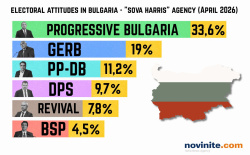
HOT: » Which party would you vote for (if you could) in the upcoming snap vote in Bulgaria on April 19?
 Send to Kindle
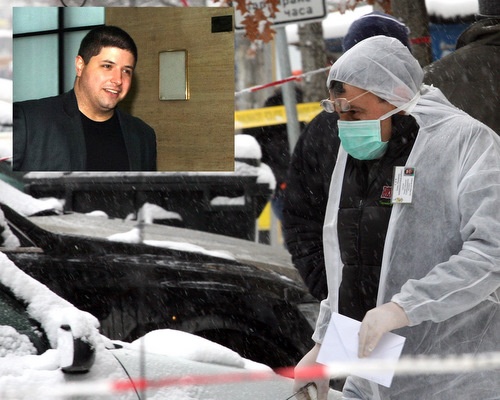 Tsankov, who in the past has been a radio anchor, was most recently known for the articles he published in tabloids disclosing details of the adventurous lives of top figures in the underground world. Photo by BGNES
euractiv.com
A controversial journalist was shot dead in the centre of Sofia yesterday (5 January). The brazen act took place just 50 metres from the police headquarters and in close proximity to the Palace of Justice.
Bobi Tsankov, known as the "chronicle writer of the mafia" and against whom several lawsuits for embezzlement had been filed, was shot dead at noon following an exchange of shots pitting two people against a group of three.
Two of the protagonists were wounded and taken to hospital, according to Dnevnik, EurActiv's partner publication in Bulgaria.
Bulgarian Prime Minister Boyko Borissov was reportedly just a few hundred metres away when the shooting began.
Tsankov, who in the past has been a radio anchor, was most recently known for the articles he published in tabloids disclosing details of the adventurous lives of top figures in the underground world.
His murder is reminiscent of the recent killing of writer Georgi Stoev, who used to call himself "the writer of the mafia" and whose novels enjoyed considerable public success. Stoev was shot dead in front of a Sofia hotel in April 2008, also at noon.
High-profile murders are emblematic of Bulgaria's transition from communist rule. In total, more than 100 figures from the underground world or controversial businessmen have been murdered since 1995. As a rule, the culprits tend to remain anonymous.
According to some analysts, organised crime in Bulgaria was boosted by the embargo on the former Yugoslavia put in place by the West in the mid-1990s, which gave criminals the opportunity to engage in large-scale smuggling.
Others see the influence of the powerful Russian mafia as the main factor in the development of organised crime in a country which had never had such "traditions" before. Many Bulgarian 'oligarchs' are believed to be in fact the managers of Russian 'dirty money'.
EU loses key 'stick' to pressure Bulgaria
Bulgaria has repeatedly come under pressure from the European Commission to crack down on organised crime and corruption.
But Brussels can no longer apply such pressure. A safeguard clause allowing the EU to refuse to recognise court decisions was due to expire on 1 January 2010, three years after the country's accession to the EU.
Although a 'Cooperation and Verification Mechanism' (CVM) still remains in place to accompany Bulgaria's accession, the mechanism will soon become irrelevant without the biting safeguard clause, local media note.
Svetoslav Terziev, a columnist in the daily Sega, writes that European Commission President José Manuel Barroso has been forced to commend Bulgaria's "progress" in dealing with corruption and organised crime in order to avoid taking the blame for allowing the Balkan country to join the EU too early. This strategy also helped Barroso's re-appointment at the head of the Commission, the editorialist said.
"The change of government does not matter in Bulgaria, because the real rulers of the country are unaffected by elections," Terziev writes.

Bulgaria's Supreme Judicial Council elected Hristo Dinev as the new Sofia City Prosecutor.
Bulgaria's Supreme Administrative Court (VAS) upheld the disciplinary dismissal of former Sofia City Prosecutor Nikolay Kokinov.

Lyutvi Mestan, leader of Bulgaria's liberal, predominantly ethnic Turkish party, DPS, appeared in Court Monday to testify in the trial against the man who pointed a gas pistol at the party's former and honorary leader.

The high-profile trial against Oktay Enimehmedov, the man who shocked Bulgaria by pointing a gas pistol at key politician Ahmed Dogan earlier in 2013, misfired once again Wednesday.

The high-profile trial against Oktay Enimehmedov, the man who shocked Bulgaria by pointing a gas pistol at key politician Ahmed Dogan earlier in 2013, is scheduled to resume Wednesday after two misfires.

Bulgaria’s top judicial body has failed to elect a chief prosecutor of the capital Sofia.

Brazen Bulgarian gangs "terrorise the elderly and rob them over their life savings with increasingly aggressive phone scams nettling millions of euros," according to an AFP story.

The prospect of US President Donald Trump's moving closer to Russia has scrambled the strategy of "balancing East and West" used for decades by countries like Bulgaria, the New York Times says.

Bulgarians have benefited a lot from their EU membership, with incomes rising and Brussels overseeing politicians, according to a New York Times piece.

German businesses prefer to trade with Bulgaria rather than invest into the country, an article on DW Bulgaria's website argues.

The truth about Bulgaria and Moldova's presidential elections is "more complicated" and should not be reduced to pro-Russian candidates winning, the Economist says.

President-elect Rumen Radev "struck a chord with voters by attacking the status quo and stressing issues like national security and migration," AFP agency writes after the presidential vote on Sunday.

Aniventure Comic Con Returns to Bulgaria with Star Guest Christopher Judge!
Global Fuel Shock: Oil Jumps Over 40% Since Iran War Began