Hungarians Agree On Need For A “Different” EU Relationship, But Split On Ukraine Stance
NEW POLL: HUNGARIANS UNITED ON NEED FOR A ‘DIFFERENT’ RELATIONSHIP WITH THE EU, BUT DIVERGENCES REMAIN ON UKRAINE
HOT: » Which party would you vote for (if you could) in the upcoming snap vote in Bulgaria on April 19?
 Send to Kindle
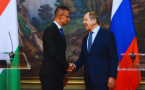
Audio recordings allegedly capturing conversations between Russian Foreign Minister Sergei Lavrov and Hungary’s Foreign Minister Péter Szijjártó have been leaked to the media, according to reporting cited by VSquare and European Pravda. The materials include transcripts of calls between the two ministers and exchanges involving other Russian officials, amid ongoing allegations that Budapest has passed information from closed EU discussions to Moscow.
One of the key conversations reportedly took place on 30 August 2024, shortly after Szijjártó returned to Budapest from St Petersburg. According to the transcripts, Lavrov contacted him within an hour of his arrival, referencing a request linked to Russian oligarch Alisher Usmanov. Lavrov reminded him that Usmanov had sought the removal of his sister, Gulbahor Ismailova, from EU sanctions lists and noted that Szijjártó had previously pledged to support the effort.
Lavrov is quoted as saying: “Look, I am calling on the request of Alisher and he just asked me to remind you that you were doing something about his sister.” Szijjártó replied: “Yeah, absolutely,” and outlined a joint initiative with Slovakia to propose her delisting at EU level. He said the proposal would be submitted the following week and placed on the agenda once a new review cycle began, adding that efforts would be made to secure her removal from the sanctions list.
Before ending the call, Szijjártó also referred to Gazprom’s new headquarters, which he had recently visited in Russia, and added: “I am always at your disposal.” The leaked audio suggests the recording may have been intercepted from Lavrov’s phone, as his voice appears clearer than Szijjártó’s in the published excerpt.
Seven months later, Ismailova was removed from the EU sanctions list, alongside Russian businessman Vyacheslav Moshe Kantor and Russian Sports Minister Mikhail Degtyarev. The report also cites a European intelligence assessment describing Szijjártó’s tone in exchanges with Lavrov as unusually compliant, with one officer suggesting the transcripts resemble intelligence-style handling if identifying names are removed.
The reporting further claims that Szijjártó’s involvement in sanctions lobbying extended beyond this case, including broader efforts to ease EU restrictions on Russian-linked individuals. A European diplomat, speaking anonymously, said Hungary and Slovakia frequently submitted extensive lists of sanctioned Russians they wanted removed, often without legal justification, framing the requests as political rather than procedural.
The same source said that during the latest sanctions renewal talks in March, both countries continued pressing for the removal of Alisher Usmanov, with negotiations lasting until the early hours of the morning before Slovakia ultimately agreed to extend the measures while keeping Usmanov and Mikhail Fridman on the list.
Previous reporting by The Washington Post has already alleged that Szijjártó regularly provided Lavrov with real-time briefings from EU meetings and updates on potential decisions. The Hungarian foreign minister has previously acknowledged that such contacts took place, arguing that EU policies on energy, industry, and security directly affect Hungary’s external relations.
Following the leak, Szijjártó responded on Facebook, stating that he sees no issue in communicating with his Russian counterpart and reiterated his criticism of the EU sanctions policy. He said he had long been aware that “foreign intelligence services – with the active cooperation of Hungarian journalists – are wiretapping” his phone calls.
He added that recent disclosures merely confirmed he says publicly the same things he says in private conversations, describing the reports as unsurprising. Szijjártó also argued that EU sanctions policy is ineffective and causes more damage to the EU than to Russia.
He stressed that Hungary will continue to oppose sanctions targeting individuals or companies considered important for the country’s energy security or for peace efforts, as well as those without what Budapest views as sufficient legal justification. He also said he regularly consults with foreign ministers from non-EU countries on sanctions policy.
Separate reports have indicated that EU institutions have increasingly excluded Hungary from sensitive negotiations, citing concerns over the potential leakage of confidential information to Russia.
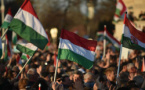
NEW POLL: HUNGARIANS UNITED ON NEED FOR A ‘DIFFERENT’ RELATIONSHIP WITH THE EU, BUT DIVERGENCES REMAIN ON UKRAINE
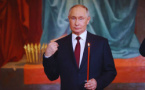
The Kremlin has announced that Russian President Vladimir Putin has ordered an “Easter ceasefire” in the war in Ukraine, declaring a temporary halt in hostilities lasting around 36 hours
A group of Members of the European Parliament has raised concerns over the potential leakage of confidential EU information to Russia, urging stronger safeguards within the European Parliament
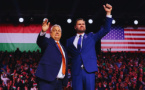
US Vice President JD Vance launched a sharp attack on the European Union during a visit to Budapest, accusing Brussels of interfering in Hungary’s election just days before a closely contested vote that could reshape the country’s political landscape
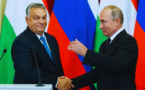
A leaked transcript of a phone call between Hungarian Prime Minister Viktor Orban and Russian President Vladimir Putin shows Orban offering extensive support to Moscow and describing himself as ready to help “in any way” in relation to the war in Ukraine
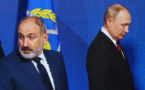
Vladimir Putin stated that Armenia cannot realistically pursue membership in the European Union while remaining part of the Moscow-led Eurasian Economic Union, arguing that the two frameworks are fundamentally incompatible
A leaked transcript of a phone call between Hungarian Prime Minister Viktor Orban and Russian President Vladimir Putin shows Orban offering extensive support to Moscow and describing himself as ready to help “in any way” in relation to the war in Ukraine
Vladimir Putin stated that Armenia cannot realistically pursue membership in the European Union while remaining part of the Moscow-led Eurasian Economic Union, arguing that the two frameworks are fundamentally incompatible
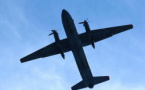
A Russian An-26 military transport aircraft has crashed in Crimea, killing all 29 people on board, according to information released by the country’s defense ministry and cited by Russian state media

Ukrainian authorities have reported the existence of a recruitment network operating across parts of Eastern Europe, including Bulgaria, which is allegedly involved in organizing sabotage and destabilization activities in support of Russian interests
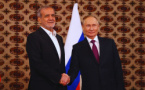
Iranian President Masoud Pezeshkian has publicly expressed gratitude to Russia and President Vladimir Putin, saying Moscow’s political backing and statements of support provide encouragement to Tehran during the ongoing conflict
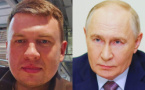
A prominent pro-Kremlin blogger, previously known for his fierce attacks on opposition figures in Russia, sharply turned against President Vladimir Putin, publishing a series of severe criticisms. Just a day after his public denunciation, he was reportedl

Aniventure Comic Con Returns to Bulgaria with Star Guest Christopher Judge!
Global Fuel Shock: Oil Jumps Over 40% Since Iran War Began