Easter Monday in Bulgaria: Tradition and Family Visits
Orthodox Easter Monday is the day following Easter Sunday and is observed across Bulgaria as part of the wider Easter celebration within the Orthodox Christian tradition
HOT: » Which party would you vote for (if you could) in the upcoming snap vote in Bulgaria on April 19?
 Send to Kindle
Average household income per person in Bulgaria grew more strongly than spending during the last quarter of 2025, according to data from the National Statistical Institute.
The quarterly total income per household member reached BGN 3,687 (€1,880), marking an increase of 9.4% compared to the same period in 2024. At the same time, average quarterly expenditure per person rose by 5.6% to BGN 3,203 (€1,635).
Salaries accounted for the largest share of total income at 58.3%, followed by pensions at 29.6%, and self-employment earnings at 7.6%. Compared to the fourth quarter of 2024, the proportion of income from salaries increased by 3.9 percentage points, while pensions’ share fell by 0.6 points.
In nominal terms, salary income climbed from BGN 1,835 (€935) to BGN 2,149 (€1,095), reflecting a 17.1% increase. Income from self-employment rose from BGN 260 (€133) to BGN 292 (€149) (up 8.4%), pensions increased from BGN 1,019 (€520) to BGN 1,090 (€555) (up 7%), while social benefits and allowances decreased from BGN 69 (€35) to BGN 56 (€29), an 18.8% drop.
On the expenditure side, the largest portion of household spending went to food and non-alcoholic beverages (29.6%), followed by taxes and social security payments (15.8%), housing (15.0%), and transport and communications (11.3%).
Spending on food and non-alcoholic beverages increased from BGN 888 (€453) to BGN 948 (€483). Alcoholic drinks and cigarettes rose from BGN 123 (€63) to BGN 139 (€71). Taxes and social security contributions went up from BGN 425 (€217) to BGN 506 (€258). Housing costs, including water, electricity, and heating, increased slightly from BGN 469 (€239) to BGN 480 (€245), and transport and communication expenses climbed from BGN 348 (€177) to BGN 363 (€185). Spending on healthcare decreased marginally from BGN 182 (€93) to BGN 181 (€92).
The data shows that household income is rising faster than spending, driven mainly by salary growth, although cost pressures continue in areas such as food, housing, and taxes.

Orthodox Easter Monday is the day following Easter Sunday and is observed across Bulgaria as part of the wider Easter celebration within the Orthodox Christian tradition

Industrial output in Bulgaria posted a modest monthly increase in February 2026, but continued to decline sharply on an annual basis, according to preliminary, seasonally adjusted data from the National Statistical Institute.
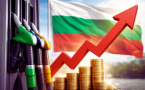
The president of the Confederation of Bulgarian Trade Unions, Plamen Dimitrov, has warned that inflation in Bulgaria is likely to exceed earlier projections, even if fuel prices begin to decline

The introduction of the euro in Bulgaria has so far produced only a limited and largely one-off effect on consumer prices, according to an analysis by the European Central Bank

Easter is the most important religious holiday in the Orthodox Christian calendar and is widely celebrated across Bulgaria. It marks the resurrection of Jesus Christ and follows the completion of Holy Week, which includes Good Friday and Holy Saturday

Holy Saturday, known in Bulgaria as Lazarus Saturday’s continuation of the Easter cycle, is a quiet but deeply symbolic day in the Orthodox Christian calendar

The Ministry of Finance has released a broad public dataset covering more than 7,000 public procurement contracts with a combined value exceeding 30 billion euros

Caretaker Finance Minister Georgi Klisurski said he expects fuel prices at gas stations to ease in the coming period, pointing to a sharp decline in international oil markets
Bulgaria’s new government borrowing for 2026 has surpassed the 1 billion euro mark following the latest successful auction of state securities, according to data cited from the Bulgarian National Bank

Bulgaria recorded only a modest and one-off increase in inflation following the adoption of the euro on January 1, with the effect estimated at between 0.3 and 0.4 percentage points

Data released by the Ministry of Finance, covering budget execution for February 2026 and preliminary estimates for March 2026, indicate a marked deterioration in Bulgaria’s fiscal position

In the 2026 edition of the Index of Economic Freedom, compiled by the Heritage Foundation, Bulgaria is placed 38th out of 176 countries, positioned between Costa Rica and Oman

Aniventure Comic Con Returns to Bulgaria with Star Guest Christopher Judge!
Global Fuel Shock: Oil Jumps Over 40% Since Iran War Began