Easter Monday in Bulgaria: Tradition and Family Visits
Orthodox Easter Monday is the day following Easter Sunday and is observed across Bulgaria as part of the wider Easter celebration within the Orthodox Christian tradition
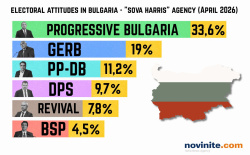
HOT: » Which party would you vote for (if you could) in the upcoming snap vote in Bulgaria on April 19?
 Send to Kindle
 Hristijan Mickoski
The accusations from the Prime Minister of North Macedonia, Hristijan Mickoski, against Bulgaria have grown increasingly contradictory and are approaching the absurd. Mickoski criticized Bulgaria for allegedly opposing the use of the Macedonian language in the so-called Community Rights Plan, a document central to North Macedonia’s EU integration process.
In reality, Bulgaria’s objections are entirely different: the plan was presented to the Macedonian public in English rather than a language accessible to citizens. Representatives of the Macedonian Bulgarian community, who received a 37-page technical document in English in early December, reported difficulties understanding the complex legal text due to language barriers and a lack of legal expertise. Georgi Tsarnomarov from the Balkan Bridge association commented that the plan does not adequately protect Macedonian Bulgarians and appears to serve as a mere formality for European institutions, effectively covering up existing issues.
Bulgaria’s Ministry of Foreign Affairs issued a statement expressing concern over Skopje’s misrepresentation of the situation, noting that these claims sharply diverge from the European consensus reached in 2022. The ministry clarified that the language in which North Macedonia implements its Community Rights Plan is an internal matter for the country and not a bilateral issue. Presenting the draft to its citizens in English is difficult to justify, especially if the plan is intended for practical implementation. The ministry reminded that the plan follows the still-pending constitutional recognition of Bulgarians in North Macedonia, a step necessary to advance EU accession negotiations. It also emphasized that Bulgaria welcomes Mickoski’s commitment to consider all recommendations from the Bulgarian community regarding the plan.
Mickoski, meanwhile, maintained that Bulgaria is challenging the plan on the false grounds that it was prepared in Macedonian. He expressed regret that Bulgaria had “missed another chance to be good neighbors” and reiterated that Brussels had been informed in advance of potential objections. Mickoski argued that the plan met all requirements, including suggestions from an Italian expert and a goodwill measure of sending the document to Bulgaria a day earlier. He stressed that since Macedonian is the official language of the country, neither he nor his ministers could issue the plan in any other language.
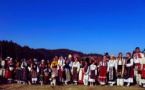
Orthodox Easter Monday is the day following Easter Sunday and is observed across Bulgaria as part of the wider Easter celebration within the Orthodox Christian tradition

Industrial output in Bulgaria posted a modest monthly increase in February 2026, but continued to decline sharply on an annual basis, according to preliminary, seasonally adjusted data from the National Statistical Institute.
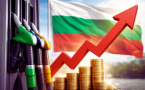
The president of the Confederation of Bulgarian Trade Unions, Plamen Dimitrov, has warned that inflation in Bulgaria is likely to exceed earlier projections, even if fuel prices begin to decline

The introduction of the euro in Bulgaria has so far produced only a limited and largely one-off effect on consumer prices, according to an analysis by the European Central Bank

Easter is the most important religious holiday in the Orthodox Christian calendar and is widely celebrated across Bulgaria. It marks the resurrection of Jesus Christ and follows the completion of Holy Week, which includes Good Friday and Holy Saturday

Holy Saturday, known in Bulgaria as Lazarus Saturday’s continuation of the Easter cycle, is a quiet but deeply symbolic day in the Orthodox Christian calendar
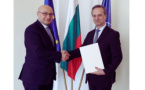
The newly appointed Ambassador of the Republic of Azerbaijan to Bulgaria, H.E. Elmar Mammadyarov, has officially begun his diplomatic mission after presenting copies of his credentials to Deputy Foreign Minister Radi Naydenov at the Ministry of Foreign Af
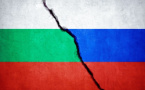
The Russian Embassy in Sofia has circulated a warning issued by the Foreign Ministry in Moscow, cautioning its citizens about what it describes as a heightened risk of detention abroad at the request of US authorities
The Bulgarian Parliament has adopted a decision establishing February 14 as the official Day of Bulgarian–Polish Friendship and Cooperation. The measure passed unanimously, receiving 165 votes in favor.

Acting Foreign Minister Nadezhda Neynski said that the diplomatic note sent by Iran to Bulgaria should be viewed as standard communication in a period of heightened international tension, stressing that it does not constitute a threat but rather a formal
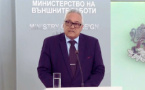
Acting Deputy Foreign Minister Marin Raykov has commented on the diplomatic note sent by Iran to Bulgaria, stressing that it should not be interpreted as a reason for public alarm
Bulgaria’s Foreign Ministry has reiterated its position that North Macedonia must fully implement its commitments regarding the protection of the rights of communities, particularly in the context of its EU accession process

Aniventure Comic Con Returns to Bulgaria with Star Guest Christopher Judge!
Global Fuel Shock: Oil Jumps Over 40% Since Iran War Began