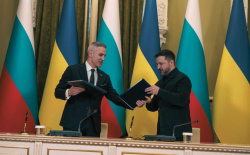
Easter Monday in Bulgaria: Tradition and Family Visits
Orthodox Easter Monday is the day following Easter Sunday and is observed across Bulgaria as part of the wider Easter celebration within the Orthodox Christian tradition
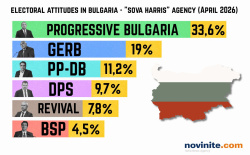
HOT: » Which party would you vote for (if you could) in the upcoming snap vote in Bulgaria on April 19?
 Send to Kindle
 Photo: Stella Ivanova
Over the past two decades, the economic growth in Bulgaria has been remarkable. While GDP per capita across the European Union increased by 188% over the last 20 years, Bulgaria experienced a staggering 600% growth. This surge underscores the transformative effect of EU membership on former socialist countries and highlights the significant progress made in Southeast Europe.
The timeline of this transformation begins with one of the EU's largest enlargements 21 years ago, when the Visegrad Four and the Baltic states joined. Bulgaria and Romania followed three years later in 2007. The period from 2004 to 2024 provides a clear window to measure the scale of economic development, and the numbers are striking. Bulgaria’s GDP per capita rose from 2,710 euros in 2004 to 16,260 euros in 2024. Only Romania surpasses Bulgaria in relative growth over this timeframe, with a 658% increase, moving from 2,820 euros to 18,560 euros, according to Eurostat data.
Other Eastern European countries also saw substantial progress. In the Baltic states, Lithuania recorded a 505% increase in GDP per capita, Latvia 436%, and Estonia 405%. Growth measured by purchasing power parity tells a similar story: Bulgaria moved from 35% to 66% of the EU average, while Romania doubled to 78%. Comparable gains were seen in Lithuania (50 to 88), Latvia (45 to 71), Poland (56 to 79), and Estonia (56 to 79), demonstrating that the region’s integration into the EU has produced consistently strong economic results.
The data paints a clear picture: EU membership has catalyzed unprecedented economic growth in Bulgaria, bringing it closer to the living standards of the broader European Union.
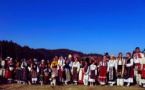
Orthodox Easter Monday is the day following Easter Sunday and is observed across Bulgaria as part of the wider Easter celebration within the Orthodox Christian tradition

Industrial output in Bulgaria posted a modest monthly increase in February 2026, but continued to decline sharply on an annual basis, according to preliminary, seasonally adjusted data from the National Statistical Institute.
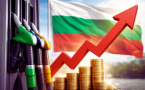
The president of the Confederation of Bulgarian Trade Unions, Plamen Dimitrov, has warned that inflation in Bulgaria is likely to exceed earlier projections, even if fuel prices begin to decline

The introduction of the euro in Bulgaria has so far produced only a limited and largely one-off effect on consumer prices, according to an analysis by the European Central Bank

Easter is the most important religious holiday in the Orthodox Christian calendar and is widely celebrated across Bulgaria. It marks the resurrection of Jesus Christ and follows the completion of Holy Week, which includes Good Friday and Holy Saturday
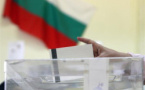
The Central Election Commission (CEC) in Bulgaria has confirmed that a total of 6,575,151 citizens are eligible to vote in the upcoming elections on April 19
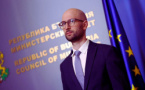
The Ministry of Finance has released a broad public dataset covering more than 7,000 public procurement contracts with a combined value exceeding 30 billion euros
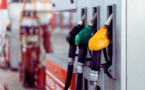
Caretaker Finance Minister Georgi Klisurski said he expects fuel prices at gas stations to ease in the coming period, pointing to a sharp decline in international oil markets
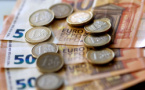
Bulgaria’s new government borrowing for 2026 has surpassed the 1 billion euro mark following the latest successful auction of state securities, according to data cited from the Bulgarian National Bank

Bulgaria recorded only a modest and one-off increase in inflation following the adoption of the euro on January 1, with the effect estimated at between 0.3 and 0.4 percentage points
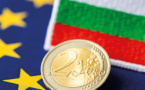
Data released by the Ministry of Finance, covering budget execution for February 2026 and preliminary estimates for March 2026, indicate a marked deterioration in Bulgaria’s fiscal position

In the 2026 edition of the Index of Economic Freedom, compiled by the Heritage Foundation, Bulgaria is placed 38th out of 176 countries, positioned between Costa Rica and Oman

Aniventure Comic Con Returns to Bulgaria with Star Guest Christopher Judge!
Global Fuel Shock: Oil Jumps Over 40% Since Iran War Began