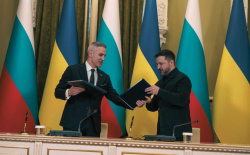
€7.3 Billion on the Table: Is Bulgarian Business Ready for Europe’s Defense Boom?
Europe is undergoing a fundamental shift in how it approaches defense, moving beyond increased spending toward the creation of an entirely new industrial ecosystem
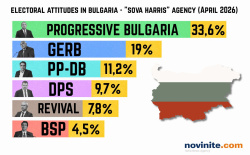
HOT: » Which party would you vote for (if you could) in the upcoming snap vote in Bulgaria on April 19?
 Send to Kindle
Today, Bulgarians celebrate Petkovden – the day dedicated to St. Paraskeva of Epivat, also known among the people as St. Petka of Bulgaria. The Orthodox Church honors her memory as that of a revered protector of faith, home, and family.
Those bearing the names Paraskeva, Petko, Pencho, Petkan, Penyo, Penko, Petkana, and Keva mark their name day today, welcoming family and guests in the traditional Bulgarian way – with rich festive meals and heartfelt hospitality.
Petkovden, often called “Winter Petkovden,” is considered by folklore to signal the beginning of the cold season and the transition into winter. The day is closely tied to family traditions and rural customs. It marks the end of the farming year, the last autumn sowing and the completion of the harvest. Villagers used to say, “On Petkovden, may your plow rest under the eaves,” meaning that all work in the fields should be finished by this day.
Saint Petka is deeply venerated as the guardian of the household, family, and fertility, a symbol of life and renewal. Folk belief also connects the holiday to the beginning of engagements and weddings, as the saint is seen as a patroness of marriage and birth, blessing both people and animals with fertility and health.
On this day, families prepare special meals and perform ritual offerings. Traditional dishes such as mutton stew, kurban chorba (a sacrificial soup), stuffed vine leaves (sarmi), tripe, and meals with leeks are arranged on the festive table. These meals are not only culinary traditions but acts of gratitude for the harvest and blessings received throughout the year.
Saint Paraskeva, known in Bulgarian tradition as Petka Epivatska, lived in the 10th–11th centuries and was born in the town of Epivat in Thrace to Bulgarian parents. Her virtuous life and miracles after death were described by St. Patriarch Euthymius of Tarnovo.
Her relics were brought to Bulgaria in 1238 and placed in the church “St. Petka Tarnovska” in Veliko Tarnovo, where they remained until the Ottoman conquest. After centuries of movement across different lands, in 1641 her relics found their permanent home in the cathedral of Iași, in present-day Romania. To this day, they draw thousands of pilgrims from around the world, who come to seek her blessing and give thanks.
Petkovden thus remains one of Bulgaria’s most cherished spiritual and folk holidays, a day that blends faith, tradition, and gratitude, uniting generations around the table with warmth and celebration.

Europe is undergoing a fundamental shift in how it approaches defense, moving beyond increased spending toward the creation of an entirely new industrial ecosystem

A leading global research center on democratic systems has issued a stark warning about political trends in several countries, concluding in its latest annual report that Bulgaria is now among those showing clear signs of democratic backsliding

Industrial output in Bulgaria posted a modest monthly increase in February 2026, but continued to decline sharply on an annual basis, according to preliminary, seasonally adjusted data from the National Statistical Institute.
The president of the Confederation of Bulgarian Trade Unions, Plamen Dimitrov, has warned that inflation in Bulgaria is likely to exceed earlier projections, even if fuel prices begin to decline

The introduction of the euro in Bulgaria has so far produced only a limited and largely one-off effect on consumer prices, according to an analysis by the European Central Bank
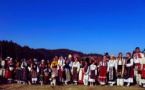
Orthodox Easter Monday is the day following Easter Sunday and is observed across Bulgaria as part of the wider Easter celebration within the Orthodox Christian tradition
Orthodox Easter Monday is the day following Easter Sunday and is observed across Bulgaria as part of the wider Easter celebration within the Orthodox Christian tradition
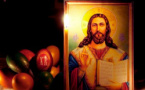
Easter is the most important religious holiday in the Orthodox Christian calendar and is widely celebrated across Bulgaria. It marks the resurrection of Jesus Christ and follows the completion of Holy Week, which includes Good Friday and Holy Saturday
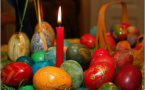
Holy Saturday, known in Bulgaria as Lazarus Saturday’s continuation of the Easter cycle, is a quiet but deeply symbolic day in the Orthodox Christian calendar
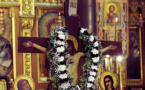
Good Friday, known in Bulgaria as Razpeti petak, is one of the most solemn and deeply observed days in the Orthodox Christian calendar
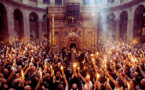
The Bulgarian Orthodox Church has decided that no official delegation will travel to Jerusalem this year to receive the Holy Fire, citing the ongoing tensions in the Middle East

Plovdiv will host the International Street Arts Festival 6Fest from April 20 to 26, 2026, turning the city into an open-air stage featuring performers from 11 countries across three continents

Aniventure Comic Con Returns to Bulgaria with Star Guest Christopher Judge!

Global Fuel Shock: Oil Jumps Over 40% Since Iran War Began