Putin Declares Easter Ceasefire in Ukraine War
The Kremlin has announced that Russian President Vladimir Putin has ordered an “Easter ceasefire” in the war in Ukraine, declaring a temporary halt in hostilities lasting around 36 hours
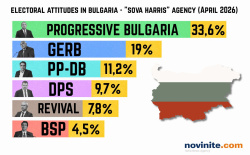
HOT: » Which party would you vote for (if you could) in the upcoming snap vote in Bulgaria on April 19?
 Send to Kindle
Western intelligence services have reportedly gathered evidence that Russia is discussing the possibility of a direct attack on NATO member states, according to EU Defense Commissioner Andrius Kubilius, as cited by Gazeta Wyborcza. Kubilius said these signals must be treated with utmost seriousness, stressing that the West cannot afford to underestimate Moscow’s intentions amid the ongoing war in Ukraine.
The commissioner referred to assessments from Western intelligence indicating that the Kremlin is actively exploring scenarios for potential strikes against the Alliance. Similar warnings were previously voiced by German intelligence services, which also confirmed that such discussions are taking place within Russian military and political circles. Kubilius pointed out that this information should serve as a wake-up call for Europe, adding that defense preparedness must now become a top priority.
The EU official recalled earlier statements made in 2025 by General Alexus Grynkewich, commander of US Army Europe and NATO Allied Forces. Grynkewich had cautioned that the United States and its European allies may have only about a year and a half to prepare for the possibility of a global conflict involving both Russia and China. He warned that these two authoritarian powers could coordinate military action by 2027, presenting an unprecedented challenge to Western security.
Kubilius noted that despite its enormous human and material losses, Russia has continued to adapt and expand its weapons production. “Putin expected to be in Kyiv within three days of the invasion,” he said. “Instead, the war evolved, and Russia adjusted to technological shifts while maintaining large-scale arms manufacturing.”
The commissioner described Ukraine as a “laboratory of modern defense,” emphasizing that Western allies must learn not only from Ukraine’s resilience but also from its innovation and adaptability. He said Kyiv is ready to share its battlefield experience and technological expertise with European partners to help them prepare for possible Russian aggression. However, he cautioned that merely purchasing interceptor drones or importing weapons systems is insufficient.
In recent months, Russia has intensified drone incursions into European airspace, with Poland, Denmark, Norway, Romania, and the Baltic states all reporting incidents of unidentified UAVs over their territories. Many of these countries, Kubilius said, still lack the means to effectively counter such attacks. Ukrainian President Volodymyr Zelensky has already offered assistance, and both Poland and Denmark have announced plans to integrate Ukrainian counter-drone technology into their defense systems.
Kubilius praised Ukraine’s ability to innovate under pressure, pointing to its thriving defense startups and flexible production methods. “Ukrainians have learned to operate without rigid bureaucracy,” he said. “Their drone manufacturers function like independent battalions - producing, testing, and improving their own systems directly on the battlefield.”
At the same time, reports from Kyiv’s military intelligence suggest that Russia is preparing for a massive rearmament effort. In September 2025, Ukraine’s defense intelligence chief, Kyrylo Budanov, disclosed that Moscow has approved a comprehensive plan to rebuild and modernize its armed forces, with the goal of achieving full operational readiness for a large-scale confrontation with Europe.
The rearmament strategy is to unfold in two stages - the first running until 2030, and the second extending to 2037. According to Budanov, the initial phase alone represents the largest weapons modernization program since the 1980s, with a projected cost of about $1.2 trillion. He warned that this effort, if completed, would significantly enhance Russia’s capacity to wage war beyond Ukraine’s borders.
Kubilius concluded that Europe must draw direct lessons from Ukraine’s experience and accelerate its own defense transformation. “We must learn flexibility, innovation, and speed from the Ukrainians,” he said. “They show us what modern defense looks like - and what will be required if we want to withstand what may come next.”
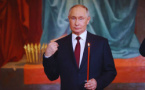
The Kremlin has announced that Russian President Vladimir Putin has ordered an “Easter ceasefire” in the war in Ukraine, declaring a temporary halt in hostilities lasting around 36 hours
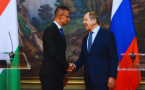
A group of Members of the European Parliament has raised concerns over the potential leakage of confidential EU information to Russia, urging stronger safeguards within the European Parliament
The European Public Prosecutor’s Office (EPPO) has carried out a series of coordinated investigative actions across several countries, including Bulgaria and Romania, as part of a probe into suspected large-scale fraud involving EU funds

A young man from Chirpan has died after spending months in a coma following a violent assault that reportedly began over a dispute involving cigarettes
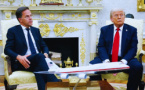
US President Donald Trump has sharply criticized NATO allies over what he described as their unwillingness to support Washington during the war with Iran, following a two-hour meeting with Secretary-General Mark Rutte at the White House

The caretaker government has approved a decision endorsing the Partnership Agreement between the European Union and its Member States and the Mercosur bloc

NEW POLL: HUNGARIANS UNITED ON NEED FOR A ‘DIFFERENT’ RELATIONSHIP WITH THE EU, BUT DIVERGENCES REMAIN ON UKRAINE
A group of Members of the European Parliament has raised concerns over the potential leakage of confidential EU information to Russia, urging stronger safeguards within the European Parliament
The European Public Prosecutor’s Office (EPPO) has carried out a series of coordinated investigative actions across several countries, including Bulgaria and Romania, as part of a probe into suspected large-scale fraud involving EU funds
The caretaker government has approved a decision endorsing the Partnership Agreement between the European Union and its Member States and the Mercosur bloc

US Vice President JD Vance launched a sharp attack on the European Union during a visit to Budapest, accusing Brussels of interfering in Hungary’s election just days before a closely contested vote that could reshape the country’s political landscape

Fuel prices in Germany have recently reached new highs, with diesel briefly exceeding 2.40 euros per litre during the Easter holiday period before easing slightly afterward

Aniventure Comic Con Returns to Bulgaria with Star Guest Christopher Judge!
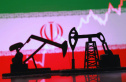
Global Fuel Shock: Oil Jumps Over 40% Since Iran War Began