Easter Monday in Bulgaria: Tradition and Family Visits
Orthodox Easter Monday is the day following Easter Sunday and is observed across Bulgaria as part of the wider Easter celebration within the Orthodox Christian tradition
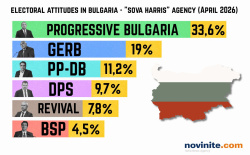
HOT: » Which party would you vote for (if you could) in the upcoming snap vote in Bulgaria on April 19?
 Send to Kindle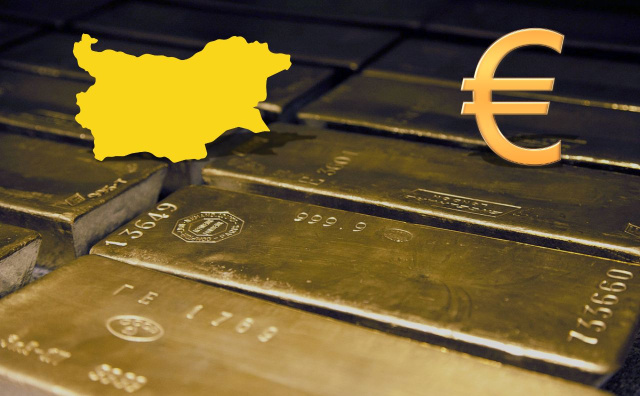
In Bulgaria, the adoption of the euro will bring changes not only to cash circulation, prices, wages, and banking, but also to the management of the country’s “national treasure” - the foreign currency and gold reserves held by the Bulgarian National Bank (BNB).
These reserves, often seen as a measure of economic strength and stability, naturally raise questions ahead of the euro transition: will Bulgaria lose its reserves? Could the government tap them to reduce national debt? In this article, we clarify how Bulgaria’s reserves will be handled under the euro, dispelling common misconceptions and outlining how their security will be preserved.
From Currency Board to Active Investment
With Bulgaria joining the eurozone on January 1, 2026, the BNB will shift to a new monetary framework that changes the way reserves are managed:
End of the currency board: Until now, the BNB’s main task was to maintain a fixed lev-to-euro exchange rate, buying and selling foreign currency as needed. After euro adoption, this obligation disappears, as the euro becomes the national currency.
Expanded investment options: Freed from the strict currency board restrictions, the BNB will gain broader discretion to invest its reserves. The new BNB Law will enable investments aimed at maximizing profitability while maintaining security, focusing on high-credit instruments.
Reserve management objective: The central bank’s primary goal remains price stability, and reserves will be managed to support this objective and ensure the BNB’s financial independence.
What Happens to Bulgaria’s General Reserves?
Part of Bulgaria’s foreign exchange reserves will be transferred to the European Central Bank (ECB) to contribute to the Eurosystem’s general reserves. Preliminary estimates place this contribution at approximately €1.28 billion.
This is not a loss. These contributions are recorded as claims by the BNB on the ECB. All eurozone national central banks make proportional contributions to provide the ECB with sufficient liquidity for foreign exchange operations when necessary.
Importantly, the BNB will continue to manage its own reserves independently. The transfer to the ECB does not diminish Bulgaria’s reserve assets outside those earmarked for monetary policy.
Can the Government Access BNB Reserves?
This is one of the most frequently asked questions. The answer is a firm “no.”
No disposal by the National Assembly: Neither the government nor Parliament can use the BNB’s reserves, for example, to reduce state debt. Such interference would violate the BNB’s independence and European law.
Ban on government financing: Under the European System of Central Banks, central banks cannot finance governments, directly or indirectly. The BNB cannot lend to the state or buy government debt. This rule is embedded in both EU treaties and the BNB Law, with oversight by the ECB.
The purpose of these rules is to encourage responsible fiscal policy. Governments must fund their expenditures through taxation or market borrowing, not central bank financing, which risks inflation and instability.
The government can only use funds in its own accounts held with the BNB. The central bank executes payment orders up to the available balances but cannot increase them through grants or financing.
Conclusion
Bulgaria’s gold and foreign currency reserves are fully protected from political interference. They cannot be used to cover government debts or deficits, ensuring financial stability as the country enters the eurozone. The BNB’s independence, combined with ECB oversight, guarantees that the national reserves remain secure while enabling prudent investment for the country’s financial future.

Orthodox Easter Monday is the day following Easter Sunday and is observed across Bulgaria as part of the wider Easter celebration within the Orthodox Christian tradition

Industrial output in Bulgaria posted a modest monthly increase in February 2026, but continued to decline sharply on an annual basis, according to preliminary, seasonally adjusted data from the National Statistical Institute.
The president of the Confederation of Bulgarian Trade Unions, Plamen Dimitrov, has warned that inflation in Bulgaria is likely to exceed earlier projections, even if fuel prices begin to decline

The introduction of the euro in Bulgaria has so far produced only a limited and largely one-off effect on consumer prices, according to an analysis by the European Central Bank

Easter is the most important religious holiday in the Orthodox Christian calendar and is widely celebrated across Bulgaria. It marks the resurrection of Jesus Christ and follows the completion of Holy Week, which includes Good Friday and Holy Saturday

Holy Saturday, known in Bulgaria as Lazarus Saturday’s continuation of the Easter cycle, is a quiet but deeply symbolic day in the Orthodox Christian calendar

The Ministry of Finance has released a broad public dataset covering more than 7,000 public procurement contracts with a combined value exceeding 30 billion euros
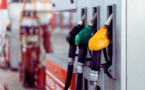
Caretaker Finance Minister Georgi Klisurski said he expects fuel prices at gas stations to ease in the coming period, pointing to a sharp decline in international oil markets

Bulgaria’s new government borrowing for 2026 has surpassed the 1 billion euro mark following the latest successful auction of state securities, according to data cited from the Bulgarian National Bank

Bulgaria recorded only a modest and one-off increase in inflation following the adoption of the euro on January 1, with the effect estimated at between 0.3 and 0.4 percentage points

Data released by the Ministry of Finance, covering budget execution for February 2026 and preliminary estimates for March 2026, indicate a marked deterioration in Bulgaria’s fiscal position

In the 2026 edition of the Index of Economic Freedom, compiled by the Heritage Foundation, Bulgaria is placed 38th out of 176 countries, positioned between Costa Rica and Oman

Aniventure Comic Con Returns to Bulgaria with Star Guest Christopher Judge!
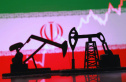
Global Fuel Shock: Oil Jumps Over 40% Since Iran War Began