Bulgaria’s annual inflation rate reached 5.3% in July 2025, while monthly inflation for the same month stood at 1.7%, according to the National Statistical Institute (NSI). The figures are based on the Consumer Price Index (CPI), with monthly inflation comparing July 2025 to June 2025, and annual inflation measuring the change relative to July 2024.
Among consumer groups, the sharpest price increases in July were seen in “Entertainment and culture” (up 13.2%), “Restaurants and hotels” (2.4%), “Communications” (2.0%), and “Housing, water, electricity, gas and other fuels” (1.9%). In contrast, “Clothing and footwear” experienced a notable decrease of 3.4%.
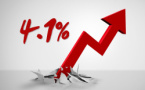
Since the start of 2025 (July compared to December 2024), inflation has accumulated to 4.1%, and the average annual inflation over the twelve months from August 2024 to July 2025 stands at 3.2%.
Food Prices in July 2025
Price changes among food products were mixed. Increases included leafy vegetables (+6.8%), apples (+5.6%), peppers (+4.6%), ice cream (+3.6%), beer (+2.9%), olives (+2.7%), tomatoes (+2.5%), peaches and apricots (+2.2%), mineral water (+2.2%), chocolate and chocolate products (+1.9%), minced meat (+1.9%), dairy oils (+1.8%), beef (+1.6%), poultry (+1.3%), eggs (+1.3%), wines (+1.3%), garlic (+1.2%), citrus and southern fruits (+1.2%), fruit juices (+1.1%), long-life sausages (+0.9%), perishable sausages (+0.6%), cucumbers (+0.6%), carbonated drinks (+0.5%), brandy (+0.4%), pasta (+0.3%), yogurts (+0.3%), root vegetables (+0.3%), sugar (+0.3%), fresh fish (+0.2%), and white bread (+0.1%).
On the other hand, prices fell for potatoes (-13.6%), other fresh vegetables such as green beans, zucchini, and eggplant (-11.0%), cabbage (-7.1%), fresh vegetable spices (-2.0%), lentils (-1.3%), chips (-1.0%), yellow cheese (-0.8%), rice (-0.8%), rye and type bread (-0.7%), whole milk (-0.7%), vinegar (-0.7%), onions (-0.6%), coffee (-0.5%), margarine (-0.5%), beans (-0.5%), mushrooms (-0.4%), flour (-0.4%), oil (-0.3%), salt (-0.2%), pork (-0.1%), and some cheeses (-0.1%).
Non-Food Goods and Services
Price growth was particularly marked in tourism and transport-related services: package holidays and travel surged 21.2%, international flights rose 15.9%, and short-term accommodation climbed 13.0%. Energy and utilities also increased, with thermal water heating up 5.7% and electricity up 2.6%. Other notable increases included driver courses (+5.0%), courier services (+4.5%), diesel fuel (+2.5%), A95N gasoline (+1.9%), vehicle accessories (+1.6%), A100N gasoline (+1.5%), televisions (+1.5%), barbershop and beauty services (+1.4%), bank financial services (+1.4%), cosmetic products (+1.4%), vacuum cleaners (+1.4%), heating wood (+1.2%), gardening and floriculture (+1.2%), cooking stoves (+1.1%), vehicle maintenance and repair (+1.1%), catering (+0.9%), air conditioners (+0.8%), pellets (+0.8%), cigarettes (+0.8%), cleaning products (+0.8%), personal hygiene items (+0.8%), and taxi fares (+0.4%).
Conversely, declines were observed for propane-butane gas for vehicles (-4.7%), shoes (-3.8%), bicycles (-3.7%), clothing (-3.4%), dishwashing detergents (-1.6%), car insurance (-1.5%), gaseous fuels for households (-1.2%), washing powders (-1.0%), boilers (-0.7%), home repair materials (-0.3%), and methane for vehicles (-0.2%).
Medical services saw modest growth, with dental care (+0.9%), laboratory tests (+0.8%), general medical services (+0.4%), and pharmaceuticals (+0.2%) all rising.
Cumulative Inflation
Over the past three years, cumulative CPI inflation (July 2025 vs. July 2022) has reached 17.0%, while five-year inflation (July 2025 vs. July 2020) stands at 41.2%.
Harmonized Index of Consumer Prices (HICP)
The HICP, used for EU comparisons, shows a monthly inflation of 1.4% in July 2025 and an annual rate of 3.4% compared to July 2024. Since the start of the year, HICP inflation totals 3.2%, and the average annual rate over the previous twelve months is 2.8%. Consumer group trends mirror those of the CPI: “Restaurants and hotels” (+5.7%), “Entertainment and culture” (+4.0%), “Communications” (+2.0%), “Housing, water, electricity, gas, and fuels” (+1.7%), “Transport” (+1.5%), “Alcohol and tobacco” (+1.1%), “Education” (+0.6%), “Miscellaneous goods and services” (+0.6%), “Household goods and furnishings” (+0.4%), “Food and non-alcoholic beverages” (+0.3%), “Healthcare” (+0.2%), with “Clothing and footwear” decreasing by 3.0%.
HICP cumulative inflation for the past three years is 14.6%, and for five years 34.6%.
Small Basket Price Index (SCPI)
For the lowest-income 20% of households, the small basket price index recorded a 0.3% increase in July and a 4.5% rise since the start of 2025. Price changes for this group included a 1.9% increase in services, a 0.2% decrease in non-food goods, and a 0.1% drop in food products.