Easter Monday in Bulgaria: Tradition and Family Visits
Orthodox Easter Monday is the day following Easter Sunday and is observed across Bulgaria as part of the wider Easter celebration within the Orthodox Christian tradition
HOT: » Which party would you vote for (if you could) in the upcoming snap vote in Bulgaria on April 19?
 Send to Kindle
 @BNT, @BGNES
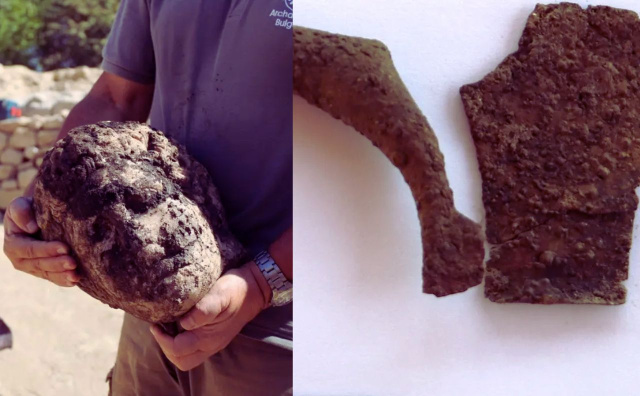
Archaeologists working at the site of Heraclea Sintica in Bulgaria have uncovered new evidence pointing to a much older Thracian presence in the region. The discovery was made during rescue excavations in the western necropolis of the ancient city by a team led by Prof. Dr. Lyudmil Vagalinski of the National Archaeological Institute with Museum at BAS. Among the finds were two bronze fibulae - ancient safety pins - dating from the 8th to 7th centuries BC. According to Prof. Vagalinski, the items likely came from disturbed burial sites and may be the first physical clues of a Thracian (possibly Synthian) settlement that predates the foundation of Heraclea Sintica in the 4th century BC by the Ancient Macedonians under Philip II. Locating this earlier settlement, he noted, will depend on both systematic fieldwork and a measure of archaeological luck.
In parallel with these excavations, the second large sculpture discovered at the site has now been restored and prepared for public display. The statue, which was transported to the National Archaeological Institute in December, has undergone an extensive conservation process led by Reneta Karamanova and based on a treatment plan developed by restorer Kitan Kitanov. The sculpture, initially found in fragmented condition, presented multiple challenges. Numerous cracks, particularly in the legs, complicated the straightening process, requiring the involvement of a broader team of experts. Efforts focused on reinforcing both legs, a supporting structural element made to resemble wood, and the slab on which the statue rests.
A notable development in the restoration was the successful attachment of the statue’s separately discovered head. With this crucial piece now in place, the sculpture has been fully assembled. It is set to be officially unveiled on August 5.
According to Prof. Vagalinski, the newly restored statue will be a valuable addition to the museum in Petrich. He emphasized its rarity, stating that such early sculptures are not commonly found in Bulgaria. For comparison, the first statue discovered at Heraclea Sintica is approximately 2,000 years old, while this second piece is estimated to be 150 to 160 years younger.
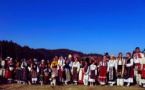
Orthodox Easter Monday is the day following Easter Sunday and is observed across Bulgaria as part of the wider Easter celebration within the Orthodox Christian tradition

Industrial output in Bulgaria posted a modest monthly increase in February 2026, but continued to decline sharply on an annual basis, according to preliminary, seasonally adjusted data from the National Statistical Institute.

The president of the Confederation of Bulgarian Trade Unions, Plamen Dimitrov, has warned that inflation in Bulgaria is likely to exceed earlier projections, even if fuel prices begin to decline

The introduction of the euro in Bulgaria has so far produced only a limited and largely one-off effect on consumer prices, according to an analysis by the European Central Bank

Easter is the most important religious holiday in the Orthodox Christian calendar and is widely celebrated across Bulgaria. It marks the resurrection of Jesus Christ and follows the completion of Holy Week, which includes Good Friday and Holy Saturday

The Central Election Commission (CEC) in Bulgaria has confirmed that a total of 6,575,151 citizens are eligible to vote in the upcoming elections on April 19

Archaeologists in Ahtopol have uncovered the longest ancient church on Bulgaria’s Southern Black Sea coast, challenging previous assumptions about the area’s history

The “Kaliakra 2025” archaeological expedition, which is drawing to a close, has unearthed more than 400 significant historical artifacts

Paleontologists have uncovered new dinosaur fossils near the Bulgarian town of Tran during the Eighth Paleontological Expedition organized by the National Museum of Natural History

Archaeologists at Perperikon have unearthed new discoveries, shedding further light on the site's medieval past

For the first time, the second marble statue uncovered at Heraclea Sintica, in Bulgaria, has been displayed fully restored - standing tall, with its head in place

An archaeological find of notable importance has emerged from the Kokalyanski Urvich Fortress near Sofia.

Aniventure Comic Con Returns to Bulgaria with Star Guest Christopher Judge!
Global Fuel Shock: Oil Jumps Over 40% Since Iran War Began