Bulgaria Expects Fuel Price Drop as Oil Falls 20%, Says Finance Minister
Caretaker Finance Minister Georgi Klisurski said he expects fuel prices at gas stations to ease in the coming period, pointing to a sharp decline in international oil markets
HOT: » Which party would you vote for (if you could) in the upcoming snap vote in Bulgaria on April 19?
 Send to Kindle
 @Pexels
Over the past decade, residential property prices in Sofia, Bulgaria, have surged by 200%, rising from an average of €715 per square meter in 2015 to more than €2,100 at the beginning of 2025. These figures are based on finalized transactions from the real estate company Imoteka, which has marked ten years in the market. According to the company’s Executive Director, Yavor Peychev, this sustained upward trend saw only a brief plateau during the COVID-19 pandemic, but since 2020, the pace of increase has become more pronounced, particularly in Sofia and other major cities.
The method for determining property prices has also evolved significantly. The average price per square meter has become a more nuanced measure, now heavily influenced by factors such as property quality, building standards, location, transportation links, local infrastructure, social environment, greenery, and the area’s future development and investment potential. As a result, homes of similar size in different neighborhoods can vary by tens of thousands of euros.
In Varna, housing prices have risen by about 120% since 2015, increasing from below €700 per square meter to over €1,500. In Plovdiv, the growth is approximately 150%, with average prices climbing from €550 to nearly €1,400 per square meter over the same period. The upward trend in transactions is mainly observed in large cities. While national transaction volumes have remained relatively stable, activity in Sofia has doubled in ten years. In Varna, it has increased by 45–50%, and in Plovdiv by around 15%.
The average size of purchased homes has also grown, rising from 84 square meters in 2015 to 96 square meters by early 2025. Peychev attributes this to both post-pandemic preferences for more spacious homes and an overall improvement in household financial capacity. The average monthly salary in Bulgaria rose from just over BGN 850 in 2015 to more than BGN 2,400 in early 2025. In Sofia, incomes are even higher, aligning with the city’s dominant share of real estate activity.
While the ratio between average salaries and price per square meter remains relatively consistent, affordability has been improved by favorable bank lending conditions. Mortgage interest rates have decreased from 4–6% in 2015 to 2–2.7% by 2025. Alongside active new construction, this has driven further growth in the market. The number of building permits issued has also doubled over the decade, from under 5,000 housing units annually to nearly 10,000 permits issued in the first quarter of 2025 alone.
The real estate landscape in Sofia has transformed noticeably, with buyers increasingly shifting interest from older, high-end neighborhoods to newly developed areas with modern complexes. The primary market for new builds has overtaken the secondary market in terms of activity. According to Peychev, many prefer to live in new, modern surroundings, and the evolving appearance of Sofia reflects this preference. He emphasizes the need for state and municipal authorities to ensure adequate infrastructure in new neighborhoods to maintain a high quality of life, while also preserving the appeal of the city’s historic center.
Similar dynamics are observed in Varna and Plovdiv, where interest is centered on areas with a significant supply of high-quality new housing projects, including houses. Following the pandemic, the market for houses has expanded as people prioritize sustainable living environments and the flexibility of remote work. This trend has spurred both customer demand and a noticeable rise in the construction of standalone homes and gated housing communities.
The rental market has also experienced significant growth, with prices increasing by about 111% over the last ten years. However, the pace has been slower than that of property purchases, as more people opt to buy rather than rent, driven by low interest rates, higher incomes, and inflation. Peychev notes that even young buyers under 30 are increasingly choosing to pay mortgage installments that are comparable to or lower than rent, motivated by the deep-rooted cultural value placed on homeownership in Bulgaria.
According to Imoteka, rental yields have declined slightly over the decade. In 2015, the gross rental return in Sofia was around 6%. In 2025, yields range from 4% in central areas like Lozenets to 4.8% in Krastova Vada, Manastirski Livadi, and Vitosha, and about 5% in neighborhoods like Malinova Dolina, Mladost, Nadezhda, and Lyulin. Peychev points out that in recent years, many property buyers have focused more on capital gains from sales than on rental income, including short-term rentals.

Caretaker Finance Minister Georgi Klisurski said he expects fuel prices at gas stations to ease in the coming period, pointing to a sharp decline in international oil markets

Residents and visitors in Sofia will be able to park without payment in the city’s “blue” and “green” zones during the upcoming Easter holidays

Global markets reacted sharply after US President Donald Trump stepped back from imminent military action against Iran, instead tying a suspension of strikes to Tehran’s agreement to a temporary ceasefire and the reopening of the Strait of Hormuz

Housing prices in Bulgaria have surged by 157% between 2015 and the end of 2025

Specialists in the real estate and tourism sectors are forecasting a notable rise in the prices of vacation properties in Bulgaria, with estimates pointing to an increase of between 25% and 30%

Fuel prices in Germany have recently reached new highs, with diesel briefly exceeding 2.40 euros per litre during the Easter holiday period before easing slightly afterward
Housing prices in Bulgaria have surged by 157% between 2015 and the end of 2025

The Bulgarian real estate market is showing signs of cooling in early 2026, with experts reporting a slowdown in transactions and a shift toward more balanced conditions between buyers and sellers

In 2026 the Bulgarian residential market is shaped less by size and more by adaptability.
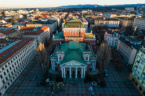
Bulgaria’s entry into the Eurozone marks a defining moment for the country’s real estate sector.

The housing market in Bulgaria is undergoing notable shifts, with buyers increasingly prioritizing location and accessibility over sheer size.

Property values in Sofia have surged by approximately €500 per square metre over the past year, according to data from one of Bulgaria’s largest real estate agencies. Across the country’s main cities, housing costs climbed by 20% in the final quarter of 2

Aniventure Comic Con Returns to Bulgaria with Star Guest Christopher Judge!

Global Fuel Shock: Oil Jumps Over 40% Since Iran War Began