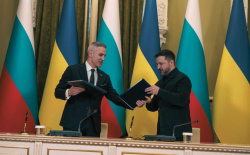
€7.3 Billion on the Table: Is Bulgarian Business Ready for Europe’s Defense Boom?
Europe is undergoing a fundamental shift in how it approaches defense, moving beyond increased spending toward the creation of an entirely new industrial ecosystem
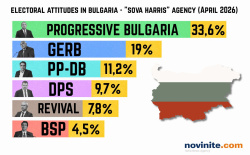
HOT: » Which party would you vote for (if you could) in the upcoming snap vote in Bulgaria on April 19?
 Send to Kindle
Prime Minister Rosen Zhelyazkov emphasized the need for Bulgaria to strengthen its defense industry and shift from being an importer to a net exporter of arms. Speaking to Bulgarian journalists in Brussels, he highlighted the importance of Bulgaria not only participating in the European defense market but also becoming a key supplier.
Zhelyazkov is attending the European Council summit, where one of the main topics will be the European Commission’s White Paper on European Defense. Discussions will also focus on aid to Ukraine, a matter on which Bulgaria has maintained its position. The prime minister reaffirmed that Bulgaria is considering providing assistance in kind, following the voluntary approach suggested by EU High Representative for Foreign Affairs and Security Policy Kaja Kallas. Her proposal aims to double military support for Ukraine this year, bringing the total to 40 billion euros.
At the same time, Zhelyazkov underlined Bulgaria’s stance on EU budget allocations, arguing against redirecting funds from the Common Agricultural Policy, cohesion policy, and internal security funds toward military spending. He pointed out that many member states that rely on cohesion funds share Bulgaria’s position on the matter.
Regarding national defense, Bulgaria is preparing an investment plan to align with pan-European defense policies. Some elements have already been approved in a closed session. The prime minister stressed the importance of improving coordination between public and private enterprises in the military-defense sector to maximize financial support from European instruments.
On domestic policy, Zhelyazkov expressed confidence in securing parliamentary backing for the budget, following discussions with MPs from the parties supporting the government. He also addressed Bulgaria’s bid to join the eurozone, expecting a positive convergence report between May and June. The government is counting on pro-European parties to support the transition to the euro, while opposition from groups such as "Revival," MECH, and "Greatness" is anticipated.
Zhelyazkov also commented on the security of European institutions in Bulgaria, following the February 22 attack on the House of Europe in Sofia during a protest against the euro organized by "Revival." European Parliament President Roberta Metsola had raised concerns, and Zhelyazkov assured that Bulgaria is committed to upholding the rule of law and sanctioning those responsible for the vandalism.
Additionally, the prime minister addressed the case of a Bulgarian citizen killed in Gaza. Bulgaria has requested clarification, with Foreign Minister Georg Georgiev discussing the matter with his Israeli counterpart Gideon Sa'ar. Israel has stated that no strikes were carried out in the area at the time, and Bulgaria continues to seek further details, as taking responsibility for the incident is a priority. Zhelyazkov also referenced Bulgaria’s past experiences with terrorism, likely alluding to the 2012 Hezbollah attack at Burgas airport that killed five Israeli tourists and a Bulgarian bus driver.
Europe is undergoing a fundamental shift in how it approaches defense, moving beyond increased spending toward the creation of an entirely new industrial ecosystem

The Bulgarian Ministry of Health has expressed support for the Bulgarian Medical Association’s proposal to raise the prices of all medical services by 25 percent

Fuel prices in Bulgaria have continued to edge upward, with diesel and gasoline both registering increases in the days following the Easter holiday
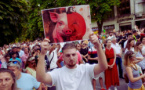
A leading global research center on democratic systems has issued a stark warning about political trends in several countries, concluding in its latest annual report that Bulgaria is now among those showing clear signs of democratic backsliding
Weather conditions across Bulgaria today are expected to remain stable and predominantly sunny, accompanied by light winds coming from the southwest

Industrial output in Bulgaria posted a modest monthly increase in February 2026, but continued to decline sharply on an annual basis, according to preliminary, seasonally adjusted data from the National Statistical Institute.
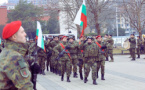
The personnel deficit in the Bulgarian Armed Forces stood at 20.5% in 2025, marking a slight improvement of 1.8 percentage points compared to the previous year, according to the Report on the State of Defence and the Armed Forces, approved by the caretake
Acting Defense Minister Atanas Zapryanov has stated that Bulgaria is not taking on any military obligations under the ten-year security cooperation agreement with Ukraine
Acting defense Minister Atanas Zapryanov said that the concept of Bulgaria relying on its own defense outside a collective system would place an unsustainable burden on the country’s economy and public finances

Journalist Hristo Rimpopov told Bulgarian National Radio that there is no basis to assume Bulgaria could become a target of Iranian attacks, following confirmation by the Foreign Ministry that Tehran had sent a diplomatic note concerning the presence of U
Acting Foreign Minister Nadezhda Neynski has stated categorically that Bulgaria will not take part in any military coalition aimed at reopening the Strait of Hormuz, citing the country’s limited capabilities
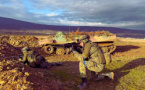
The Council of Ministers has adopted the Report on the State of Defense and the Armed Forces of the Republic of Bulgaria for 2025, which was submitted to both the National Assembly and the public, outlining an overall assessment of military readiness and

Aniventure Comic Con Returns to Bulgaria with Star Guest Christopher Judge!
Global Fuel Shock: Oil Jumps Over 40% Since Iran War Began