The Power of Knowledge Lies in Its Use
Dr. Boyko Takov: Analytical and empirical results from ongoing projects constitute a solid information base
Business | April 9, 2026, Thursday // 18:21
HOT: » Which party would you vote for (if you could) in the upcoming snap vote in Bulgaria on April 19?
 Send to Kindle
 @GovBulgaria, "X"
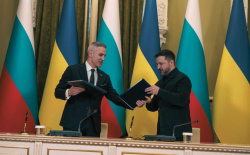
During a meeting in The Hague, Dutch Prime Minister Mark Rutte expressed his strong support for Bulgaria's immediate acceptance as a full member of the Schengen area, including for land borders. Currently, Bulgaria is accepted into the "air and sea Schengen". Rutte's remarks came during discussions with Bulgarian Prime Minister Nikolai Denkov, focusing on Bulgaria's priorities, particularly its entry into the land-based Schengen zone and accession to the Eurozone.
"If I could decide, Bulgaria would be accepted as a full Schengen member immediately"
Rutte emphasized his optimism regarding Bulgaria's Schengen membership, stating that while current political circumstances pose challenges, he remains committed to facilitating Bulgaria's full integration into the Schengen area. He pledged to collaborate with other countries, including Romania and Austria, to expedite Bulgaria's Schengen accession, aiming for progress in the months following mid-March.
The meeting also addressed key issues on the European agenda, with a particular focus on security within the European Union. Both leaders underscored the importance of bolstering NATO's eastern flank and enhancing cooperation with neighboring countries like Turkey and Romania to strengthen regional defense capabilities. Discussions also touched on supporting Ukraine across various domains, including military assistance, energy, and humanitarian aid, especially in light of the significant number of Ukrainian refugees residing in Bulgaria.
Denkov highlighted the joint efforts to support Ukraine and reiterated Bulgaria's commitment to both humanitarian aid and regional security. The discussions reflected a shared commitment to addressing pressing security challenges in the region while advancing Bulgaria's integration into key European structures.
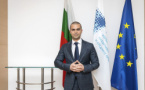
Dr. Boyko Takov: Analytical and empirical results from ongoing projects constitute a solid information base
The European Public Prosecutor’s Office (EPPO) has carried out a series of coordinated investigative actions across several countries, including Bulgaria and Romania, as part of a probe into suspected large-scale fraud involving EU funds

Holiday weather conditions are expected to remain mixed across Bulgaria, with alternating periods of sunshine and rain showers, according to the forecast
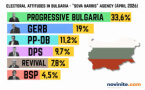
A new survey by the “Sova Harris” agency indicates that six political formations would enter the next Bulgarian National Assembly, based on data collected between April 2 and 6 among 800 respondents through standardized face-to-face interviews

Up to 90 percent of construction and renovation workers in Bulgaria are operating outside the legal framework, according to entrepreneur Lozan Lozanov, who raised concerns about the lack of regulation in construction and installation services
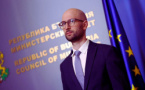
The Ministry of Finance has released a broad public dataset covering more than 7,000 public procurement contracts with a combined value exceeding 30 billion euros
The European Public Prosecutor’s Office (EPPO) has carried out a series of coordinated investigative actions across several countries, including Bulgaria and Romania, as part of a probe into suspected large-scale fraud involving EU funds
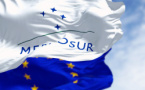
The caretaker government has approved a decision endorsing the Partnership Agreement between the European Union and its Member States and the Mercosur bloc

US Vice President JD Vance launched a sharp attack on the European Union during a visit to Budapest, accusing Brussels of interfering in Hungary’s election just days before a closely contested vote that could reshape the country’s political landscape
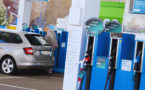
Fuel prices in Germany have recently reached new highs, with diesel briefly exceeding 2.40 euros per litre during the Easter holiday period before easing slightly afterward
A recently revised German military service framework has triggered public debate after it emerged that it places new travel-related obligations on men aged between 17 and 45

Spain has officially launched its system of digital identity, which came into effect on April 2 and grants the electronic version of the national identity card the same legal validity as the physical document

Aniventure Comic Con Returns to Bulgaria with Star Guest Christopher Judge!
Global Fuel Shock: Oil Jumps Over 40% Since Iran War Began