Bulgaria Weather: Mixed Easter Forecast With Sun, Rain, and Gradually Rising Temperatures
Holiday weather conditions are expected to remain mixed across Bulgaria, with alternating periods of sunshine and rain showers, according to the forecast
HOT: » Which party would you vote for (if you could) in the upcoming snap vote in Bulgaria on April 19?
 Send to Kindle
 @novinite.com
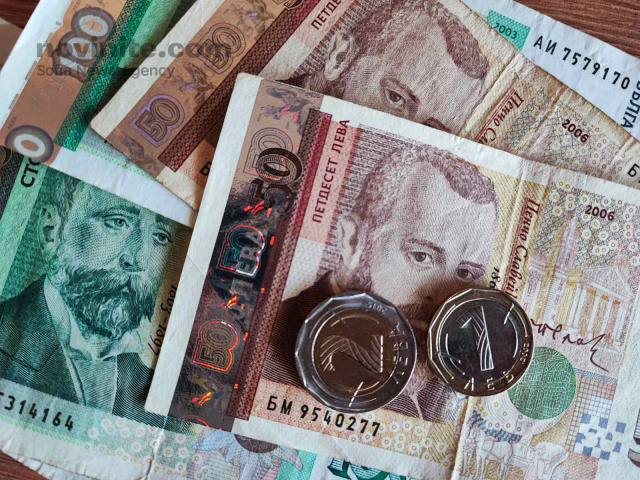
Bulgaria's economic landscape saw the gross external debt ascend to EUR 44,402.6 million by the end of November 2023, marking a 1% increase from the previous year and constituting 46.5% of the country's Gross Domestic Product (GDP). The Bulgarian National Bank's recent report provides a comprehensive overview of the nation's financial health, offering insights into various sectors and their roles in shaping the debt scenario.
As of November 2023, short-term liabilities accounted for 16.2% of the total debt, amounting to EUR 7,174.2 million, reflecting a notable 16% reduction from the end of November 2022. In contrast, long-term liabilities totaled EUR 37,228.4 million, representing 83.8% of the total debt and exhibiting a 5.1% increase from the previous year.
The general government's gross external debt, standing at EUR 10,665.1 million, comprised 11.2% of the GDP, showcasing a substantial 25.6% surge from the end of November 2022. This sector-specific analysis sheds light on the economic challenges and opportunities faced by Bulgaria's public administration.
The external liabilities of the central bank witnessed a decrease of 9.5%, totaling EUR 2,055.7 million, equivalent to 2.2% of the GDP. Similarly, other monetary financial institutions, including banks and money market funds, reported a 5.5% drop in external liabilities, reaching EUR 5,701.8 million or 6% of the GDP.
External debt from other sectors, amounting to EUR 11,651.7 million, constituted 12.2% of the GDP, revealing a 9.8% reduction compared to the previous year. The intercompany lending segment held the largest share in external debt, contributing 32.3% at the end of November 2023.
The net flow for January to September 2023 recorded a positive value of EUR 735.1 million, equivalent to 0.8% of the GDP. However, this reflected a decrease from the positive value of EUR 3,776.4 million recorded during the same period in 2022.
Additionally, the net external debt, with a negative value of EUR 29,953 million, increased by EUR 5,231 million (21.2%) from the end of September 2022. This shift was attributed to a larger increase in gross external assets (7.2%) and a decrease in gross external debt (0.7%).

Holiday weather conditions are expected to remain mixed across Bulgaria, with alternating periods of sunshine and rain showers, according to the forecast
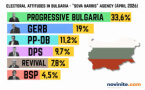
A new survey by the “Sova Harris” agency indicates that six political formations would enter the next Bulgarian National Assembly, based on data collected between April 2 and 6 among 800 respondents through standardized face-to-face interviews

Up to 90 percent of construction and renovation workers in Bulgaria are operating outside the legal framework, according to entrepreneur Lozan Lozanov, who raised concerns about the lack of regulation in construction and installation services

The Ministry of Finance has released a broad public dataset covering more than 7,000 public procurement contracts with a combined value exceeding 30 billion euros

The Easter holiday getaway has officially begun in Bulgaria, with traffic leaving Sofia surging as thousands of people set off for the long weekend

A 53-year-old man with a criminal record has been detained in Bulgaria during a targeted police operation against vote buying, carried out in the village of Brestnitsa in the Lovech region
The Ministry of Finance has released a broad public dataset covering more than 7,000 public procurement contracts with a combined value exceeding 30 billion euros
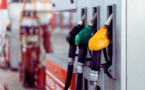
Caretaker Finance Minister Georgi Klisurski said he expects fuel prices at gas stations to ease in the coming period, pointing to a sharp decline in international oil markets
Bulgaria’s new government borrowing for 2026 has surpassed the 1 billion euro mark following the latest successful auction of state securities, according to data cited from the Bulgarian National Bank

Bulgaria recorded only a modest and one-off increase in inflation following the adoption of the euro on January 1, with the effect estimated at between 0.3 and 0.4 percentage points

Data released by the Ministry of Finance, covering budget execution for February 2026 and preliminary estimates for March 2026, indicate a marked deterioration in Bulgaria’s fiscal position

In the 2026 edition of the Index of Economic Freedom, compiled by the Heritage Foundation, Bulgaria is placed 38th out of 176 countries, positioned between Costa Rica and Oman

Aniventure Comic Con Returns to Bulgaria with Star Guest Christopher Judge!
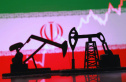
Global Fuel Shock: Oil Jumps Over 40% Since Iran War Began