Easter Monday in Bulgaria: Tradition and Family Visits
Orthodox Easter Monday is the day following Easter Sunday and is observed across Bulgaria as part of the wider Easter celebration within the Orthodox Christian tradition
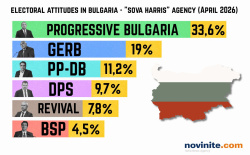
HOT: » Which party would you vote for (if you could) in the upcoming snap vote in Bulgaria on April 19?
 Send to Kindle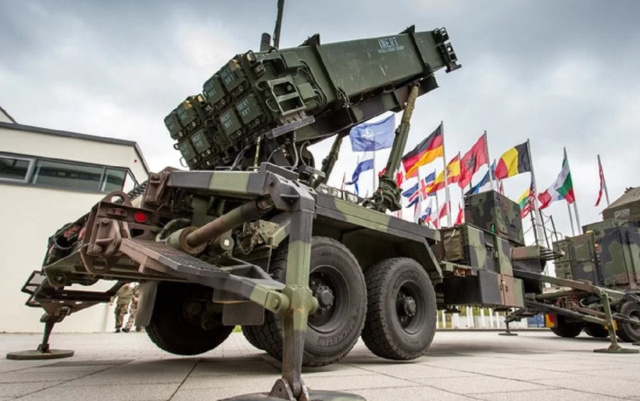
Bulgaria has recently embarked on a significant strategic move by aligning itself with the "European Sky Shield Initiative" (ESSI), a collaborative air defense project led by Germany, aiming to fortify Europe's defenses against evolving aerial threats, primarily emanating from Russia. This substantial step positions Bulgaria among the growing list of European nations dedicated to bolstering a coordinated defense against potential airborne attacks.
The concept of the "European Sky Shield" revolves around establishing a multi-tiered defense system designed to counter a broad spectrum of airborne threats, spanning short, medium, and long-range interceptors. Germany's initiative has drawn participation from a diverse array of countries, including the Czech Republic, Denmark, Estonia, Finland, Hungary, Latvia, Lithuania, the Netherlands, Norway, Slovenia, Sweden, and more.
At the core of this ambitious endeavor lies the acquisition and integration of advanced air defense systems, aimed at addressing a variety of aerial threats. While the specific details of Bulgaria's procurement remain undisclosed, indications suggest a keen interest in the IRIS-T SLM for short and medium-range defense. Germany's initiative also encompasses the procurement of a spectrum of other defense systems, including the LVS NNbS, IRIS-T SLM, Patriot, and Arrow 3, strategically positioned to counter varying threat ranges.
This proactive approach to fortifying air defense capabilities arrives amidst escalating tensions, notably exacerbated by Russia's war in Ukraine. The conflict has accentuated concerns among NATO nations regarding the evolving landscape of aerial threats, including the deployment of drones, cruise missiles, and ballistic missiles. The European Sky Shield Initiative emerges as a response to these evolving threats, signaling a collective effort to establish a robust defense mechanism.
However, the comprehensive execution of the project faces intricate challenges on several fronts. The limited array of available systems within the initiative may pose challenges for countries already equipped with alternative defense structures. Notably, nations like France, Italy, and Poland, with their distinct air defense systems, have expressed reservations towards adopting the systems under the European Sky Shield Initiative.
Bulgaria's existing air defense arsenal primarily comprises Soviet-era systems, including the S-75M3 "Volkhov" (SA-2), S-125M "Neva" (SA-3), 2K12 "Kub" (SA-6), S-200 "Vega" (SA-5), and S-300 (SA-10). However, logistical dependencies on Russia for maintenance and spare parts procurement have impeded operational capabilities. The depletion of spare parts stockpiles has raised concerns regarding the sustained effectiveness of Bulgaria's air defense systems.
The successful implementation of the "European Sky Shield" remains uncertain, entangled in logistical, economic, and geopolitical complexities. The project necessitates robust coordination among participating nations, overcoming compatibility issues, strategic alignments, and varying defense structures to create a unified, formidable defense architecture.
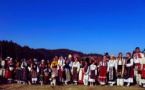
Orthodox Easter Monday is the day following Easter Sunday and is observed across Bulgaria as part of the wider Easter celebration within the Orthodox Christian tradition

Industrial output in Bulgaria posted a modest monthly increase in February 2026, but continued to decline sharply on an annual basis, according to preliminary, seasonally adjusted data from the National Statistical Institute.
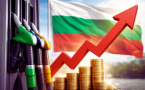
The president of the Confederation of Bulgarian Trade Unions, Plamen Dimitrov, has warned that inflation in Bulgaria is likely to exceed earlier projections, even if fuel prices begin to decline

The introduction of the euro in Bulgaria has so far produced only a limited and largely one-off effect on consumer prices, according to an analysis by the European Central Bank

Easter is the most important religious holiday in the Orthodox Christian calendar and is widely celebrated across Bulgaria. It marks the resurrection of Jesus Christ and follows the completion of Holy Week, which includes Good Friday and Holy Saturday

Holy Saturday, known in Bulgaria as Lazarus Saturday’s continuation of the Easter cycle, is a quiet but deeply symbolic day in the Orthodox Christian calendar
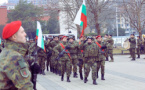
The personnel deficit in the Bulgarian Armed Forces stood at 20.5% in 2025, marking a slight improvement of 1.8 percentage points compared to the previous year, according to the Report on the State of Defence and the Armed Forces, approved by the caretake
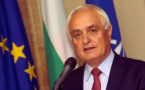
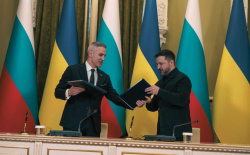
Acting Defense Minister Atanas Zapryanov has stated that Bulgaria is not taking on any military obligations under the ten-year security cooperation agreement with Ukraine
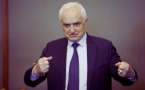
Acting defense Minister Atanas Zapryanov said that the concept of Bulgaria relying on its own defense outside a collective system would place an unsustainable burden on the country’s economy and public finances
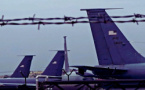
Journalist Hristo Rimpopov told Bulgarian National Radio that there is no basis to assume Bulgaria could become a target of Iranian attacks, following confirmation by the Foreign Ministry that Tehran had sent a diplomatic note concerning the presence of U
Acting Foreign Minister Nadezhda Neynski has stated categorically that Bulgaria will not take part in any military coalition aimed at reopening the Strait of Hormuz, citing the country’s limited capabilities
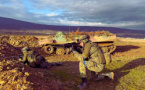
The Council of Ministers has adopted the Report on the State of Defense and the Armed Forces of the Republic of Bulgaria for 2025, which was submitted to both the National Assembly and the public, outlining an overall assessment of military readiness and

Aniventure Comic Con Returns to Bulgaria with Star Guest Christopher Judge!
Global Fuel Shock: Oil Jumps Over 40% Since Iran War Began