Putin Declares Easter Ceasefire in Ukraine War
The Kremlin has announced that Russian President Vladimir Putin has ordered an “Easter ceasefire” in the war in Ukraine, declaring a temporary halt in hostilities lasting around 36 hours
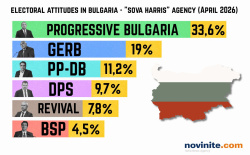
HOT: » Which party would you vote for (if you could) in the upcoming snap vote in Bulgaria on April 19?
 Send to Kindle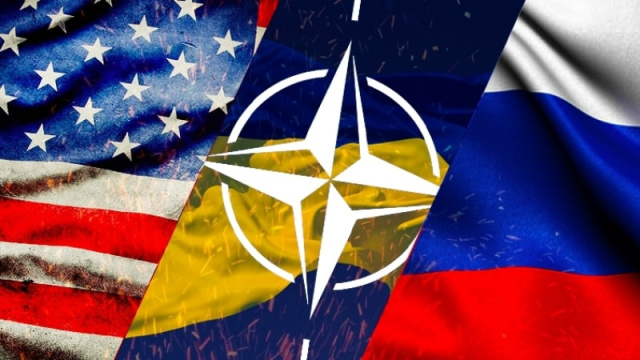
NATO has strongly condemned Russia's withdrawal from the Treaty on Conventional Armed Forces in Europe (CFE), a historic document that played a crucial role in balancing arms control between NATO and former Warsaw Pact states after the Cold War. The treaty, signed in 1990, aimed to maintain stability and limit the deployment of conventional military equipment in Europe. On Tuesday, Moscow formally withdrew from the CFE treaty, citing concerns over the expansion of NATO, especially regarding Finland and Sweden.
NATO issued a statement expressing its strong disapproval of Russia's decision to withdraw from the treaty and its aggressive actions against Ukraine, which contradicted the treaty's objectives. In response to Russia's withdrawal, NATO has decided to suspend the CFE Treaty, with the support of all NATO member states. This suspension will remain in place for as long as necessary, in accordance with international law.
The CFE Treaty, originally designed to prevent either side of the Cold War from amassing forces for a quick offensive in Europe, faced challenges over the years. While it played a vital role in promoting transparency and cooperation, it also faced opposition, especially from Moscow. In 2007, Russia froze its participation in the treaty and later suspended it in 2015.
In response, the United States and NATO ceased to apply the CFE Treaty to Russia in 2011, arguing that Russia's "suspension" was not legally valid. This move severely undermined treaty verification, transparency, and the cooperative approach to European security.
The withdrawal from the CFE Treaty is just one aspect of the complex relationship between Russia and NATO. The matter is further complicated by Russia's claims of NATO's expansion and NATO's expectations of Russia fulfilling commitments to Georgia and Moldova as a condition for ratifying the 1999 CFE Treaty.
The suspension of the CFE Treaty marks a significant development in the evolving security landscape of Europe and may have broader implications for regional stability.
The Kremlin has announced that Russian President Vladimir Putin has ordered an “Easter ceasefire” in the war in Ukraine, declaring a temporary halt in hostilities lasting around 36 hours
A group of Members of the European Parliament has raised concerns over the potential leakage of confidential EU information to Russia, urging stronger safeguards within the European Parliament
US President Donald Trump has sharply criticized NATO allies over what he described as their unwillingness to support Washington during the war with Iran, following a two-hour meeting with Secretary-General Mark Rutte at the White House
A leaked transcript of a phone call between Hungarian Prime Minister Viktor Orban and Russian President Vladimir Putin shows Orban offering extensive support to Moscow and describing himself as ready to help “in any way” in relation to the war in Ukraine
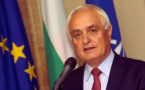
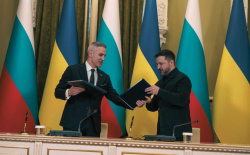
Acting Defense Minister Atanas Zapryanov has stated that Bulgaria is not taking on any military obligations under the ten-year security cooperation agreement with Ukraine
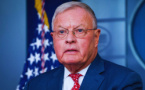
Keith Kellogg, who previously served as US President Donald Trump’s Special Envoy for Ukraine, has raised the possibility of reshaping existing security structures, including moving beyond NATO
A leaked transcript of a phone call between Hungarian Prime Minister Viktor Orban and Russian President Vladimir Putin shows Orban offering extensive support to Moscow and describing himself as ready to help “in any way” in relation to the war in Ukraine
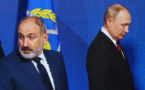
Vladimir Putin stated that Armenia cannot realistically pursue membership in the European Union while remaining part of the Moscow-led Eurasian Economic Union, arguing that the two frameworks are fundamentally incompatible

A Russian An-26 military transport aircraft has crashed in Crimea, killing all 29 people on board, according to information released by the country’s defense ministry and cited by Russian state media
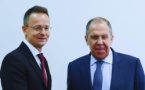
Audio recordings allegedly capturing conversations between Russian Foreign Minister Sergei Lavrov and Hungary’s Foreign Minister Péter Szijjártó have been leaked to the media

Ukrainian authorities have reported the existence of a recruitment network operating across parts of Eastern Europe, including Bulgaria, which is allegedly involved in organizing sabotage and destabilization activities in support of Russian interests
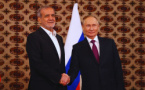
Iranian President Masoud Pezeshkian has publicly expressed gratitude to Russia and President Vladimir Putin, saying Moscow’s political backing and statements of support provide encouragement to Tehran during the ongoing conflict

Aniventure Comic Con Returns to Bulgaria with Star Guest Christopher Judge!
Global Fuel Shock: Oil Jumps Over 40% Since Iran War Began