Sofia Imposes Winter Driving Ban: Polluting Cars Restricted from December 1
From December 1, new restrictions will be introduced on vehicle movement in Sofia to reduce air pollution
HOT: » Which party would you vote for (if you could) in the upcoming snap vote in Bulgaria on April 19?
 Send to Kindle
 @Wikimedia Commons
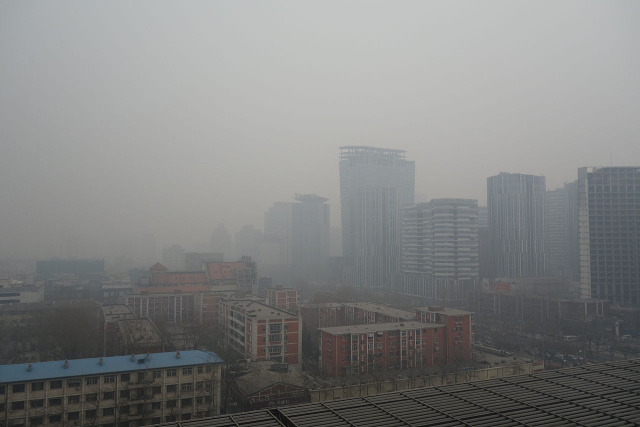
A groundbreaking study has uncovered a significant connection between air pollution and the risk of developing Parkinson's disease. The research, soon to be published in the medical journal Neurology by the American Academy of Neurology, has revealed that individuals residing in areas with median levels of air pollution face a staggering 56% higher risk of acquiring Parkinson's disease compared to those living in areas with the lowest levels of air pollution.
The study aimed to uncover national and geographic patterns of Parkinson's disease while investigating national and region-specific links to fine particulate matter. This breakthrough research was led by Dr. Brittany Krzyzanowski, a researcher at Barrow Neurological Institute.
Previous studies have indicated that fine particulate matter can lead to brain inflammation, a known mechanism associated with the development of Parkinson's disease. Utilizing state-of-the-art geospatial analytical techniques, the research team confirmed, for the first time, a robust nationwide correlation between incident Parkinson's disease and fine particulate matter in the United States.
Moreover, the study revealed that the relationship between air pollution and Parkinson's disease is not consistent across the entire country but varies in strength by region. Notably, the Mississippi-Ohio River Valley emerged as a hotspot for Parkinson's disease, along with central North Dakota, parts of Texas, Kansas, eastern Michigan, and the tip of Florida. In contrast, individuals residing in the western half of the U.S. demonstrated a reduced risk of developing Parkinson's disease compared to the rest of the nation.
Dr. Krzyzanowski commented that these regional disparities may be linked to variations in the composition of particulate matter. Certain areas could have particulate matter containing more toxic components, such as combustion particles from traffic and heavy metals from manufacturing, which have been associated with cell death in the brain region related to Parkinson's disease.
The research was a population-based geographic study that identified nearly 90,000 people with Parkinson's disease from a Medicare dataset encompassing nearly 22 million individuals. The participants with Parkinson's disease were geocoded to their neighborhood of residence, allowing researchers to calculate the rates of Parkinson's disease within each region. Additionally, the study calculated the average annual concentrations of fine particulate matter in these specific regions.
Following adjustments for various risk factors, including age, sex, race, smoking history, and medical care utilization, Barrow researchers established a clear connection between a person's prior exposure to fine particulate matter and their subsequent risk of developing Parkinson's disease.
Dr. Krzyzanowski highlighted the potential of population-based geographic studies to provide valuable insights into the role of environmental toxins in the development and progression of Parkinson's. The same methodology could be applied to explore other neurological health outcomes.
The researchers anticipate that the data from this pioneering study will play a crucial role in reinforcing policies aimed at reducing air pollution levels and lowering the risk of Parkinson's disease and related illnesses. While previous research has primarily focused on pesticide exposure as a risk factor for Parkinson's disease, this study underscores the importance of considering air pollution as a significant contributor to the condition.
/ANI

From December 1, new restrictions will be introduced on vehicle movement in Sofia to reduce air pollution

Environment and Water Minister Julian Popov has assured the public of a continual and thorough investigation into the air pollution plaguing Ruse

In an effort to combat air pollution, Sofia city officials have announced a ban on older cars from entering the city center starting this Friday

Sofia ranks 27th in the world in air quality and pollution.

Every year 14 000 people die in Bulgaria as a result of air pollution, which is calculated according to a certain methodology.

Concentration of fine particulate matter higher than maximum admissible (MAC) was reported in ten Bulgarian cities on Tuesday morning: Sofia, Plovdiv, Gorna Oryahovitsa, Rousse, Pleven, Bourgas, Shoumen, Vidin, Smolyan, and Vratsa, according to the Enviro

The Bulgarian Medical Association has called for an urgent overhaul of healthcare funding, insisting on a 25 percent increase in the prices of clinical pathways and all medical services, alongside a revision of the user fee for hospital stays

Health authorities report that measles infections in Bulgaria have surpassed 70 confirmed cases, with a total of 73 registered as of April 3

Health authorities have reported a total of 66 confirmed measles cases in Bulgaria, with the first infection now recorded in Sofia, according to data published on the Ministry of Health’s epidemic monitoring platform.

All emergency medical centers across Bulgaria have now been equipped with the opioid antidote Naloxone, a development confirmed by the Ministry of Health. The drug is used in cases of overdose and is considered critical for saving lives in emergencies inv
A total of 43 measles infections have been recorded across three regions in Bulgaria, according to data released by the Ministry of Health on March 30

Last year, Bulgaria recorded over 17,000 abortions, according to data compiled by the National Center for Public Health and Analysis

Aniventure Comic Con Returns to Bulgaria with Star Guest Christopher Judge!

Global Fuel Shock: Oil Jumps Over 40% Since Iran War Began