Putin Declares Easter Ceasefire in Ukraine War
The Kremlin has announced that Russian President Vladimir Putin has ordered an “Easter ceasefire” in the war in Ukraine, declaring a temporary halt in hostilities lasting around 36 hours
HOT: » Which party would you vote for (if you could) in the upcoming snap vote in Bulgaria on April 19?
 Send to Kindle
 Kremlin spokesman Dmitry Peskov @Wikimedia Commons
The Kremlin has warned it will react if the European Union makes it harder for Russians to travel to the bloc as part of measures to support Ukraine. The idea of banning Russian tourists in Europe has divided the EU countries, with some of them fully supporting it, and others fearing that it will close the door to Russian dissidents fleeing abroad.
EU foreign ministers will discuss the issue during a two-day meeting in Prague today. "We know that among Europeans there are different opinions on the issue. We will follow this issue closely. This is a very serious decision that can be directed against our citizens," Kremlin spokesman Dmitry Peskov told reporters. "Of course, such decisions cannot go unanswered," he said. "Step by step, Brussels and individual European capitals demonstrate an absolute lack of reason... This mixture of irrationality, bordering on madness, allows such decisions (on visas) to be discussed," Peskov added.
Brussels imposed a number of unprecedented sanctions on Moscow in response to the Russian offensive against pro-Western Ukraine that began on February 24. The EU has already suspended visas for Russian official delegations and business leaders but short-stay visitors are allowed to travel within the bloc. Although Ukraine has called for Russian tourists to be completely banned from the EU, a symbolic suspension of the agreement, which makes it easier to apply for visas, is expected. Russian tourists use Schengen visas, which are generally valid in 26 EU and associated countries, including Switzerland and Norway. The visas usually allow a stay of up to 90 days within a 180-day period.
Follow Novinite.com on Twitter and Facebook
Write to us at editors@novinite.com
Информирайте се на Български - Novinite.bg
/Nova
The Kremlin has announced that Russian President Vladimir Putin has ordered an “Easter ceasefire” in the war in Ukraine, declaring a temporary halt in hostilities lasting around 36 hours
A group of Members of the European Parliament has raised concerns over the potential leakage of confidential EU information to Russia, urging stronger safeguards within the European Parliament
The European Public Prosecutor’s Office (EPPO) has carried out a series of coordinated investigative actions across several countries, including Bulgaria and Romania, as part of a probe into suspected large-scale fraud involving EU funds
The caretaker government has approved a decision endorsing the Partnership Agreement between the European Union and its Member States and the Mercosur bloc

US Vice President JD Vance launched a sharp attack on the European Union during a visit to Budapest, accusing Brussels of interfering in Hungary’s election just days before a closely contested vote that could reshape the country’s political landscape
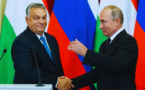
A leaked transcript of a phone call between Hungarian Prime Minister Viktor Orban and Russian President Vladimir Putin shows Orban offering extensive support to Moscow and describing himself as ready to help “in any way” in relation to the war in Ukraine
A leaked transcript of a phone call between Hungarian Prime Minister Viktor Orban and Russian President Vladimir Putin shows Orban offering extensive support to Moscow and describing himself as ready to help “in any way” in relation to the war in Ukraine
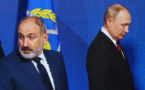
Vladimir Putin stated that Armenia cannot realistically pursue membership in the European Union while remaining part of the Moscow-led Eurasian Economic Union, arguing that the two frameworks are fundamentally incompatible
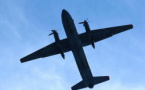
A Russian An-26 military transport aircraft has crashed in Crimea, killing all 29 people on board, according to information released by the country’s defense ministry and cited by Russian state media
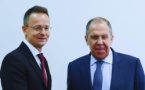
Audio recordings allegedly capturing conversations between Russian Foreign Minister Sergei Lavrov and Hungary’s Foreign Minister Péter Szijjártó have been leaked to the media
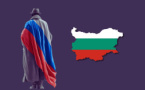
Ukrainian authorities have reported the existence of a recruitment network operating across parts of Eastern Europe, including Bulgaria, which is allegedly involved in organizing sabotage and destabilization activities in support of Russian interests
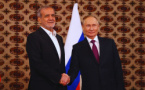
Iranian President Masoud Pezeshkian has publicly expressed gratitude to Russia and President Vladimir Putin, saying Moscow’s political backing and statements of support provide encouragement to Tehran during the ongoing conflict

Aniventure Comic Con Returns to Bulgaria with Star Guest Christopher Judge!
Global Fuel Shock: Oil Jumps Over 40% Since Iran War Began