Easter Monday in Bulgaria: Tradition and Family Visits
Orthodox Easter Monday is the day following Easter Sunday and is observed across Bulgaria as part of the wider Easter celebration within the Orthodox Christian tradition
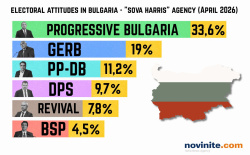
HOT: » Which party would you vote for (if you could) in the upcoming snap vote in Bulgaria on April 19?
 Send to Kindle
About 28% of adult Bulgarians would rather get vaccinated against Covid-19, while 43% would not. With regard to educational status, among higher school graduates the proportion of those declaring that they would get vaccinated is higher. The significant share (29%) are those who do not know or have not yet decided whether they would get vaccinated.
These are the results of the recent Trend polling agency survey on the attitudes of Bulgarians to vaccination against Covid-19.
The lack of certainty that the vaccine is safe (22%) and concerns about side effects (12%) are among the main reasons why Bulgarians do not want to get vaccinated. Conflicting information about the vaccine or lack of information (9%) also appears as a reason not to get vaccinated.
42% of respondents are of the opinion that with the advent of the vaccine against Covid-19, we are entering a new stage in which the world learnss to cope with this pandemic. Nearly one in three are skeptical of this claim.
The fact that some of the largest international pharmaceutical companies are behind the development of the vaccine against Covid-19 gives rise to confidence in the vaccine for 36% of respondents. 38% is the proportion of those who say that this is not a reason to trust the vaccines.
One in five (22%) approves of the idea that people who do not have a vaccine should be banned from air travel. More than half (57%) however, do not approve of this idea.
The fact that public and political figures have been vaccinated creates more confidence in the vaccine for every third Bulgarian. Again, a larger share is reported among skeptics - for 51% this does not build trust.
The mass media remain the main source of information about vaccines against Covid-19 (65%). Discussing the topic with friends and relatives also continues to be a way of gettin information for Bulgarians (38%), followed by social networks (28%).
Medical professionals/GPs are also a major source of information about vaccines against Covid-19 (27%). One in ten respondents say they do not seek information about vaccines at all.
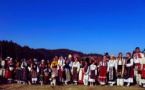
Orthodox Easter Monday is the day following Easter Sunday and is observed across Bulgaria as part of the wider Easter celebration within the Orthodox Christian tradition

Industrial output in Bulgaria posted a modest monthly increase in February 2026, but continued to decline sharply on an annual basis, according to preliminary, seasonally adjusted data from the National Statistical Institute.
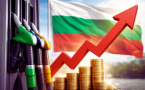
The president of the Confederation of Bulgarian Trade Unions, Plamen Dimitrov, has warned that inflation in Bulgaria is likely to exceed earlier projections, even if fuel prices begin to decline

The introduction of the euro in Bulgaria has so far produced only a limited and largely one-off effect on consumer prices, according to an analysis by the European Central Bank

Easter is the most important religious holiday in the Orthodox Christian calendar and is widely celebrated across Bulgaria. It marks the resurrection of Jesus Christ and follows the completion of Holy Week, which includes Good Friday and Holy Saturday

Holy Saturday, known in Bulgaria as Lazarus Saturday’s continuation of the Easter cycle, is a quiet but deeply symbolic day in the Orthodox Christian calendar

Health authorities in Bulgaria report a total of 101 confirmed measles cases across the country, according to data from the Ministry of Health

The Bulgarian Medical Association has called for an urgent overhaul of healthcare funding, insisting on a 25 percent increase in the prices of clinical pathways and all medical services, alongside a revision of the user fee for hospital stays

Health authorities report that measles infections in Bulgaria have surpassed 70 confirmed cases, with a total of 73 registered as of April 3

Health authorities have reported a total of 66 confirmed measles cases in Bulgaria, with the first infection now recorded in Sofia, according to data published on the Ministry of Health’s epidemic monitoring platform.
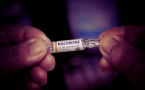
All emergency medical centers across Bulgaria have now been equipped with the opioid antidote Naloxone, a development confirmed by the Ministry of Health. The drug is used in cases of overdose and is considered critical for saving lives in emergencies inv
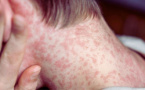
A total of 43 measles infections have been recorded across three regions in Bulgaria, according to data released by the Ministry of Health on March 30

Aniventure Comic Con Returns to Bulgaria with Star Guest Christopher Judge!

Global Fuel Shock: Oil Jumps Over 40% Since Iran War Began