According to a recent survey of Gallup International, 61 % of Bulgarians have not heard of an Armenian genocide having taken place in the Ottoman Empire, while 39 % are familiar with the event.
This amounts to around two million Bulgarian adult citizens currently residing in the country, who are familiar with the issue.
The majority of the respondents (60 %) did not know or could not say whether the Bulgarian Parliament should recognise that the mass killings of Armenians in the Ottoman Empire constituted a genocide.
One third (31 %) expressed opinion that the Bulgarian Parliament should recognise the Armenian genocide, while less than 10 % were against such a move.
If only the share of people, who have heard of the genocide, is considered, then 66 % are in favour of the Bulgarian Parliament recognising it, while only 6 % are against such a move.
Gallup estimated that between one million and 1.3 million Bulgarian adults are familiar with the mass killings, which took place in the Ottoman Empire, and are generally in favour towards their official recognition as a genocide.
The survey of Gallup International was conducted between January 30 and February 5 among 1011 adult Bulgarians at the request of the Armenian Embassy to Bulgaria.
These figures come as Armenia commemorates the centenary of the mass killings of Ottoman Armenians on Friday.
The Bulgarian Parliament recognised that the killings constituted a mass extermination, but not a genocide, as had been initially proposed by the Ataka nationalist party.
The decision of the Bulgarian MPs declares April 24 as a day for commemoration of the Armenian victims.


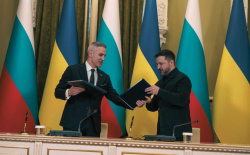
 File photo