Easter Monday in Bulgaria: Tradition and Family Visits
Orthodox Easter Monday is the day following Easter Sunday and is observed across Bulgaria as part of the wider Easter celebration within the Orthodox Christian tradition
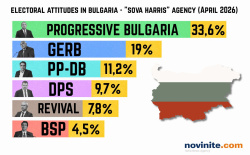
HOT: » Which party would you vote for (if you could) in the upcoming snap vote in Bulgaria on April 19?
 Send to Kindle
The government has decided to raise minimum wage by BGN 40, increase pension age by four months and keep health and pension insurance contributions unchanged next year.
The decisions were made part of the 2015 budget draft adopted by the minority coalition cabinet at an extraordinary meeting on Monday alongside the budgets of the National Health Insurance Fund and the National Social Security Institute.
Updated budget forecasts for 2016 and 2017 were also approved.
The government projected a budget deficit equivalent to 3.0% of GDP next year, 2.5% for 2016 and 2.0% for 2017.
Assuming new debt worth BGN 8.1 B in 2015 would take total debt figure at BGN 24.5 B at the end of next year. Debt-to-GDP ratio was projected at 29.7%.
According to the 2015 budget draft, to be submitted to Parliament for approval, the minimum wage, currently set at BGN 340, will rise to BGN 360 from 1 January and to BGN 380 from 1 July next year.
Further increases to BGN 420 from 1 January 2016 and BGN 460 from 1 January 2017 were also planned.
According to Finance Minister Vladislav Goranov, the planned increase will boost the disposable income and take the minimum wage closer to the medium level for Bulgaria. Currently the minimum wage stands at about 42% of the medium salary – a relatively low ratio by European standards, Goranov explained.
Pension age will be increased by four months for both men and women next year following a freeze in 2014, the government decided, rejecting the proposal of Social Policy Minister Ivaylo Kalfin to limit the increase to two months. The same rate of increase by four months was projected for each of 2016 and 2017.
Maximum insurable income for 2015 was increased by BGN 200 to BGN 2,600.
Pensions would rise by 1.9% as of July 1 next year. Maximum pension was capped at BGN 910.
A total of BGN 3.1 B including a reserve of BGN 300 M was allocated to the National Health Insurance Fund. Nearly half of the sum, or BGN 1.3 B, was allocated to hospitals, and a further BGN 554 M would go towards procurement of medicines.
The government would also extend a loan of up to BGN 2 B to the Deposit Insurance Fund to help finance repayment of state-guaranteed deposits with collapsed Corporate Commercial Bank, or KTB.
"Without claming that it is possible to make the best financial plan of the state within 20 days, we guarantee that this is a stable and realistic budget which won’t be put to debate like the 2014 budget,” Goranov commented after the cabinet session.

Orthodox Easter Monday is the day following Easter Sunday and is observed across Bulgaria as part of the wider Easter celebration within the Orthodox Christian tradition

Industrial output in Bulgaria posted a modest monthly increase in February 2026, but continued to decline sharply on an annual basis, according to preliminary, seasonally adjusted data from the National Statistical Institute.
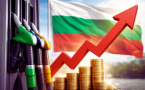
The president of the Confederation of Bulgarian Trade Unions, Plamen Dimitrov, has warned that inflation in Bulgaria is likely to exceed earlier projections, even if fuel prices begin to decline

The introduction of the euro in Bulgaria has so far produced only a limited and largely one-off effect on consumer prices, according to an analysis by the European Central Bank

Easter is the most important religious holiday in the Orthodox Christian calendar and is widely celebrated across Bulgaria. It marks the resurrection of Jesus Christ and follows the completion of Holy Week, which includes Good Friday and Holy Saturday

Holy Saturday, known in Bulgaria as Lazarus Saturday’s continuation of the Easter cycle, is a quiet but deeply symbolic day in the Orthodox Christian calendar

The Ministry of Finance has released a broad public dataset covering more than 7,000 public procurement contracts with a combined value exceeding 30 billion euros
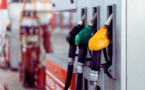
Caretaker Finance Minister Georgi Klisurski said he expects fuel prices at gas stations to ease in the coming period, pointing to a sharp decline in international oil markets
Bulgaria’s new government borrowing for 2026 has surpassed the 1 billion euro mark following the latest successful auction of state securities, according to data cited from the Bulgarian National Bank

Bulgaria recorded only a modest and one-off increase in inflation following the adoption of the euro on January 1, with the effect estimated at between 0.3 and 0.4 percentage points

Data released by the Ministry of Finance, covering budget execution for February 2026 and preliminary estimates for March 2026, indicate a marked deterioration in Bulgaria’s fiscal position

In the 2026 edition of the Index of Economic Freedom, compiled by the Heritage Foundation, Bulgaria is placed 38th out of 176 countries, positioned between Costa Rica and Oman

Aniventure Comic Con Returns to Bulgaria with Star Guest Christopher Judge!
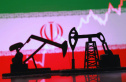
Global Fuel Shock: Oil Jumps Over 40% Since Iran War Began