Hungarians Agree On Need For A “Different” EU Relationship, But Split On Ukraine Stance
NEW POLL: HUNGARIANS UNITED ON NEED FOR A ‘DIFFERENT’ RELATIONSHIP WITH THE EU, BUT DIVERGENCES REMAIN ON UKRAINE
HOT: » Which party would you vote for (if you could) in the upcoming snap vote in Bulgaria on April 19?
 Send to Kindle
 Thousands of demonstrators light up their mobile phones as they protest against an internet tax planned to be introduced by the Hungarian government in front of the Ministry of National Economy in Budapest, Hungary, 26 October 2014. Photo EPA/BGNES
Thousands protested in Budapest on Sunday against Hingarian government’s plans to impose tax on Internet data traffic.
Opponents to the new levy say it will not only make it more expensive for individuals and businesses to use Internet, especially for cash-strapped schools and universities, but will also restrict access to the Web to government critics who mainly use online media.
The Hungarian government led by Prime Minister Viktor Orban included the new levyin the 2015 draft tax bill submitted to parliament. Under the proposed draft, Internet providers will have to pay a tax of 150 forints (EUR 0.50) per gigabyte of data traffic traffic transferred over their networks.
Even though the draft suggests companies will be able to offset corporate income tax against the new levy, the protesters believe common users will have to bear the increased tax burden.
Orban has said the new levy will be an extension of phone call and text taxes his government introduced in 2011. Neelie Kroes, the outgoing European Commissioner in charge of the EU’s digital agenda, said last week the new tax will hurt Hungary's digital economy, pointing out that the country has a below EU-average score its Internet use, broadband access and online regulation.
According to state-run Hungarian news agency MTI, protests against the planned new tax were also held in the towns of Pecs, Miskolc and Veszprem.
The organizers of the protest action in Budapest said in a statement the proposed new tax “is part of the Orban government’s increasingly repressive efforts to control and punish independent media and civil society watchdog groups through both legal and economic means.”
Orban’s government plans to collect as much as 25 billion forints (EUR 81M) of revenue from the measure. According to the Economy Ministry, the new levy is needed because people increasingly use Internet-based services instead of traditional phones.
While the demonstration was underway, Orban’s governing Fidesz party issued a statement in which it promised to submit on Monday an amendment to the draft legislation in parliament, which would cap monthly payments for household subscribers at 700 forints (EUR 2.3).

NEW POLL: HUNGARIANS UNITED ON NEED FOR A ‘DIFFERENT’ RELATIONSHIP WITH THE EU, BUT DIVERGENCES REMAIN ON UKRAINE
A group of Members of the European Parliament has raised concerns over the potential leakage of confidential EU information to Russia, urging stronger safeguards within the European Parliament

US Vice President JD Vance launched a sharp attack on the European Union during a visit to Budapest, accusing Brussels of interfering in Hungary’s election just days before a closely contested vote that could reshape the country’s political landscape
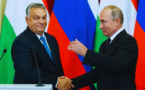
A leaked transcript of a phone call between Hungarian Prime Minister Viktor Orban and Russian President Vladimir Putin shows Orban offering extensive support to Moscow and describing himself as ready to help “in any way” in relation to the war in Ukraine
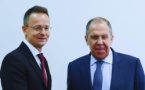
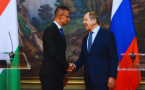
Audio recordings allegedly capturing conversations between Russian Foreign Minister Sergei Lavrov and Hungary’s Foreign Minister Péter Szijjártó have been leaked to the media

U.S. President Donald Trump has thrown his support behind Hungarian Prime Minister Viktor Orban ahead of Hungary’s April 12 election, praising him as a “true friend, fighter, and winner.”
A group of Members of the European Parliament has raised concerns over the potential leakage of confidential EU information to Russia, urging stronger safeguards within the European Parliament
The European Public Prosecutor’s Office (EPPO) has carried out a series of coordinated investigative actions across several countries, including Bulgaria and Romania, as part of a probe into suspected large-scale fraud involving EU funds

The caretaker government has approved a decision endorsing the Partnership Agreement between the European Union and its Member States and the Mercosur bloc
US Vice President JD Vance launched a sharp attack on the European Union during a visit to Budapest, accusing Brussels of interfering in Hungary’s election just days before a closely contested vote that could reshape the country’s political landscape
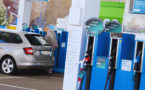
Fuel prices in Germany have recently reached new highs, with diesel briefly exceeding 2.40 euros per litre during the Easter holiday period before easing slightly afterward
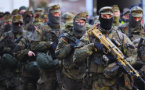
A recently revised German military service framework has triggered public debate after it emerged that it places new travel-related obligations on men aged between 17 and 45

Aniventure Comic Con Returns to Bulgaria with Star Guest Christopher Judge!
Global Fuel Shock: Oil Jumps Over 40% Since Iran War Began