€7.3 Billion on the Table: Is Bulgarian Business Ready for Europe’s Defense Boom?
Europe is undergoing a fundamental shift in how it approaches defense, moving beyond increased spending toward the creation of an entirely new industrial ecosystem
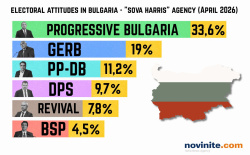
HOT: » Which party would you vote for (if you could) in the upcoming snap vote in Bulgaria on April 19?
 Send to Kindle
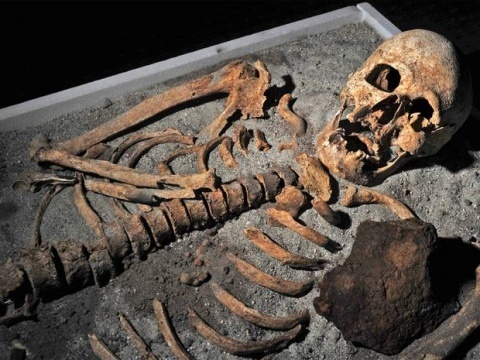 The skeleton of a man at Sozopol in Bulgaria, with an iron stake driven through his chest. Photo by Getty Images
By BBC Monitoring
Two towns in Bulgaria and Romania are planning to boost their tourist appeal by capitalising on their "vampire" past, it seems.
Bulgaria's ancient city of Sozopol on the Black Sea coast is teaming up with medieval Sighisoara in Romania, the birthplace of Vlad the Impaler, the ruler thought to have inspired Bram Stoker's Dracula.
Last year, archaeologists in Sozopol found the 700-year-old skeleton of a man with an iron spike through his chest. The old pagan ritual was meant to prevent "bad" dead people from rising from their graves.
Sozopol's mayor, Panayot Reyzi, saw an opportunity to attract more tourists by twinning his city with Sighisoara. "Both Dracula and our vampire had a limp and could've been cousins," he tells the Flagman news website.
Recently he announced the two towns had agreed to create a "vampire trail". Tourists visiting Dracula's house in Sighisoara would also be encouraged to go to neighbouring Bulgaria to see the "Sozopol vampire", explains Focus News.
The number of visitors to the archaeological museum in Sozopol has quadrupled since it exhibited the pierced skeleton this summer, Burgas 24 news website reports.
However, with the "vampire trail" stretching to nearly 700 km, it would take a long day to bus tourists from one attraction to the other.

Europe is undergoing a fundamental shift in how it approaches defense, moving beyond increased spending toward the creation of an entirely new industrial ecosystem

Energy expert Boyan Rashev has warned that Europe could be moving toward what he described as an “energy lockdown” scenario if fuel supply pressures continue to worsen

The Bulgarian Ministry of Health has expressed support for the Bulgarian Medical Association’s proposal to raise the prices of all medical services by 25 percent

Fuel prices in Bulgaria have continued to edge upward, with diesel and gasoline both registering increases in the days following the Easter holiday

A leading global research center on democratic systems has issued a stark warning about political trends in several countries, concluding in its latest annual report that Bulgaria is now among those showing clear signs of democratic backsliding
Weather conditions across Bulgaria today are expected to remain stable and predominantly sunny, accompanied by light winds coming from the southwest

Brazen Bulgarian gangs "terrorise the elderly and rob them over their life savings with increasingly aggressive phone scams nettling millions of euros," according to an AFP story.

The prospect of US President Donald Trump's moving closer to Russia has scrambled the strategy of "balancing East and West" used for decades by countries like Bulgaria, the New York Times says.

Bulgarians have benefited a lot from their EU membership, with incomes rising and Brussels overseeing politicians, according to a New York Times piece.

German businesses prefer to trade with Bulgaria rather than invest into the country, an article on DW Bulgaria's website argues.

The truth about Bulgaria and Moldova's presidential elections is "more complicated" and should not be reduced to pro-Russian candidates winning, the Economist says.

President-elect Rumen Radev "struck a chord with voters by attacking the status quo and stressing issues like national security and migration," AFP agency writes after the presidential vote on Sunday.

Aniventure Comic Con Returns to Bulgaria with Star Guest Christopher Judge!
Global Fuel Shock: Oil Jumps Over 40% Since Iran War Began