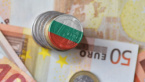
During the third quarter of 2013, the relative share of monetary income into the total household income in Bulgaria was 97.6%. File photo
The average quarterly total income per household member in Bulgaria during the third quarter of 2013 was BGN 1 242 or by 10.9% more compared to the same quarter of 2012.
The data was released by the National Statistics Institute.
Wages and salaries continued to be the main source of household income - 52.9% from the total income. During the third quarter of 2013 it was BGN 657 per capita or by 10.4% more compared to the third quarter of 2012. The relative share of wages and salaries within the total income decreases by 0.2 percentage points (pp) during the surveyed period.
The second important source of household income is the income from retirement pensions. During the third quarter of 2013 it was BGN 312 per capita or by 8.5% more compared to the third quarter of 2012.The relative share of pensions within the total income was 25.1%.
The income from self-employment was the same during the third quarter of 2013 compared to the third quarter of 2012; it was BGN 94 per capita and the relative share within the total income decreased by 0.8 pp and it was 7.6%.
The weight of other social benefits during the third quarter of 2013 was relatively insignificant in the total household income. During the period this income was BGN 34; the relative share decreased by 0.8 pp and was 2.7%.
The relative share of monetary income into the total income during the third quarter of 2013 was similar in comparison with the same quarter of 2012 and was 97.6%.
The total expenditure per household member during the third quarter of 2013 was BGN 1 145 and it increased by 10.8% in relation to the same quarter of 2012.
Expenditures for food and housing had the greatest share in forming the total expenditure and constituted 50.8% of them.
The most significant part in the household budget was expenditure for food and non-alcoholic beverages. As absolute values it was BGN 388 on average per household member during the third quarter of the year; represented 33.9% of the total expenditure and decreased by 0.4% in comparison with the same quarter last year.
The expenditure for housing (water, electricity, heating and furnishing) for the compared quarter increased from BGN 190 to BGN 194 per capita; the relative share was 16.9% of the total expenditure.
The expenditure for health increased from BGN 48 to BGN 52 per capita; its relative share decreased by 0.2% and represented 4.5% of the total expenditure.
The expenditure for transport and communication increased by 7.9%; it was BGN 123 per capita as absolute values during the third quarter of 2013; the relative share decreased by 0.2 pp and represented 10.8% of the total expenditure.
The expenditure for alcoholic beverages and tobacco was BGN 48 per capita during the third quarter of 2013, whose relative share in the total expenditure was 4.2% or 0.4 pp less compared to the third quarter of 2012.
The expenditure for clothing and footwear was BGN 39 per capita during the third quarter of 2013, which represented 3.4% of the total expenditure or by 0.3 pp more compared to the third quarter of 2012.
The average consumption of main food products per capita didn't change vastly during the third quarter of 2013, compared to the third quarter of 2012. Increase was observed in consumption of fruit - from 19.1 kg to 20.2 kg, meat - from 7.1 to 7.5 kg, milk - from 4.6 kg to 4.9 liters, vegetables - from 30.1 kg to 30.3 kg and eggs - from 33 to 35. Decrease was observed in the consumption of yoghurt - from 7.5 kg to 7.2 kg and in bread and pasta products - from 24.6 kg to 24.5 kg.