Russian Drone Crosses Into Romania, Fighter Jets Scrambled
Romania’s Ministry of National Defense has confirmed that a military drone crossed into Romanian airspace and later crashed, after being diverted during Ukrainian air defense activity
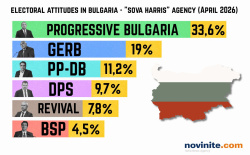
HOT: » Which party would you vote for (if you could) in the upcoming snap vote in Bulgaria on April 19?
 Send to Kindle
 The 1.3 million US diplomatic cables from the period of the Cold War, 1973 – 1976, released by WikiLeaks, contain 4 226 diplomatic cables from the US Embassy in Sofia. File photo
The site for investigative journalism Bivol.bg, official partner of WikiLeaks for Bulgaria, has analyzed the records from the latest whistle-blowing project "The Kissinger Cables."
The 1.3 million US diplomatic cables from the period of the Cold War, 1973 – 1976, released by WikiLeaks, contain 4 226 diplomatic cables from the US Embassy in Sofia. 574 of them are classified as "CONFIDENTIAL" and just 31 are classified as "SECRET." The key word (tag) Bulgaria is found in 16 389 texts, 405 of which have the grief "SECRET."
Bivol further informs that during the Cold War American diplomats have been more productive, sending 10 times more cables than during the period 2003 – 2010. The Cold War cables are, however, shorter, which is explained with mutual spying and information blackouts, prompting diplomats to report even minor rumors obtained through their contacts.
The Bulgarian-linked "Kissinger Cables" do not contain any shocking revelations, according to Bivol, but are a "gold mine" for historians and anyone researching the country's communist past.
They show the American diplomacy's viewpoints about communist Bulgaria, its internal and foreign policies, and the fragile resistance to the regime.
Expectedly, the most mentioned name is the one of communist dictator, Todor Zhivkov – 693 times. There are comments on all his official appearances, including in the media, in the country and abroad. Unofficial information from various sources and even rumors are added to the comments. Many titles include reports on Zhivkov's health, such as a minor heart attack and a prostate surgery with suspicions it was related to cancer.
In addition to Zhivkov, the diplomats focus on members of Politburo and their appearances at events or missing such events, which is interpreted as tipoff for intrigues and struggles for power. Information on dissidents is scarce – one is a report about four members of the Writers' Union refusing to sign a declaration condemning Solzhenitsyn, seen at the time as a heroic act.
"WE WOULD ALSO NOT DISCOUNT POSSIBILITY THAT SUCH A RUMOR COULD HAVE ORIGINATED FROM SOME FOREIGN SOURCE WITH DISINFORMATION INTEREST IN MIND, EITHER TO DISCREDIT SOVIETS (CHINESE) OR TO CAUSE DISQUIET (SOVIETS THEMSELVES)," Ambassador Barnes has written.
The rumor has prompted a check in Sofia and a second secret cable, dated May 28, 1974, this time written by the American Ambassador in Sofia, Herz.
In it the diplomat reports he "ASKED ROMANIAN AMBASSADOR SIMEDREA WHAT HE THOUGHT OF RECURRING RUMORS "IN THE WEST" THAT BULGARIA MIGHT ENTER THE USSR AS SIXTEENTH SOVIET REPUBLIC. SIMEDREA, WHO HAD JUST WITNESSED BULGARIAN LEADERSHIP IN ACTION DURING CEAUSESCU AND MACOVESCU VISITS, SAID "ONE CAN ONLY ADMIRE THE BULGARIANS. ON THE SURFACE THEY ARE AT ONE WITH THE SOVIET UNION, BUT BELOW THE SURFACE THEY ARE THE MOST NATIONALISTIC COUNTRY IN THE WORLD."
Romania’s Ministry of National Defense has confirmed that a military drone crossed into Romanian airspace and later crashed, after being diverted during Ukrainian air defense activity

The Romanian government is set to introduce an emergency ordinance declaring a crisis on the oil and petroleum products market, alongside a package of measures aimed at shielding both the economy and consumers.
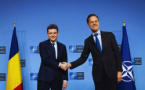
NATO Secretary General Mark Rutte has stated that the alliance is prepared to defend Romania in the event of any threat linked to Iran. His remarks came after talks in Brussels with Romanian President Nicușor Dan
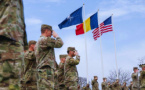
Iran has issued a warning to Romania, stating that it will take political and legal action if the country permits the United States to operate military bases on its territory for operations targeting Iran
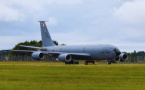
The first three US aerial refueling aircraft have arrived in Romania as part of a temporary deployment requested by Washington amid the ongoing Middle East conflict
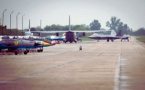
Romania has approved a request from the United States to deploy military personnel and equipment on its territory, including facilities located relatively close to the Bulgarian border
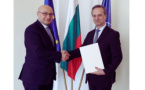
The newly appointed Ambassador of the Republic of Azerbaijan to Bulgaria, H.E. Elmar Mammadyarov, has officially begun his diplomatic mission after presenting copies of his credentials to Deputy Foreign Minister Radi Naydenov at the Ministry of Foreign Af
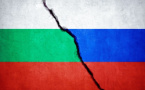
The Russian Embassy in Sofia has circulated a warning issued by the Foreign Ministry in Moscow, cautioning its citizens about what it describes as a heightened risk of detention abroad at the request of US authorities
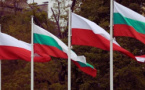
The Bulgarian Parliament has adopted a decision establishing February 14 as the official Day of Bulgarian–Polish Friendship and Cooperation. The measure passed unanimously, receiving 165 votes in favor.

Acting Foreign Minister Nadezhda Neynski said that the diplomatic note sent by Iran to Bulgaria should be viewed as standard communication in a period of heightened international tension, stressing that it does not constitute a threat but rather a formal
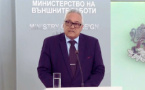
Acting Deputy Foreign Minister Marin Raykov has commented on the diplomatic note sent by Iran to Bulgaria, stressing that it should not be interpreted as a reason for public alarm

Bulgaria’s Foreign Ministry has reiterated its position that North Macedonia must fully implement its commitments regarding the protection of the rights of communities, particularly in the context of its EU accession process

Aniventure Comic Con Returns to Bulgaria with Star Guest Christopher Judge!
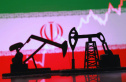
Global Fuel Shock: Oil Jumps Over 40% Since Iran War Began