Bulgaria Hit by Fuel Shock as Diesel Prices Surge 37% Since Iran War Began
Bulgaria’s fuel market has recorded a sharp upward shift since the outbreak of the war in Iran, with diesel and petrol prices rising significantly across the country
HOT: » Which party would you vote for (if you could) in the upcoming snap vote in Bulgaria on April 19?
 Send to Kindle
Bulgaria's government will come up with its investment decision for the construction of the Russian-sponsored gas transit pipeline South Stream on November 15, 2012, President Rosen Plevneliev announced.
Plevneliev met Monday with Economy Minister Delyan Dobrev over the upcoming signing of the contract for Bulgaria's participation in South Stream.
The meeting came after in the past few days the President declared that the Bulgarian public did not have sufficient information on the gas transit pipeline, while Mihail Andonov, head of the state-owned Bulgarian Energy Holding, alleged the opposite.
Dobrev has assured Plevneliev that all necessary information on South Stream and Bulgaria's participation in the project is contained in a file that he has presented to the Council of Ministers and the Presidency.
Earlier, Prime Minister Boyko Borisov confirmed about Dobrev's file, and assumed that Plevneliev might not be well-informed on the project because of his traveling abroad in the recent days.
"What matters to me for the sake of the Bulgarian citizens and consumers is the approach. Minsiter Dobrev assured me that efforts are being made to reduce the price of natural gas," Plevneliev said on Monday, referring to Bulgaria's natural gas supplies from Russia, its primary supplier.
The Bulgarian President further noted that a common EU position on South Stream is important for Bulgaria, in addition to the further development of the Southern Energy Corridor (aka Southern Gas Corridor).
Plevneliev did stress, however, that South Stream is a project that diversifies the pipeline routes but does not diversify the supplier, i.e. Russia.
Dobrev in turn announced that Slovenia's decision about its South Stream section is expected later on Monday, as are the investment decisions of France and Italy about the underwater section of the pipeline, with Bulgaria thus being "the last country to sign the investment decision."
"We are yet to make our investment decision on Thursday when we will have also worked out the parameters of out new gas [supply] contract [with Russia]," the Economy Minister said.
Dobrev emphasized that Bulgaria had "no financial commitments" to the construction of South Stream.
"South Stream on Bulgaria's territory will be fully funded with project funding," he said.
The South Stream pipeline is intended to transport up to 63 billion cubic meters of natural gas to central and southern Europe, diversifying Russian gas routes away from transit countries such as Ukraine. Construction will start in December 2012, and not 2013 as previously planned.
The pipes will go from Russia to Bulgaria via the Black Sea; in Bulgaria it will split in two – with the northern leg going through Serbia, Croatia, Hungary, and Slovenia to Austria and Northern Italy, and the southern leg going through Greece to Southern Italy. Recent reports have indicated, however, that Russian energy giant Gazprom may give up on the construction of the offshore section of the South Stream gas pipeline to Austria.
The Black Sea underwater section of South Stream between Russia and Bulgaria will be 900 km long, and will be constructed at a maximum depth of 2 km.
In order to service the supplies for South Stream, Russia will expand its own gas transit network by building additional 2 446 km of pipelines with 10 compressor stations with a total capacity of 1473 MW, a project to be called "South Corridor" and to be completed in two stages by 2019.
The construction of the South Stream gas pipeline will begin in December 2012, and the first supplies for Europe are scheduled for December 2015.
The pipeline's core shareholders include Gazprom with 50%, Italy's Eni with 20% and Germany's Wintershall Holding and France's EDF with 15% each.
Gazprom has already established national joint ventures with companies from Austria, Bulgaria, Croatia, Slovenia, Greece, Hungary and Serbia to manage the onshore section of the South Stream pipeline.
Bulgaria recently committed itself to speeding up the construction of the Russian-sponsored pipeline on its territory, since on January 1, 2013, the EU is introducing new requirements for the access to energy networks.
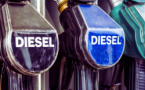
Bulgaria’s fuel market has recorded a sharp upward shift since the outbreak of the war in Iran, with diesel and petrol prices rising significantly across the country
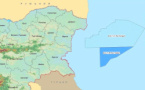
The second exploration drilling in the Krum-1 area of the Khan Asparuh block in Bulgaria’s Black Sea has also failed to identify commercially significant natural gas deposits, according to OMV Petrom

The Ombudswoman institution has voiced strong opposition to the proposed increase in heating prices in Sofia, which is expected to approach nearly 30 percent
The Energy and Water Regulatory Commission (EWRC) in Bulgaria has set the price of natural gas for April 2026 at 34.27 euros per megawatt-hour, excluding access, transmission, excise duties and VAT
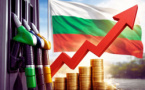
Fuel prices in Bulgaria have recorded a sharp upward movement over the past month, with diesel showing the most significant increase, according to data from the Fuelo platform
Bulgargaz has defended its previously submitted proposal for a 5% rise in natural gas prices for April before the Energy and Water Regulatory Commission, with CEO Veselin Sinabov stressing that there is currently no justification for any further increases

Aniventure Comic Con Returns to Bulgaria with Star Guest Christopher Judge!
Global Fuel Shock: Oil Jumps Over 40% Since Iran War Began