Instagram Takes Strict Measures against Weight Loss Products
Instagram has announced stricter posts for weight loss products and cosmetic surgery.
Society | September 19, 2019, Thursday // 10:51
HOT: » Which party would you vote for (if you could) in the upcoming snap vote in Bulgaria on April 19?
 Send to Kindle
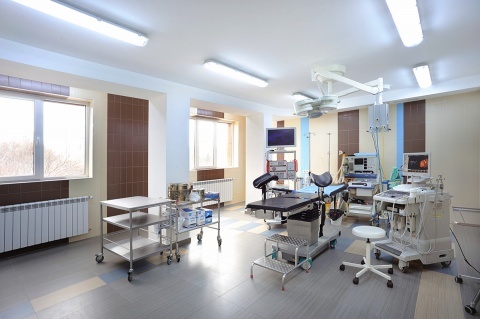 The St. Lazar Hospital in Sofia. Photo by st.lazar-hospital.com
Urinary incontinence is a symptom that hides a pathological condition of a serious disease. Both sexes can suffer from this problem but it is more frequent with women.
Many people believe that urinary incontinence is the result of aging. It can be several types:
- Stress incontinence – leakage of urine when coughing, sneezing, or otherwise increased abdominal pressure;
- Hyperactive bladder - urge incontinence or frequent urination – it is usually caused by an infection;
- Overflow incontinence – most often related to the first two types. Some substances such as coffee, alcohol, some pharmaceuticals can cause temporary urination problems;
- Functional incontinence – this is the result of the pathology of an individual body system. Conditions such as dementia, immobility, or depression do not allow the patient to realize the need to urinate;
- Mixed incontinence.
Incontinence often results in a number of complications – infections in the groin area, lifestyle changes. The diagnosis is pronounced based on a description of the symptoms, a thorough examination, a laboratory analysis of urine, and special tests – determining residual urine, ultrasound, cystography. The treatment depends on the type, the gravity of the problem, and the cause.
Urinary incontinence must be treated together with the illness that caused it. Sometimes the treatment is simple – exercises of the pelvis floor, Kegel exercises – voluntary contraction of the lesser pelvis muscles. Another method is the treatment of the bladder by postponing urination in order to increase the period before urinating.
Treatment with medicines depends on their type. For example, estrogen stimulates the alpha receptors of the detrusor and the sphincter, improve blood circulation of the organs in the lesser pelvis. If it is caused by vaginal prolapse, a vaginal pessary can be employed or the problem can be treated surgically.
There are many surgical treatment methods:
- The implantation of an artificial urinary ring;
- The injecting of a synthetic matter around the sphincter;
- Uretero-vesicopexy – it can be performed through the abdomen or through the vagina. The bladder can be fixed through the abdomen when it is prolapsed. This raises not only the bladder but also the urethra.
In the past, some clinics performed frontal vaginoplasty. This is a classical surgery for fixing the bladder through the vagina. These surgeries are often unsuccessful, and in other cases there is a new prolapse after a certain period of time. Now with there are sling technologies to the rescue. Each new method is created in order to correct some deficiencies of a previous one. The sling technologies use artificial matter from polypropylene that are completely compatible with the tissue and serve to lift and fix the urinary tract and the vaginal walls.
The so called sling is a band that is placed at the border between the bladder and the urethra that can be fixed suprapubically or transobturatorily. This changes the angle between the bladder and the urethra, and the leakage of urine stops. This method presents a one-day surgical operation, and requires a special regime for 45 days.
In case of a large prolapse – frontal or back – a large net called mesh is implanted which lifts and fixes the front or back vaginal wall and thus removes the prolapse. These surgeries have been practices all over Europe but have become available in Bulgaria only recently. They remove the problem permanently since the slings and the meshes grow together with the tissue, and prevent a new prolapse.
Dr. D. Bancheva
Obstetrics and Gynecology Hospital Saint Lazar
?4A Simeonovsko Shose Blvd
http://www.st.lazar-hospital.com
Tel.:+359 2 962 20 05
Mobile: +359 888 58 18 10 / +359 888 51 14 92
St. Lazar Hospital's Profile at BEST IN BG

Instagram has announced stricter posts for weight loss products and cosmetic surgery.

It has been seven years since the launch of the Assisted Reproductive Technology (ART) section at the Obstetrics and Gynecology Hospital Saint Lazar in Sofia.

An understanding of what is beautiful and a quest for perfection are directing more and more women to laser vaginal rejuvenation surgery.

The St. Lazar Hospital has been establishing its reputation among the obstetric-gynecology hospitals in Bulgaria for 12 years now, and it has deservedly won the trust and love of its patients.

Anders Behring Breivik has undergone plastic surgery several times, according to a childhood friend of his.

Health authorities in Bulgaria report a total of 101 confirmed measles cases across the country, according to data from the Ministry of Health

The Bulgarian Medical Association has called for an urgent overhaul of healthcare funding, insisting on a 25 percent increase in the prices of clinical pathways and all medical services, alongside a revision of the user fee for hospital stays

Health authorities report that measles infections in Bulgaria have surpassed 70 confirmed cases, with a total of 73 registered as of April 3

Health authorities have reported a total of 66 confirmed measles cases in Bulgaria, with the first infection now recorded in Sofia, according to data published on the Ministry of Health’s epidemic monitoring platform.

All emergency medical centers across Bulgaria have now been equipped with the opioid antidote Naloxone, a development confirmed by the Ministry of Health. The drug is used in cases of overdose and is considered critical for saving lives in emergencies inv

A total of 43 measles infections have been recorded across three regions in Bulgaria, according to data released by the Ministry of Health on March 30

Aniventure Comic Con Returns to Bulgaria with Star Guest Christopher Judge!

Global Fuel Shock: Oil Jumps Over 40% Since Iran War Began