Bulgaria Honors Victims of Communist Repressions
Society | August 23, 2012, Thursday // 20:12
- Tweet
 Send to Kindle
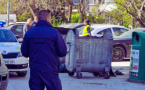
 An elderly man looks at the wreaths laid at the Memorial for the Victims of the Bulgarian communist regime in downtown Sofia. Photo by BGNES
Bulgarian citizens and politicians have honored the memory of the thousands of victims who perished in the repressions of the Bulgarian communist regime (1944-1989).
The remembrance took place at the special memorial in downtown Sofia, before the National Palace of Culture, on the occasion of August 23, the European Day of Remembrance for Victims of Stalinism and Nazism.
The event marked the first time since the European Day of Remembrance for Victims of Stalinism and Nazism became an official day of remembrance in 2012 that the ceremony features a wreath from the acting Bulgarian President (in this case, Rosen Plevneliev, whose term started in January 2012).
"History has no leftist and rightist reading, history must be objective. In 2012, we still have no objective reading of history in our textbooks," Bulgarian MEP from the ruling center-right GERB party Andrey Kovatchev stated in a speech at the memorial, as cited by BGNES.
The Union of Bulgarians Repressed by the Communist Regime has reminded that over 30 000 people perished in the first years after the establishment of the communist regime in Bulgaria in 1944-1948, while thousands technically remain missing as a result of the communist repressions.
The European Day of Remembrance for Victims of Stalinism and Nazism (known as the International Black Ribbon Day and under other names in some countries), which is observed on 23 August, was designated by the European Parliament in 2008/2009 as "a Europe-wide Day of Remembrance for the victims of all totalitarian and authoritarian regimes.
August 23 was chosen to coincide with the date of the signing of the Molotov-Ribbentrop Pact, in which the Soviet Union and Nazi Germany agreed to divide Eastern Europe between themselves, an event described by the European Parliament's President Jerzy Buzek in 2010 as "the collusion of the two worst forms of totalitarianism in the history of humanity.
In November 2009, the Bulgarian Parliament followed suit by declaring August 23 a day of remembrance for the victims of the crimes of all national-socialist, communist, and other totalitarian regimes in the world.
"Bow your head, Bulgarian. This wall incorporates the suffering of our nation. Let the memory of the innocent spilled blood burn our hears in eternal flames. Let the past never be repeated," states the inscription on the wall of the downtown Sofia memorial for the victims of the communist repressions in Bulgaria.

Bulgaria's Antarctic Expedition Ship Returns to Varna
The Bulgarian scientific research vessel “Sts. Cyril and Methodius” (NIC 421) has returned to Varna, docking at the Marine Station and marking the official end of the country’s 34th Antarctic expedition
Society | April 9, 2026, Thursday // 17:53
Weather in Bulgaria: Mixed Easter Forecast With Sun, Rain, and Gradually Rising Temperatures
Holiday weather conditions are expected to remain mixed across Bulgaria, with alternating periods of sunshine and rain showers, according to the forecast
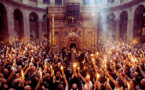
Holy Synod Confirms No Trip to Jerusalem, No Holy Fire Brought to Bulgaria
The Bulgarian Orthodox Church has decided that no official delegation will travel to Jerusalem this year to receive the Holy Fire, citing the ongoing tensions in the Middle East

Plovdiv Becomes Open-Air Stage as 6Fest Brings Street Arts from 11 Countries
Plovdiv will host the International Street Arts Festival 6Fest from April 20 to 26, 2026, turning the city into an open-air stage featuring performers from 11 countries across three continents

Bulgaria: Over 191,000 Cars Leave Sofia as Easter Travel Rush Begins
The Easter holiday getaway has officially begun in Bulgaria, with traffic leaving Sofia surging as thousands of people set off for the long weekend
Society | April 9, 2026, Thursday // 12:02
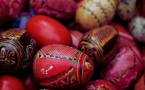
Holy Thursday in Bulgaria: Egg Dyeing , Bread Making and Reflection on Christ’s Suffering
Holy Thursday marks one of the most significant days in Holy Week, as Christians reflect on the final moments before the crucifixion of Jesus Christ