Is Russian Oil Flowing to Bulgaria in 2026?
Bulgaria's only oil refinery, Lukoil Neftochim Burgas, processed Russian crude for most of its post-Soviet history. Since March 2024, that has been banned by law
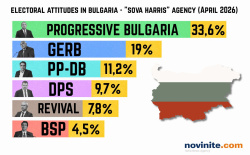
HOT: » Which party would you vote for (if you could) in the upcoming snap vote in Bulgaria on April 19?
 Send to Kindle
 Russian Foreign Minister Sergey Lavrov gives a press briefing at the end of NATO - Russia Foreign Ministers cooperation council at NATO headquarters, in Brussels, Belgium, 08 December 2011. Photo by BGNES
An "attack on Iran by Western powers" could cause an unpredictable "chain reaction" throughout the region, Russia's Foreign Minister Sergei Lavrov has warned.
"It is impossible to list all the consequences [of an attack]. But I have no doubt that it would pour oil on the still smoldering fire of Sunni-Shia confrontation, which would lead to a chain reaction," Sergei Lavrov said in an annual address on Wednesday, as cited by RIA Novosti.
"As for how likely such a catastrophe is, you need to ask those who constantly mention this as an option," he added. Lavrov also said that Russia would "do everything" in its power to prevent an attack on Iran.
The Russian news agency RIA Novosti points out that although Israeli Defense Minister Ehud Barak said on Wednesday that Israel is "very far off" from taking the decision to strike Iran, Washington and Tel Aviv have refused to rule out military force against Tehran over suspicions that its nuclear program is aimed at the production of atomic weapons.
Iran, which recently began enriching uranium at an underground bunker, denies it is seeking nuclear arms and says its program is to provide peaceful civilian energy.
Lavrov also said that sanctions on Iranian oil exports being discussed by the European Union would "hurt" ordinary people and were more about stirring up unrest than nuclear non-proliferation.
"This has nothing to do with a desire to strengthen nuclear non-proliferation," he said. "It's aimed at stifling the Iranian economy and the population in the apparent hope of provoking discontent," he said, adding that sanctions would also prove "an obstacle" to the revival of a dialog between Iran and the six world powers involved in negotiations on its nuclear program.
Oil exports make up some 80 percent of Iran's foreign revenues and Tehran has threatened to close the Strait of Hormuz, the export route for one third of global seaborne traded oil, in response to sanctions. US Defense Secretary Leon Panetta has said such a move would provoke a response.
RIA Novosti points out that analysts are doubtful whether Russia has the military and economic clout to play a decisive role on Iran
"Russia has practically no real influence left in the Middle East. Iran cannot rely on Russia to defend it. The US and Israel are certainly not afraid of this. Russia will not definitely go to war over Iran," said analyst Sergei Demidenko of the Moscow-based Institute of Strategic Studies and Analysis.

Bulgaria's only oil refinery, Lukoil Neftochim Burgas, processed Russian crude for most of its post-Soviet history. Since March 2024, that has been banned by law

Hungary’s Tisza party leader Péter Magyar has said the country cannot abandon Russian oil supplies at present, stressing the continued importance of deliveries via the Druzhba pipeline and expressing hope that flows will resume after recent disruptions.
A report by the Financial Times claims that Iran secretly obtained a Chinese-made spy satellite in late 2024, which was later used to track US military installations across the Middle East during the recent conflict
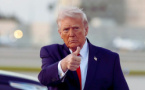
US President Donald Trump said the conflict with Iran is “very close to over,” pointing to the possibility of a new round of direct talks expected to take place in Pakistan in the coming days

Speaking at a public meeting in Pazardzhik, “We Continue the Change” leader Asen Vassilev warned that a new external shock linked to Iran could trigger another major economic crisis, with direct effects on energy prices, food costs and vulnerable househol
U.S. President Donald Trump has again escalated rhetoric beyond the ongoing war with Iran, suggesting that Cuba could become Washington’s next target

Thousands of people took to the streets in Slovakia and abroad on Tuesday to protest a proposal by populist Prime Minister Robert Fico that would end mail-in voting for citizens living outside the country
A report by the Financial Times claims that Iran secretly obtained a Chinese-made spy satellite in late 2024, which was later used to track US military installations across the Middle East during the recent conflict

The International Monetary Fund has revised downward its outlook for the euro area, now projecting economic growth of 1.1% this year
US President Donald Trump said the conflict with Iran is “very close to over,” pointing to the possibility of a new round of direct talks expected to take place in Pakistan in the coming days

A shooting at a school in southeastern Turkey left 16 people injured after a former student opened fire before taking his own life, according to local authorities.
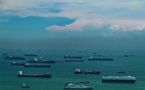
Despite the US-imposed naval blockade targeting Iranian-linked maritime traffic through the Strait of Hormuz, several sanctioned vessels have continued to pass through the strategic waterway

Aniventure Comic Con Returns to Bulgaria with Star Guest Christopher Judge!
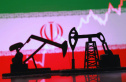
Global Fuel Shock: Oil Jumps Over 40% Since Iran War Began