Bulgaria Sees Foreign Direct Investment Surge Nearly 50% to €1.4 Billion in May
Foreign direct investment (FDI) in Bulgaria reached €1.4 billion in May 2025, marking a notable increase of 46.9% compared to the same month in the previous year
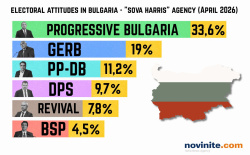
HOT: » Which party would you vote for (if you could) in the upcoming snap vote in Bulgaria on April 19?
 Send to Kindle
 A survey of OSI-Sofia has registered declining appeal of emigration for Bulgarian workers as a result of the ongoing financial crisis. Photo by BGNES
The fact that some EU countries still impose restrictions on access to their labor market for Bulgarian citizens means only one thing: that these people will spend more time there working illegally.
The conclusion is part of the "Bulgarian Labor Migration: Do Restrictions Make Sense" report of the Open Society Institute - Sofia published by Capital daily on Monday.
The study conducted by OSI–Sofia indicates that Spain, Germany, Italy, Greece and the United Kingdom have been the main recipient countries for Bulgarian emigrants in the European Union over the past 10–15 years.
The list of the most popular destinations for migrant workers from Bulgaria includes countries which lifted labor restrictions in 2007, like Spain, as well as others, like Germany, which will keep the limitations in force for the maximum possible period, until 2014.
According to the survey, there has been no difference in the flow of Bulgarian migrants to Spain and Germany after Bulgaria's accession to the EU on January 1, 2007.
The report of the Sofia-based think tank suggests that the appeal of emigration has been gradually declining for Bulgarians due to the fact that its unemployment rate is now comparable to Western European levels.
At the same time, OSI-Sofia notes that differences in income have decreased: in the 1990s per capita income in Western Europe was 4 times higher than that in Bulgaria, while one decade later this ratio is 2.5 measured by purchasing power parity.
The study identifies hotel and tourism, domestic work, care services, construction and trade as the main employment sectors for Bulgarian labor emigrants.
The think-tank also notes that 2009 interviews with Bulgarian workers in the United Kingdom highlight agriculture as another important start-up sector.
OSI-Sofia also compares statistics on remittances received in Bulgaria,EUR 596.8 M, and FDI data, EUR 534.5 M, as recorded by the Bulgarian National Bank (BNB) for the period January-September.

Foreign direct investment (FDI) in Bulgaria reached €1.4 billion in May 2025, marking a notable increase of 46.9% compared to the same month in the previous year

Foreign direct investment (FDI) in Bulgaria recorded a net positive flow of 1.24 billion euros for the first nine months of 2024

February witnessed a surge in remittances from Bulgarians residing abroad, reaching a remarkable EUR 110.5 million, marking the highest value since last July

Linguistic similarities, high levels of education, labour market shortages, the mobilisation of national and EU resources, civil society involvement, and close cultural ties have helped Ukrainian refugees to find temporary employment in the EU and Norway

Unemployment in Bulgaria saw a slight uptick in January, with the registered rate climbing by 0.2% compared to December figures. According to data from the Employment Agency, the unemployment rate now stands at 5.8%

Tech billionaire Elon Musk made a striking prediction during this week's artificial intelligence summit – he believes that artificial intelligence will eventually render paid labor unnecessary

EU countries will each have to secure guarantees worth billions of euros for the loan to Ukraine funded by frozen Russian assets, Politico’s Brussels edition reports.

Bulgaria's Minister of Defense Todor Tagarev admitted the possibility that an explosive device might have been planted on board the crashed plane in which Yevgeny Prigozhin was traveling

The European Commission has announced that it is preparing criminal proceedings against Bulgaria, Cyprus, Greece, Malta, and Portugal for incorrect application of the rules on the exchange of data on criminal records and the establishment of the relevant

The European Commission has started an evaluation of the Plan for Reconstruction and Development of Bulgaria, said the spokesman of the European Commission Eric Mamer. The document was submitted to the Commission on 15 October.

58% of Bulgarians do not support the introduction of the euro as the official currency in the country. This shows a study prepared by Trend agency specifically for the financial forum NEXT DIFI 2021, organized by b2b Media for the fifth year. The data dur

Too late Bulgaria began to explain its own position towards North Macedonia, as it should have been clear to our European partners some time ago.

Aniventure Comic Con Returns to Bulgaria with Star Guest Christopher Judge!

Global Fuel Shock: Oil Jumps Over 40% Since Iran War Began