Putin Declares Easter Ceasefire in Ukraine War
The Kremlin has announced that Russian President Vladimir Putin has ordered an “Easter ceasefire” in the war in Ukraine, declaring a temporary halt in hostilities lasting around 36 hours
HOT: » Which party would you vote for (if you could) in the upcoming snap vote in Bulgaria on April 19?
 Send to Kindle
 Map from novinite.bg
Bulgaria's Environment Ministry has postponed by one addition week its final decision on the fate of the troubled Burgas-Alexandroupolis oil pipeline project.
On Monday, October 31, the Ministry was supposed to make public its pronouncement on whether the environmental impact assessment met the eco requirements of the Bulgarian legislation.
However, it has made it clear that its experts need one more week to complete their evaluation of the document submitted to them by Trans-Balkan Pipeline, the Bulgarian-Greek-Russian company in charge of the pipe, reported Novinite.bg.
Trans-Balkan Pipeline BV, a Bulgarian-Greek-Russian government consortium, submitted the revised and supplemented ESIA (environmental and social impact assessement) report to the Ministry of Environment and Water of Bulgaria on September 30, 2011, within the term set by the Ministry
The EIA of the Burgas-Alexandroupolis pipeline project company had been rejected and returned for correction three times by the Bulgarian Environment Ministry over the recent months, casting ever greater doubts on the fate of the controversial oil pipeline initiative.
The newly submitted report by TBP is said to be of enormous volume, which, according the government sources, is taken to mean that the EIA has been thoroughly reworked.
If the Environment Ministry in Sofia approves the report, its word still will not be final since the report will then be referred for a public discussion, and will then be taken to the Supreme Expert Environmental Council, a body of government and NGO experts.
However, the project would be dead, if the Bulgarian Environment Ministry rules that the report is inadequate.
Last month, Russian oil pipeline monopoly Transneft said it will freeze the construction of the troubled Burgas-Alexandroupolis project, which has been largely obstructed by Bulgaria's government in the past 2 years.
Transneft will not abandon the Burgas–Alexandroupolis oil pipeline project - despite its partner Bulgaria's failure to provide financing - but will freeze the construction this fall, Transneft Vice President Mikhail Barkov declared.
The construction of the Trans-Balkan oil pipeline, designed to link the Black Sea port of Burgas to Alexandroupolis on the Aegean Sea, has long been hampered by the position of Bulgaria, which has threatened to abandon the project over environmental risks. Most of the pipeline was planned to run through Bulgarian territory.
Transneft has repeatedly complained that Bulgaria was failing to finance its part of the project. Media has said the project was likely to be suspended while Transneft only said it would minimize its spending on the pipeline.
The Russian "freeze" of the oil pipeline project came after in late August 2011 the Bulgarian government granted Trans-Balkan Pipeline an extension on the environmental assessment of Burgas-Alexandroupolis.
Bulgaria's Environment Ministry had given TBP until September 30, 2011, to submit anew its environment assessment impact study on the troubled oil pipeline project.
TBP had requested the extension in mid July, a government spokesperson said Monday.
The new delay on the final decision of the BA pipeline's fate came after in June 2011 Bulgarian Environment Minister Nona Karadzhova had declared that she gave Trans-Balkan Pipeline a final chance – a two-month extension – in order to fix the environmental impact flaws in its project.
Shortly after that the Bulgarian government approved a contribution to the Bulgarian state company for the construction of the vastly troubled pipeline, which was at the bare minimum for keeping alive operation of the company, which holds on behalf of Bulgaria a share of 24.5% in the Trans-Balkan Pipeline company, a joint venture of Bulgaria, Greece, and Russia.
In June 2011, the Bulgarian government delayed further the controversial project for the Burgas-Alexandroupolis oil pipeline, returning its environmental assessment report for the second time to the Trans-Balkan Pipeline company, prompting Transneft President Nikolai Tokarev to describe the actions of the Bulgarian government as an insult.
The 300-km pipeline, planned to link the Black Sea port of Burgas to Alexandroupolis on the Aegean Sea, is designed to transport 35 million tons of oil a year, with a possible expansion to 50 million tons, to ease the tanker traffic burden in the Bosphorus and the Dardanelles straits.
Transneft does not rule out finding a route bypassing Bulgaria to deliver Russian oil through Greece to the Mediterranean, Tokarev said.

The Kremlin has announced that Russian President Vladimir Putin has ordered an “Easter ceasefire” in the war in Ukraine, declaring a temporary halt in hostilities lasting around 36 hours

A group of Members of the European Parliament has raised concerns over the potential leakage of confidential EU information to Russia, urging stronger safeguards within the European Parliament

A criminal network linked to Bulgaria has been accused of defrauding dozens of elderly people in northern Greece through an elaborate telephone scam that resulted in losses exceeding 600,000 euros, according to Kathimerini.

A leaked transcript of a phone call between Hungarian Prime Minister Viktor Orban and Russian President Vladimir Putin shows Orban offering extensive support to Moscow and describing himself as ready to help “in any way” in relation to the war in Ukraine

The United States is expanding shipments of liquefied natural gas to Southeast Europe and Ukraine via Greece, according to remarks by the US Ambassador to Athens, Kimberly Guilfoyle

A police operation in Burgas has led to the discovery of a significant quantity of ammunition and a weapon equipped with optics in a residential property in the Ostritsata-2 area, near the Banevo district.

Bulgaria’s fuel market has recorded a sharp upward shift since the outbreak of the war in Iran, with diesel and petrol prices rising significantly across the country
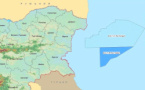
The second exploration drilling in the Krum-1 area of the Khan Asparuh block in Bulgaria’s Black Sea has also failed to identify commercially significant natural gas deposits, according to OMV Petrom

The Ombudswoman institution has voiced strong opposition to the proposed increase in heating prices in Sofia, which is expected to approach nearly 30 percent
The Energy and Water Regulatory Commission (EWRC) in Bulgaria has set the price of natural gas for April 2026 at 34.27 euros per megawatt-hour, excluding access, transmission, excise duties and VAT

Fuel prices in Bulgaria have recorded a sharp upward movement over the past month, with diesel showing the most significant increase, according to data from the Fuelo platform

Bulgargaz has defended its previously submitted proposal for a 5% rise in natural gas prices for April before the Energy and Water Regulatory Commission, with CEO Veselin Sinabov stressing that there is currently no justification for any further increases

Aniventure Comic Con Returns to Bulgaria with Star Guest Christopher Judge!
Global Fuel Shock: Oil Jumps Over 40% Since Iran War Began