Easter Monday in Bulgaria: Tradition and Family Visits
Orthodox Easter Monday is the day following Easter Sunday and is observed across Bulgaria as part of the wider Easter celebration within the Orthodox Christian tradition
HOT: » Which party would you vote for (if you could) in the upcoming snap vote in Bulgaria on April 19?
 Send to Kindle
 Bulgaria's President Georgi Parvanov himself was revealed in 2006 to have worked for the notorious State Security DS under the code name "Gotse". Photo by Sofia Photo Agency
Bulgaria's President Georgi Parvanov has imposed a veto on legal amendments, which ban former State Security agents from the times of the Communist regime to take up key diplomatic positions.
Following the presidential veto, the amendments will be transferred back to parliament for further debates.
In his motives President Parvanov says that several amendments of the bill adopted on July 14 breach the Constitution and basic principles of international law.
He criticizes most harshly those parts of the amendments, which ban agents of the former secret services from representing Bulgaria abroad and rules diplomats with secret police records to be recalled from abroad.
"More than twenty years after the start of the democratic reforms, our society should have overcome primitive oppositions and it is unacceptable that a legislative body creates new legal conditions conducive to division," Parvanov said.
He went as far as to slam the law for being a tool for carrying out a state policy of discrimination.
The president harshly criticizes the foreign minister for overstepping his powers and taking over the head of state right to dismiss the diplomats abroad.
The amendments to Bulgaria's Diplomatic Service Act were adopted by parliament earlier this month, which paved the way for kicking out of office the country's 35 ambassadors proven to have been collaborators of the communist regime's secret service.
The changes initiated by Foreign Minister Nikolay Mladenov were designed to rectify the huge scandal that shook the Bulgarian government in the fall of 2010 with regards to the diplomats' lustration (i.e. limiting the participation of former communists, and especially informants of the communist secret police in the civil service).
The Foreign Minister was outraged after at the end of 2010 the so-called Files Commission, the special panel examining the Communist era documentation, revealed that almost half of Bulgaria's ambassadors abroad, in a number of key countries – from the UK to Russia and China, had been collaborators of the former State Security Service.
President Parvanov himself was revealed in 2006 to have worked for the notorious State Security DS under the code name "Gotse".
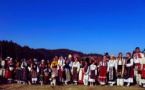
Orthodox Easter Monday is the day following Easter Sunday and is observed across Bulgaria as part of the wider Easter celebration within the Orthodox Christian tradition

Industrial output in Bulgaria posted a modest monthly increase in February 2026, but continued to decline sharply on an annual basis, according to preliminary, seasonally adjusted data from the National Statistical Institute.

The president of the Confederation of Bulgarian Trade Unions, Plamen Dimitrov, has warned that inflation in Bulgaria is likely to exceed earlier projections, even if fuel prices begin to decline

The introduction of the euro in Bulgaria has so far produced only a limited and largely one-off effect on consumer prices, according to an analysis by the European Central Bank

Easter is the most important religious holiday in the Orthodox Christian calendar and is widely celebrated across Bulgaria. It marks the resurrection of Jesus Christ and follows the completion of Holy Week, which includes Good Friday and Holy Saturday

Holy Saturday, known in Bulgaria as Lazarus Saturday’s continuation of the Easter cycle, is a quiet but deeply symbolic day in the Orthodox Christian calendar
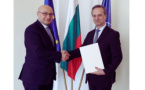
The newly appointed Ambassador of the Republic of Azerbaijan to Bulgaria, H.E. Elmar Mammadyarov, has officially begun his diplomatic mission after presenting copies of his credentials to Deputy Foreign Minister Radi Naydenov at the Ministry of Foreign Af
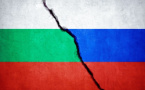
The Russian Embassy in Sofia has circulated a warning issued by the Foreign Ministry in Moscow, cautioning its citizens about what it describes as a heightened risk of detention abroad at the request of US authorities
The Bulgarian Parliament has adopted a decision establishing February 14 as the official Day of Bulgarian–Polish Friendship and Cooperation. The measure passed unanimously, receiving 165 votes in favor.

Acting Foreign Minister Nadezhda Neynski said that the diplomatic note sent by Iran to Bulgaria should be viewed as standard communication in a period of heightened international tension, stressing that it does not constitute a threat but rather a formal
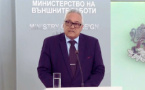
Acting Deputy Foreign Minister Marin Raykov has commented on the diplomatic note sent by Iran to Bulgaria, stressing that it should not be interpreted as a reason for public alarm

Bulgaria’s Foreign Ministry has reiterated its position that North Macedonia must fully implement its commitments regarding the protection of the rights of communities, particularly in the context of its EU accession process

Aniventure Comic Con Returns to Bulgaria with Star Guest Christopher Judge!

Global Fuel Shock: Oil Jumps Over 40% Since Iran War Began